The importance of economical production of agricultural materials, especially crops and animal products serving as base materials for foodstuffs, and of their technological processing (mechanical operations, storage, handling etc.
Genetic research in some fundamental crops, together with the use of chemicals as pesticides and fertilizers, opened the way in the 1950s and 1960s to great changes in methodology in agriculture - with astonishing results in the tropics.
Marketing Sugar and Other Sweeteners was written to fill a large void of literature on the marketing aspects of an important sector of the food market.
International challenges in agricultural economics for the nineties will come from a redirection of the EC policy, stimulated by GATT negotiations, the opening towards Eastern Europe and environmental considerations, from a production oriented policy towards rural policy, aiming at protecting vulnerable regions, maintaining a rural population, curtailing production in the West and fostering it in the East, and aiming at the provision of environmentally desirable output.
Understanding why agricultural policies of developed countries are what they are is critical on several accounts for the developed countries as a group and for individual countries.
Economics of Food Processing in the United States aims to provide an economic overview of the food processing industries in the United States; to explore the firm-level implications of social, economic, technological, and institutional forces for selected food processing industries; and to uncover some of the implications for consumers, raw product producers, and the national economy of the major trends observed in food industries.
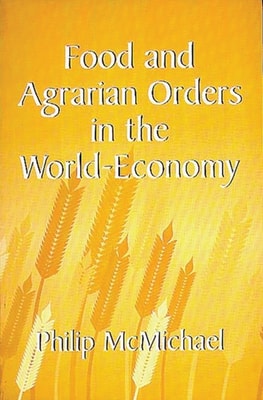
The emergence of a world economy depends on the reorganization of agriculture and food systems to provision the work force and the industries associated with the division of labor.
This work presents models that characterize the relationships between quantity and quality of irrigation water application, and agricultural production and the environment.
2015 NEW MEXICO-ARIZONA BOOK AWARD WINNER"e;This useful, entertaining guide gives prospective microfarmers the dirt on realistic essentials for turning a garden into a moneymaking enterpriseThe author advises on such basics as business plans and sales techniques; profiles a range of actual working microfarms, from flowers to killer bees; and relates hilarious stories from his own microfarming.
In a vast society where environmentally conscious nonfarming voters and consumers have grown to greatly outnumber those directly engaged in agriculture, what happens in agriculture becomes increasingly subject to control by the general society, as policies and laws cater to constituents and consumers.
A $100 trillion global market (with little competition) exists for products & services that revitalize cities and natural resources, with an estimated activity of $2 trillion per yearThis is the first book to show community and national leaders how to achieve rapid, sustainable renewalCunningham's groundbreaking first book, The Restoration Economy (Berrett Koehler Publishers, 2002), now in its third printing, was hailed by government, business, and academic leaders worldwideThe theme of ReWealth!
In this completely revised Texas A&M University Press edition, Guthery and coauthor Fidel Hernndez have breathed new life into a classic work that for more than twenty years has been teaching biologists, managers, and ranchers to think like a quail.
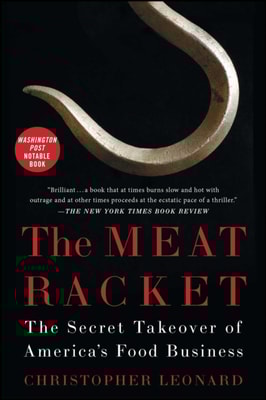
A powerful and important work of investigative journalism that explores the runaway growth of the American meatpacking industry and its dangerous consequences"e;A worthy update to Upton Sinclair's The Jungle and a chilling indicator of how little has changed since that 1906 muckraking classic.
Interest is growing in sustainable agriculture, which involves the use of productive and profitable farming practices that take advantage of natural biological processes to conserve resources, reduce inputs, protect the environment, and enhance public health.
Microlivestock is a term coined for species that are inherently small as well as for breeds of cattle, sheep, goats, and pigs that are less than about half the size of the most common breeds.
How the debate over genetically modified crops in India is transforming science and politics Genetically modified or transgenic crops are controversial across the world.
An unexplored, fascinating history of nineteenth-century agrarian life, told through the engaging lens of three families central to the peppermint oil industry This unconventional history relates the engaging and unusual stories of three families in the late nineteenth and early twentieth centuries whose involvement in the peppermint oil industry provides insights into the perspectives and concerns of rural people of their time.
An exploration of the lived experience of small-scale organic farmers in New England that unpacks how they balance their ideals with economic realities In recent years, the popularity of organically grown produce has exploded.
An exploration of the rise of the crop strain that came to dominate the American tobacco industry and its toll on the Southern landscape that produced it Drew A.
In this groundbreaking book Andrew Sluyter demonstrates for the first time that Africans played significant creative roles in establishing open-range cattle ranching in the Americas.
This book deals with an important and timely issue: the political and economic forces that have shaped agricultural policies in the United States during the past eighty years.
The “Hikayat Banjar,” a native court chronicle from Borneo, characterizes the irresistibility of natural resource wealth to outsiders as “the banana tree at the gate.
This is the first history of the Jewish agricultural colonies that were established in Crimea and Southern Ukraine in 1924 and that, fewer than 20 years later, ended in tragedy.