Archaeological Theory in Dialogue presents an innovative conversation between five scholars from different backgrounds on a range of central issues facing archaeology today.
This book discusses the archaeology and heritage of the German military presence in Finnish Lapland during the Second World War, framing this northern, overlooked WWII material legacy from the nearly forgotten Arctic front as 'dark heritage' - a concrete reminder of Finns siding with the Nazis, often seen as polluting 'war junk' that ruins the 'pristine natural beauty' of Lapland's wilderness.
This book discusses the archaeology and heritage of the German military presence in Finnish Lapland during the Second World War, framing this northern, overlooked WWII material legacy from the nearly forgotten Arctic front as 'dark heritage' - a concrete reminder of Finns siding with the Nazis, often seen as polluting 'war junk' that ruins the 'pristine natural beauty' of Lapland's wilderness.
This book, at the intersection of early childhood and reconceptualizing practice, looks at how practitioners, theorists, and teachers are supporting young children to care about the environment differently.
Theoretical Approaches in Bioarchaeology emphasizes how several different theoretical perspectives can be used to reconstruct the biocultural experiences of humans in the past.
This book, at the intersection of early childhood and reconceptualizing practice, looks at how practitioners, theorists, and teachers are supporting young children to care about the environment differently.
Theoretical Approaches in Bioarchaeology emphasizes how several different theoretical perspectives can be used to reconstruct the biocultural experiences of humans in the past.
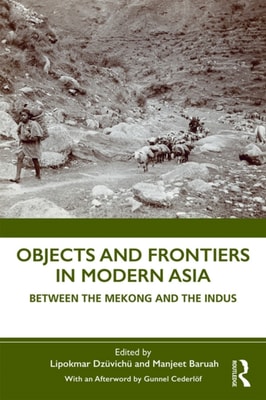
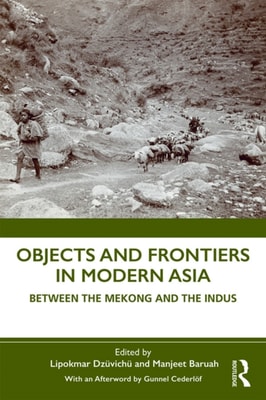
Focusing on the geographies between the Mekong and the Indus, this book brings objects to the centre of enquiry in the understanding of modern Asian frontiers.
Focusing on the geographies between the Mekong and the Indus, this book brings objects to the centre of enquiry in the understanding of modern Asian frontiers.
DISCOVER MULTI-MILLION-COPY BESTSELLING BOOK THAT TURNED HISTORY ON ITS HEAD Arresting and audacious Daily MailPart intellectual detective story, part history book, Fingerprints of the Gods directs probing questions at orthodox history, presenting disturbing new evidence that historians have tried - but failed - to explain.
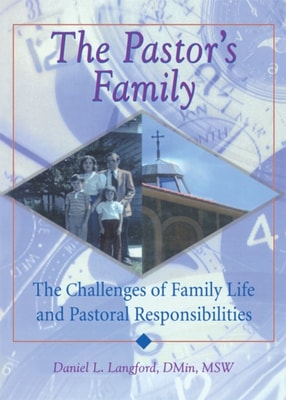
Describing the difficulties of balancing a career and family life, The Pastor's Family: The Challenges of Family Life and Pastoral Responsibilities is a personal narrative that discusses the all-too-familiar practice of neglecting your family for your job.
A lively and authoritative investigation into the lives of our ancestors, based on the revolution in the field of Bronze Age archaeology which has been taking place in Norfolk and the Fenlands over the last twenty years, and in which the author has played a central role.
All farming in prehistoric Europe ultimately came from elsewhere in one way or another, unlike the growing numbers of primary centers of domestication and agricultural origins worldwide.
This book explores and critiques the underlying assumption that a binary gender system and patriarchal norms were universal in Bronze Age Europe through a careful analysis of burial practice in Ireland and Scotland.
The royal necropolis of New Kingdom Egypt, known as the Valley of the Kings (KV), is one of the most important--and celebrated--archaeological sites in the world.
This volume explores 15,000 years of indigenous human history on the North American continent, drawing on the latest archaeological theories, time-honored methodologies, and rich datasets.
The date of the Cerne Giant has long been a matter for debate, as exemplified by a public and televised debate of March 1996, published as The Cerne Giant: An Antiquity on Trial (1999, Oxbow Books).
Assembling Archaeology provides a radical rethinking of the relationships between teaching, researching, digging, and practicing as an archaeologist in the 21st century.
Contemporary Archaeology and the City foregrounds the archaeological study of post-industrial and other urban transformations through a diverse, international collection of case studies.
Contemporary Archaeology and the City foregrounds the archaeological study of post-industrial and other urban transformations through a diverse, international collection of case studies.
This Handbook aims to serve as a research guide to the archaeology of the Levant, an area situated at the crossroads of the ancient world that linked the eastern Mediterranean, Anatolia, Mesopotamia, and Egypt.
This Handbook aims to serve as a research guide to the archaeology of the Levant, an area situated at the crossroads of the ancient world that linked the eastern Mediterranean, Anatolia, Mesopotamia, and Egypt.
It has been clear for many years that the ways in which archaeology is practised have been a direct product of a particular set of social, cultural, and historical circumstances - archaeology is always carried out in the present.
It has been clear for many years that the ways in which archaeology is practised have been a direct product of a particular set of social, cultural, and historical circumstances - archaeology is always carried out in the present.
The Oxford Handbook of the Archaeology of Death and Burial reviews the current state of mortuary archaeology and its practice, highlighting its often contentious place in the modern socio-politics of archaeology.
The Oxford Handbook of the Archaeology of Death and Burial reviews the current state of mortuary archaeology and its practice, highlighting its often contentious place in the modern socio-politics of archaeology.
The Later Prehistory of North-West Europe provides a unique, up-to-date, and easily accessible synthesis of the later prehistoric archaeology of north-west Europe, transcending political and language barriers that can hinder understanding.
In this book, Carr unravels the biography of the archaeologist Tessa Verney Wheeler, a charming, tiny woman whose untimely death left her archaeological career overshadowed by her distinguished husband, Sir Mortimer Wheeler.
Why is it that in some places around the world communities live in villages, while elsewhere people live in isolated houses scattered across the landscape?
While Celtic art includes some of the most famous archaeological artefacts in the British Isles, such as the Battersea shield or the gold torcs from Snettisham, it has often been considered from an art historical point of view.