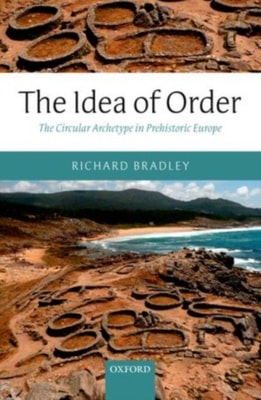
Richard Bradley investigates the idea of circular buildings - whether houses or public architecture - which, though unfamiliar in the modern West, were a feature of many parts of prehistoric Europe.
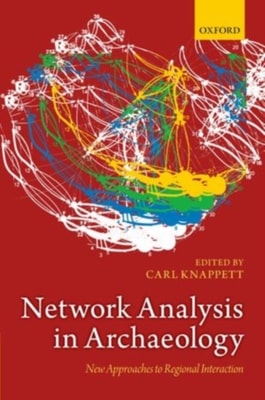
While the study of networks has grown exponentially in the past decade and is now having an impact on how archaeologists study ancient societies, its emergence in the field has been dislocated.
Widely regarded as major visible field monuments of the Iron Age, hillforts are central to an understanding of later prehistoric communities in Britain and Europe from the later Bronze Age.
The environment has always been a central concept for archaeologists and, although it has been conceived in many ways, its role in archaeological explanation has fluctuated from a mere backdrop to human action, to a primary factor in the understanding of society and social change.
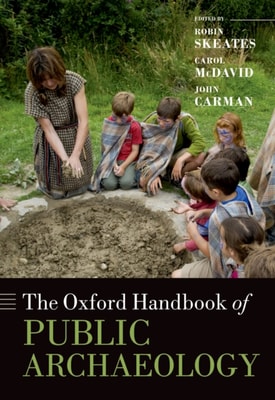
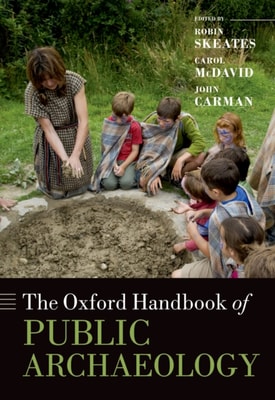
The Oxford Handbook of Public Archaeology seeks to reappraise the place of archaeology in the contemporary world by providing a series of essays that critically engage with both old and current debates in the field of public archaeology.
The Oxford Handbook of Public Archaeology seeks to reappraise the place of archaeology in the contemporary world by providing a series of essays that critically engage with both old and current debates in the field of public archaeology.
Sticks, Stones, and Broken Bones: Neolithic Violence in a European Perspective presents an up-to-date overview of the evidence for violent injuries on human skeletons of the Neolithic period in Europe, ranging from 6700 to 2000 BC.
Despite being one of the most successful branches of mainstream archaeology, wetland archaeology, as an academic discipline, is still relatively unknown.
Margarita Diaz-Andreu offers an innovative history of archaeology during the nineteenth century, encompassing all its fields from the origins of humanity to the medieval period, and all areas of the world.
Archaeologists have long acknowledged the absence of a regular and recurrent burial rite in the British Iron Age, and have looked to rites such as cremation and scattering of remains to explain the minimal impact of funerary practices on the archaeological record.
Since the eighteenth century, the concept of prehistory was exported by colonialism to far parts of the globe and applied to populations lacking written records.
The beginning of the Neolithic in Britain is a topic of perennial interest in archaeology, marking the end of a hunter-gatherer way of life with the introduction of domesticated plants and animals, pottery, polished stone tools, and a range of new kinds of monuments, including earthen long barrows and megalithic tombs.
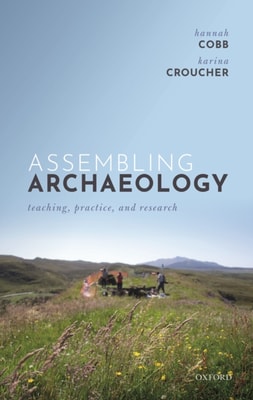
Assembling Archaeology provides a radical rethinking of the relationships between teaching, researching, digging, and practicing as an archaeologist in the 21st century.
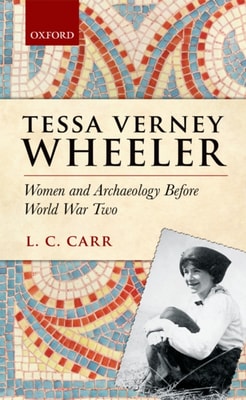
In this book, Carr unravels the biography of the archaeologist Tessa Verney Wheeler, a charming, tiny woman whose untimely death left her archaeological career overshadowed by her distinguished husband, Sir Mortimer Wheeler.
One of the most exciting recent developments in archaeology and history has been the adoption of new perspectives which see human societies in the past-as in the present-as made up of networks of interlinked individuals.
This volume, featuring sixteen contributions from leading Roman historians and archaeologists, sheds new light on approaches to the economic history of urban craftsmen and traders in the Roman world, with a particular emphasis on the imperial period.
How people engaged with materials such as clay or stone, why people dug features such as pits, why they decorated their bodies, or treated their dead in certain ways, were all meaningful in the African past.
This volume explores the pervasive influence exerted by some prehistoric monuments on European social life over thousands of years, and reveals how they can act as a node linking people through time, possessing huge ideological and political significance.
The environment has always been a central concept for archaeologists and, although it has been conceived in many ways, its role in archaeological explanation has fluctuated from a mere backdrop to human action, to a primary factor in the understanding of society and social change.
The Oxford Handbook of the European Bronze Age is a wide-ranging survey of a crucial period in prehistory during which many social, economic, and technological changes took place.
The Oxford Handbook of the European Bronze Age is a wide-ranging survey of a crucial period in prehistory during which many social, economic, and technological changes took place.
In Breaking the Surface, Doug Bailey offers a radical alternative for understanding Neolithic houses, providing much-needed insight not just into prehistoric practice, but into another way of doing archaeology.
In Breaking the Surface, Doug Bailey offers a radical alternative for understanding Neolithic houses, providing much-needed insight not just into prehistoric practice, but into another way of doing archaeology.
The royal necropolis of New Kingdom Egypt, known as the Valley of the Kings (KV), is one of the most important--and celebrated--archaeological sites in the world.
Archaeological remains are ‘fragmented by definition’: apart from exceptional cases, the study of the human past takes into account mainly traces, ruins, discards, and debris of past civilizations.
Making Heritage Together presents a case study of public archaeology by focusing on the collaborative creation of knowledge about the past with a rural community in central Crete.
Working as Indigenous Archaeologists explores the often-contentious relationship between Indigenous and other formerly colonized peoples and Archaeology through their own voices.
This volume provides fresh insight into northern human-animal relations and illustrates the breadth and practical utility of archaeological human-animal studies.
Assessing key questions such as who the foreigners and outsiders in ancient Maya societies were and how was the foreign a generative component of identity, Foreigners Among Us reassess the arrival of foreigners as part of archaeological understandings of Pre-Columbian Maya and questions not only who these foreigners might have been but who were making such designations of difference in the first place.
Composite Artefacts in the Ancient Near East: Exhibiting an imaginative materiality, showing a genealogical nature' examines the complex relationship between environment, materials, society and materiality with particular reference to the composite artefacts in the ancient Near East.
The Northumberland Archaeological Group’s (NAG) Wether Hill project spanned the years 1994–2015 and was located on the eponymous hilltop overlooking the mouth of the Breamish Valley in the Northumberland Cheviots.
More than two thousand people from the British Channel Islands were deported to and interned in Germany during the Second World War, making up as many as 60% of all interned British citizens in occupied territory during this period.
Departing from more conscribed definitions, this book argues for an expansion of the concept of 'Creolization' in terms of duration, temporality, population, and importantly, in regional scope, which also impact climate and the practices of slavery that are typically included and excluded from consideration.