The Bayeux Tapestry, perhaps the most famous, yet enigmatic, of medieval artworks, was the subject of an international conference at the British Museum in July 2008.
The Dutch bestseller Nominated for Le Prix Nicolas Bouvier'A masterclass in storytelling, exploring who we are and where we came from' Danielle Clode 'Gripping and brilliantly told, We Hominids deftly blends personal experience with a journalist's eye for a remarkable story' Mark McKennaWHO ARE WE?
What is Hadrian’s Wall made of, where did this material come from and how has it been reused in other buildings in the communities that emerged in the centuries after the Roman Empire?
The Tribal Hidage, attributed to the 7th century, records the named groups and polities of early Anglo-Saxon England and the taxation tribute due from their lands and surpluses.
While late 17th- and 18th-century burial grounds of colonial North America are frequently the subject of research, wide-scale studies of 17th-century burial landscapes are often the less documented aspect of these sites.
Arthwyr ap Meurig, der wahre König Arthur, im Schatten der Normannen & Franken, ist meine deutsche Übersetzung der historischen Bücher von Wilson & Blackett.
This book charts and explains how human activities have shaped and altered the development of soils in many parts of the world, taking advantage of five decades of soil analytical work in many archaeological landscapes from around the globe.
Gudme: The Iron Age Settlement and Central Halls presents, describes and interprets the many finds and structures that have been comprised during the extended excavations at the central parts of the Gudme locality on southeast Funen, Denmark.
The College of St George at Windsor Castle was founded by Edward III in 1348 to support the newly created Order of the Garter, and to this day fulfills the same primary purpose.
This volume examines how pre-Columbian societies in the Americas envisioned their cosmos and iteratively modeled it through the creation of particular objects and places.
Tell Ahmar – also known as Masuwari, Til Barsib and Kar-Shalmaneser in the first millennium BCE – was first inhabited in the sixth millennium, during the Ubaid period, and progressively developed to become a regional center and, in the eighth and seventh centuries, a provincial capital of the Assyrian empire.
The Archaeology of Roman Portugal aims to contribute to the wider debate on Roman imperialism and expansionism, by bringing to the fore a much-underrepresented area of the Roman empire, at least in English-language scholarship: its westernmost edge in modern day Portugal.
Butrint, ancient Buthrotum, has taken many forms in different ages, shaped by the near-constant interaction between the place, its lagoonal landscape and the Mediterranean.
This book is about two islands off the coast of Continental Europe, the seas that surrounded them, and the ways in which they were used over a period of three thousand years.
According to one narrative, that received almost canonical status a century ago with Francis Haverfield, the orthogonal grid was the most important development of ancient town planning, embodying values of civilization in contrast to barbarism, diffused in particular by hundreds of Roman colonial foundations, and its main legacy to subsequent urban development was the model of the grid city, spread across the New World in new colonial cities.
This book concerns textile production at the fringes of north-western Europe - areas in western Norway and the North Atlantic in the expanding, dynamic and transformative period from the early Viking Age into the Middle Ages.
This volume summarizes 30 years of fieldwork in Denmark, some of the evidence for the spread of agriculture and the Neolithic into Scandinavia and some opinions about the origins of agriculture.
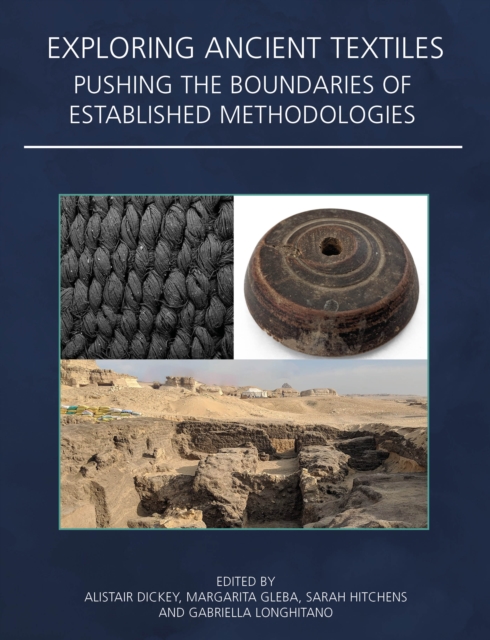
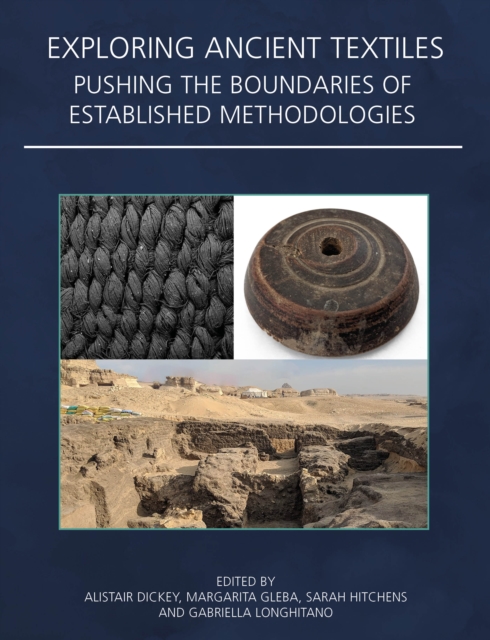
New research into the techniques of tablet weaving, sprang, braiding, knotting and lace is presented in this lavishly illustrated volume written by leading specialists from Austria, Canada, Denmark, France, Germany, Sweden, Switzerland, the UK, and USA.
The First Stones brings together the results of recent research on the Neolithic long cairns lying in the shadow of the Black Mountains in south-east Wales, focusing upon Penywyrlod and Gwernvale, the two best known tombs within the group, previously excavated in the 1970s.
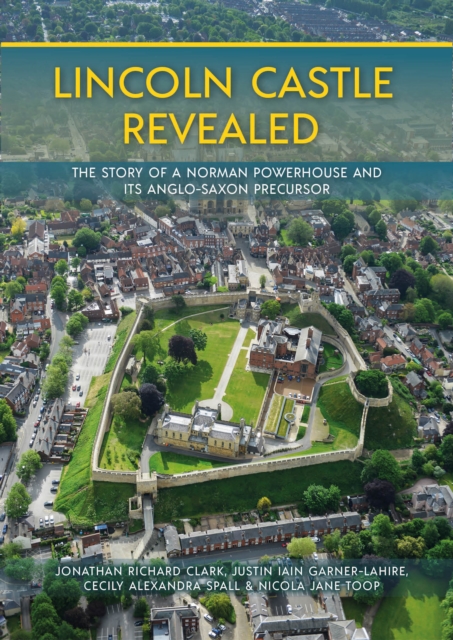
This book tells a new story of the royal castle of Lincoln in the north of England, how it was imposed on the late Anglo-Saxon town, and how it developed over the next 900 years in the hands of the English king or his aristocratic associates, leaving us a surviving monument of three great towers, each with its own biography.