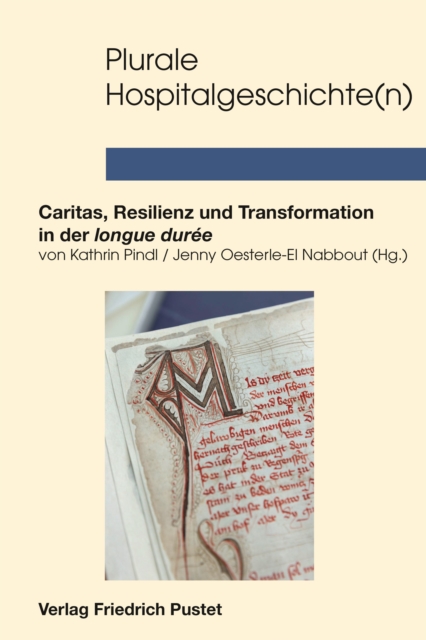
The topic of this volume consists in discussing the methods used in the different areas of philosophy during the Latin Middle Ages and in the Islamicate world.
In the mid-14th century, an invisible killer emerged from the trade routes of the East, carrying with it the end of the world as the Middle Ages knew it.
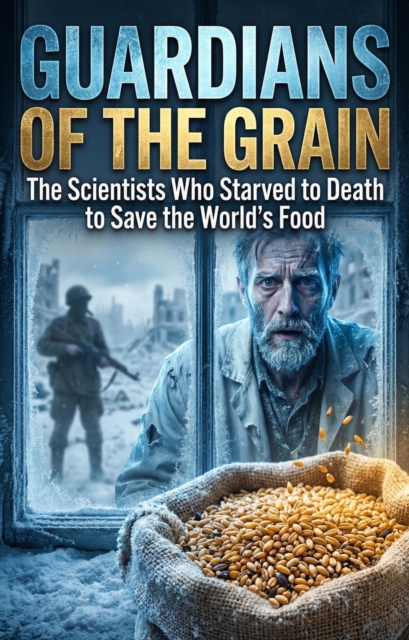
During the 900-day Siege of Leningrad in World War II, a group of Soviet botanists at the Vavilov Institute of Plant Industry faced an impossible choice.
Jeder kennt den berühmten Satz, den Goethe ihm in den Mund legte, doch die historische Realität des Götz von Berlichingen ist weitaus faszinierender als das literarische Denkmal.
This is a fascinating combination of biographical material about the great Scottish engineer Thomas Telford (1757-1834), and a modern travelogue that revisits the places in the Highlands and Islands where he worked over a period of 20 years.
This book aims to provide insights regarding business management and corporate expansion in Germany from the late 19th century until the end of World War II (periods of the Second Reich, the Weimar Republic, and National Socialism) from the perspective of comparative management studies.
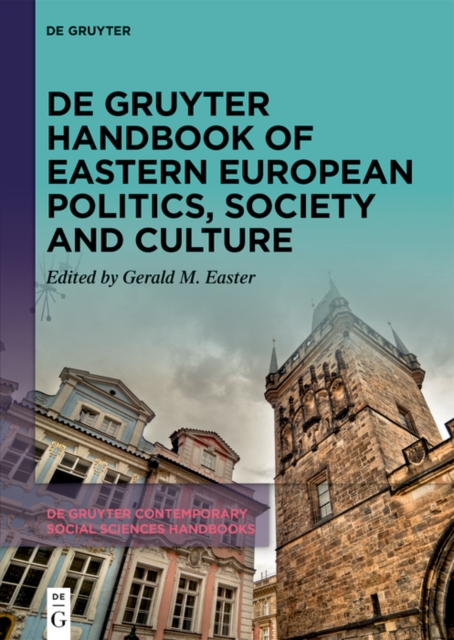
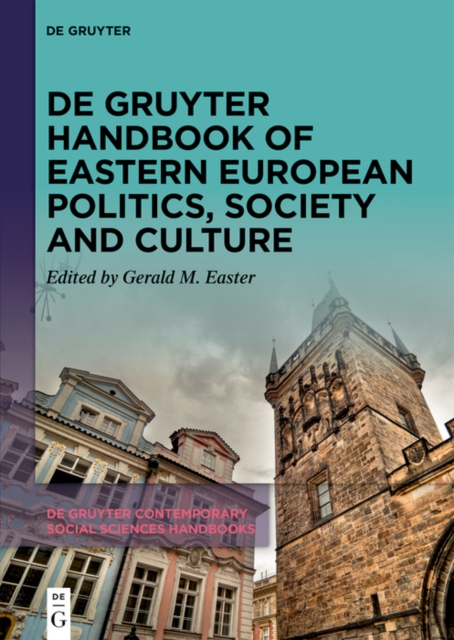
The De Gruyter Handbook of Eastern European Politics, Society and Culture provides a comparative analysis of why the region is at the forefront of a momentous turn in European history.
The De Gruyter Handbook of Eastern European Politics, Society and Culture provides a comparative analysis of why the region is at the forefront of a momentous turn in European history.
This book examines patterns of national integration and the mobilisation of the peasantry across two historical regions, Central and Eastern Europe, over a long historical timeframe, spanning from the 1848 Revolution to the outbreak of the Second World War.
Beginning with the premise that religious and non-religious identities were fluid, overlapping phenomena rather than static, binary conditions, this timely edited collection challenges the traditional notion that atheism was an acute intellectual innovation of Western modernity by rethinking its multifarious pre-modern manifestations and impact in Brazil, China, England, France, Italy, New England, Poland, Scotland, Spain, and Transylvania.
Beginning with the premise that religious and non-religious identities were fluid, overlapping phenomena rather than static, binary conditions, this timely edited collection challenges the traditional notion that atheism was an acute intellectual innovation of Western modernity by rethinking its multifarious pre-modern manifestations and impact in Brazil, China, England, France, Italy, New England, Poland, Scotland, Spain, and Transylvania.
This book examines the influence and strategic efforts of the Comintern, the agency created in 1919 by Lenin to promote world revolution, during the Spanish civil war.
This book examines the previously hidden and unpublished submissions made to the Irish Boundary Commission in 1924-25, offering a rare glimpse into a pivotal moment in Irish and British history.