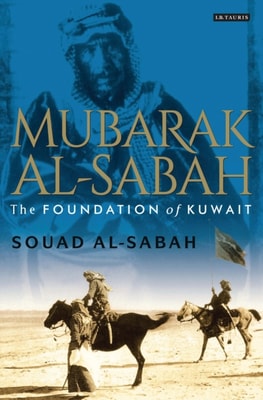
Amidst political upheaval and the decline of the Ottoman Empire, the State of Kuwait emerged as an independent country under British protection in 1899, with Sheikh Mubarak Al Sabah widely accredited as the instrument of its foundation.
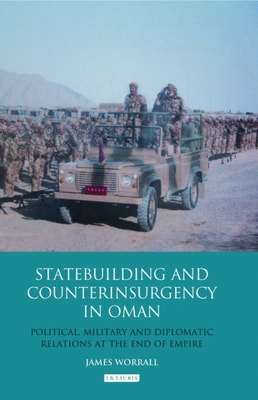
In the depths of the Cold War and in the wake of Britain's announcement of its intention to withdraw 'East of Suez' by the end of 1971, Britain was faced with the stark reality of a Marxist rebellion in the Dhofar province of Oman.
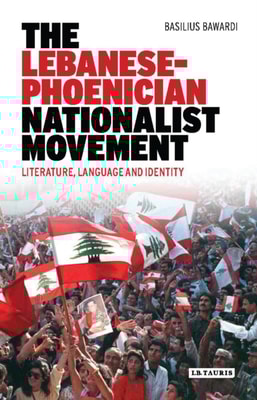
Whether defined as essentially 'Turkish', and therefore alien to the Lebanese experience, or remembered in its final years as a tyrannical and brutal dictatorship, the period has not been thought of fondly in most Lebanese historiography.
The question of belonging has formed the basis of the political, religious and cultural tensions in Lebanon, to the point that sectarian conflict on the country's future contributed significantly to the outbreak of civil war in 1975.
Despite high degrees of cultural and ethnic diversity as well as prevailing political instability, Guinea-Bissau s population has developed a strong sense of national belonging.
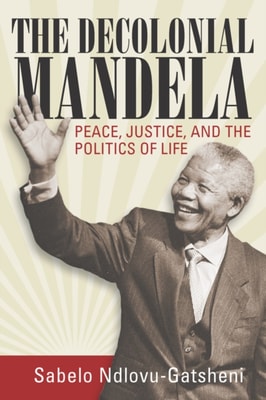
A significant contribution to the emerging literature on decolonial studies, this concise and forcefully argued volume lays out a groundbreaking interpretation of the Mandela phenomenon.
For twenty-five years, Feminism and Nationalism in the Third World has been an essential primer on the late nineteenth- and early twentieth-century history of women's movements in Asia and the Middle East.
Much has been written on the how colonial subjects took up British and European ideas and turned them against empire when making claims to freedom and self-determination.
This book compares the trajectories of states and societies in Africa, Asia and Latin America under neoliberalism, a time marked by serial economic crises, escalating social conflicts, the remilitarisation of North-South relations and the radicalisation of social and nationalist forces.
Through mapping the rights discourse and the transformations in transnational finance capitalism since the world wars, and interrogating the connections between the two, Radha D'Souza examines contemporary rights in theory and practice through the lens of the struggles of the people of the Third World, their experiences of national liberation and socialism and their aspirations for emancipation and freedom.
Through mapping the rights discourse and the transformations in transnational finance capitalism since the world wars, and interrogating the connections between the two, Radha D'Souza examines contemporary rights in theory and practice through the lens of the struggles of the people of the Third World, their experiences of national liberation and socialism and their aspirations for emancipation and freedom.
Frantz Fanon (1925-1961) was a Caribbean and African psychiatrist, philosopher and revolutionary whose works, including Black Skin, White Masks and The Wretched of the Earth are hugely influential in the fields of post-colonial studies, critical theory, and post-Marxism.
Frantz Fanon (1925-1961) was a Caribbean and African psychiatrist, philosopher and revolutionary whose works, including Black Skin, White Masks and The Wretched of the Earth are hugely influential in the fields of post-colonial studies, critical theory, and post-Marxism.
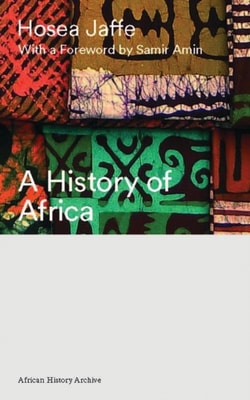
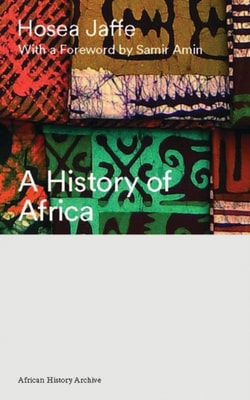
Spanning more than two thousand years of African history, from the African Iron Age to the collapse of colonialism and the beginnings of independence, Hosea Jaffe's magisterial work remains one of the few to do full justice to the continent's complex and diverse past.
Spanning more than two thousand years of African history, from the African Iron Age to the collapse of colonialism and the beginnings of independence, Hosea Jaffe's magisterial work remains one of the few to do full justice to the continent's complex and diverse past.
Written in 1957, when North African independence movements were gaining momentum, The Colonizer and the Colonized studies the enduring legacy, political as much as psychological, of colonisation throughout the world.
Inspired by Antonio Gramsci's writings on the history of subaltern classes, the authors in Mapping Subaltern Studies and the Postcolonial sought to contest the elite histories of Indian nationalists by adopting the paradigm of 'history from below'.
In this new book, Liam O Duibhir charts the struggle for independence, both militarily and politically, in Donegal from before the events of Easter 1916 until the truce in 1921.