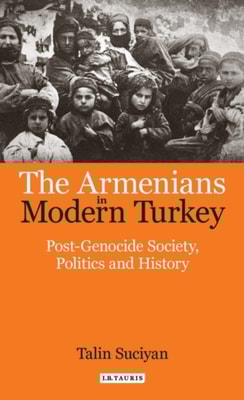
After the Armenian genocide of 1915, in which over a million Armenians died, thousands of Armenians lived and worked in the Turkish state alongside those who had persecuted their communities.
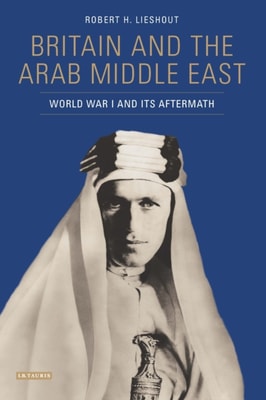
The profound effects of the British Empire's actions in the Arab World during the First World War can be seen echoing through the history of the 20th century.
After the creation of the State of Israel in 1948, Palestinian refugees fled over the border into Jordan, which in 1950 formally annexed the West Bank.
The retreat of the Byzantine army from Syria in around 650 CE, in advance of the approaching Arab armies, is one that has resounded emphatically in the works of both Islamic and Christian writers, and created an enduring motif: that of the Islamic-Byzantine frontier.
The coup d'état which took place in Turkey on 12 September 1980 was the third in the history of the Republic, and ushered in a three-year period of military rule.
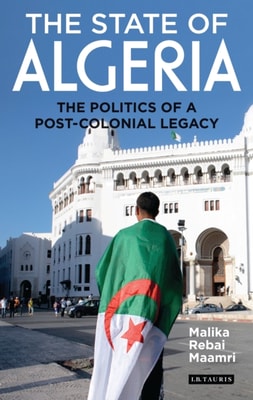
Algeria's current politics are influenced by its colonial period under the French to an extent not seen in other North African and Middle Eastern states.
The percentage of women aged 15-49 in Egypt who have undergone the procedure of female circumcision, or genital mutilation/cutting (FGM/C) stands at 91%, according to the latest research carried out by UNICEF.
Railway expansion was symbolic of modernization in the late 19th century, and Britain, Germany and France built railways at enormous speed and reaped great commercial benefits.
The network of freemasons and Masonic lodges in the Middle East is an opaque and mysterious one, and is all too often seen - within the area - as a vanguard for Western purposes of regional domination.
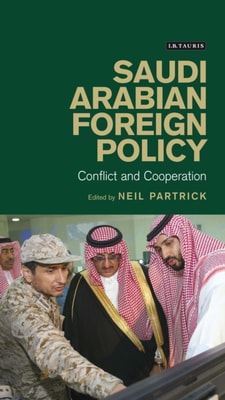
As the only oil producer with sufficient spare capacity to shape the world economy, Saudi Arabia is one of the most significant states in twenty-first century geopolitics.
The British Empire was an astonishingly complex and varied phenomenon, not to be reduced to any of the simple generalisations or theories that are often taken to characterise it.
Beginning on the eve of oceanic exploration, and the first European forays into the Indian Ocean and the Middle East, The Ottomans and the Mamluks traces the growth of the Ottoman Empire from a tiny Anatolian principality to a world power, and the relative decline of the Mamluks-historic defenders of Mecca and Medina and the rulers of Egypt and Syria.
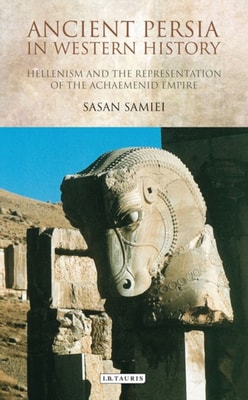
Ancient Persia in Western History is a measured rejoinder to the dominant narrative that considers the Graeco-Persian Wars to be merely the first round of an oft-repeated battle between the despotic 'East' and the broadly enlightened 'West'.
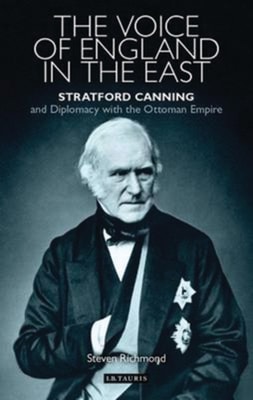
In the time of the 'Great Powers', Stratford Canning served as British ambassador to the Ottoman Empire during several long missions throughout the first half of the nineteenth century.
The Ottoman Empire maintained a complex and powerful bureaucratic system which enforced the Sultan's authority across the Empire's Middle-Eastern territories.
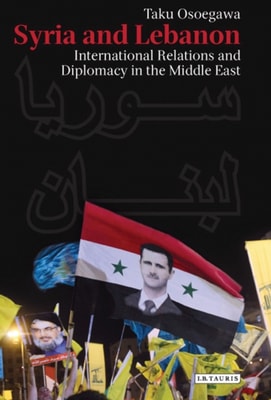
The so-called 'Cedar Revolution' in Lebanon, triggered by the assassination of the former Prime Minister Rafiq Hariri in February 2005, brought to an end three decades of Syrian military presence in the country.
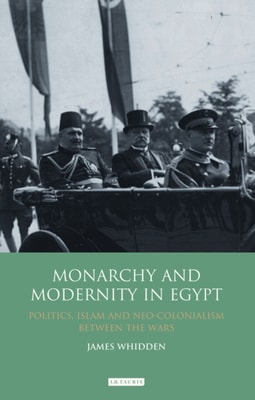
The creation of the Egyptian monarchy in 1922, under King Fuad II, opened contests and debates over fundamental cultural questions, particularly definitions of Egyptian modernity, rule and identity.
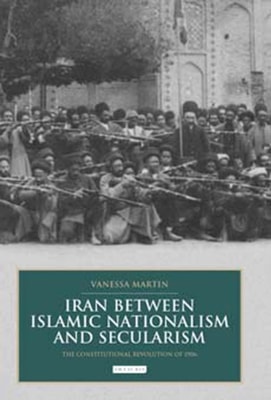
With the ratification of a new constitution in December 1906, Iran embarked on a great movement of systemic and institutional change which, along with the introduction of new ideas, was to be one of the most abiding legacies of the first Iranian revolution - known as the Constitutional Revolution.
For many years Malise Ruthven has been at the forefront of discerning commentary on the Islamic world and its relations with the predominantly secularised and Christian societies of the West.
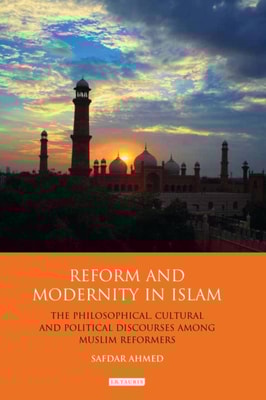
The debate over Islam and modernity tends to be approached from a Eurocentric perspective that presents Western norms as a template for progress - against which Islamic societies can be measured.
The leaders of the oil-rich rentier states of the Middle East, and in particular in the Gulf, have hitherto often predicated their legitimacy on a tacit social contract with their (much poorer) populations.
In this ground-breaking book, aimed at new generation of students, Stig Stenslie and Kjetil Selvik provide a new introduction to the contemporary Middle East, using topical questions about stability and change as a way of interrogating the politics, economics and history of the region.