In the first work documenting Anglo-Turkish relations in the Middle East in the early Cold War period, Mustafa Bilgin identifies two very distinct stages in the relationship between Britain and Turkey.
Ahmet Agaoglu's life and writings reflect huge 20th-century historical events, such as revolutions in Russia in1905 and 1917, in Ottoman Turkey in 1908, World War I, the Turkish War of Independence and the establishment of Azerbaijan.
Between Sea and Sahara is one of the great classics of travel writing about the Middle East - a landmark in the story of Europe's fascination with 'the Orient'.
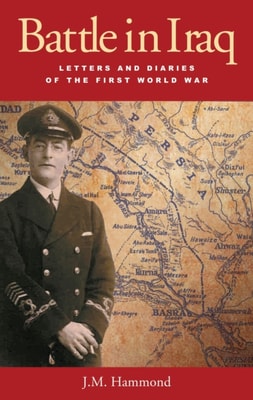
This moving and unusual story of a British engineer who becomes caught up in the horrifying events of the First World War vividly illuminates life - and death - on the Mesopotamian Front.
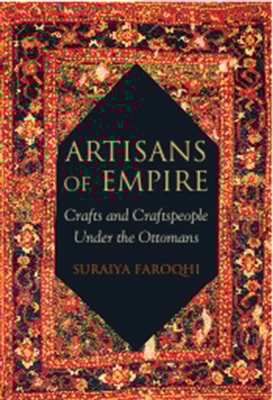
The manufacture and trade in crafted goods and the men and women who were involved in this industry - including metalworkers, ceramicists, silk weavers, fez-makers, blacksmiths and even barbers - lay at the social as well as the economic heart of the Ottoman empire.
A mixture of travelogue, history and war journalism, Allah's Mountains tells the story of the conflict between a nation of mountain tribes and the might of the Russian army.
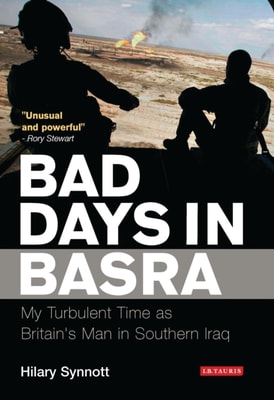
The phonecall came from out of the blue, just when Sir Hilary Synnott was looking forward to retirement after helping steer India and Pakistan back from the verge of nuclear war.
'The most dangerous place in the world' - Barack ObamaThe borderlands of Afghanistan and Pakistan have become the arena for a global conflict with consequences that defy prediction.
Twenty-Five Women Who Shaped the Ottoman Empire is a tale of how women's triumphs as well as their failures shaped a global society-not despite, but because of, gender.
Top World Guild Award WinnerThis book is about an idea namely, that Scripture mandates a Jewish return to the historical region of Palestine which in turn morphed into a political movement, rallied around a popular slogan ("e;A country without a nation for a nation without a country"e;), and eventually contributed to the establishment of the state of Israel in 1948.
Gershon Baskin's memoir of thirty-eight years of intensive pursuit of peace begins with a childhood on Long Island and a bar mitzvah trip to Israel with his family.
Gershon Baskin's memoir of thirty-eight years of intensive pursuit of peace begins with a childhood on Long Island and a bar mitzvah trip to Israel with his family.
This collection of essays contains a wide range of topics reflecting the depth and breadth of interest of the scholar in whose honour they were commissioned - Kevin J.
This is the first book to examine the causes, events and consequences of a major conflict in ancient Palestine, and assess the accounts of its star witness, Josephus.
The capture of Jerusalem by the First Crusade in 1099 signalled the beginning of an armed struggle in Palestine and throughout the Eastern Mediterranean which lasted until the 15th century.
The seventeenth-century Ottoman Empire was rife with polemical debate, around worshipping at saints' graves, medical procedures, smoking tobacco, and other everyday practices.
The seventeenth-century Ottoman Empire was rife with polemical debate, around worshipping at saints' graves, medical procedures, smoking tobacco, and other everyday practices.
In this chronicle of political awakening and queer solidarity, the activist and novelist Sarah Schulman describes her dawning consciousness of the Palestinian liberation struggle.
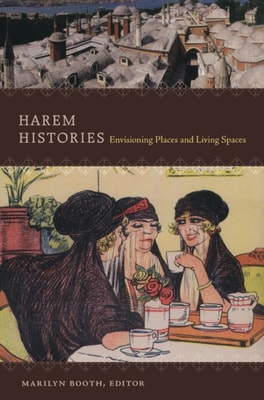
Harem Histories is an interdisciplinary collection of essays exploring the harem as it was imagined, represented, and experienced in Middle Eastern and North African societies, and by visitors to those societies.
In The Making of a Human Bomb, Nasser Abufarha, a Palestinian anthropologist, explains the cultural logic underlying Palestinian martyrdom operations (suicide attacks) launched against Israel during the Al-Aqsa Intifada (2000-06).
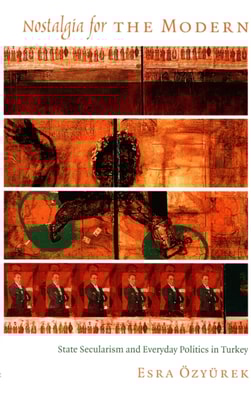
As the twentieth century drew to a close, the unity and authority of the secularist Turkish state were challenged by the rise of political Islam and Kurdish separatism on the one hand and by the increasing demands of the European Union, the International Monetary Fund, and the World Bank on the other.
With the first Fulbright grant for research in Iran to be awarded since the Iranian revolution in 1979, Roxanne Varzi returned to the country her family left before the Iran-Iraq war.
This important volume rethinks the conventional parameters of Middle East studies through attention to popular cultural forms, producers, and communities of consumers.
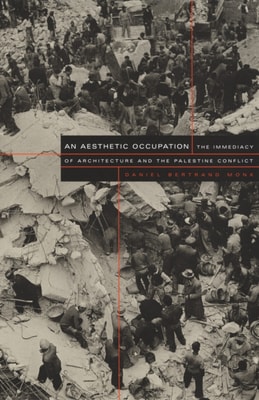
In An Aesthetic Occupation Daniel Bertrand Monk unearths the history of the unquestioned political immediacy of "e;sacred"e; architecture in the conflict between Palestinians and Israelis.
In Belated Travelers, Ali Behdad offers a compelling cultural critique of nineteenth-century travel writing and its dynamic function in European colonialism.
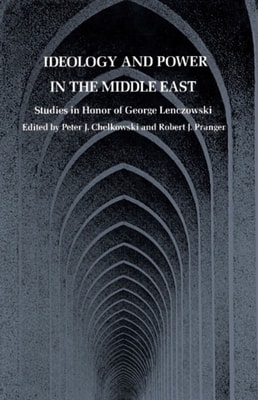
Scholars from the United States, Canada, Europe, and the Middle East combine their talents and expertise to honor George Lenczowski, whose studies of the Middle East over two generations have made him a foremost expert on contemporary affairs in this most volatile and complex region.
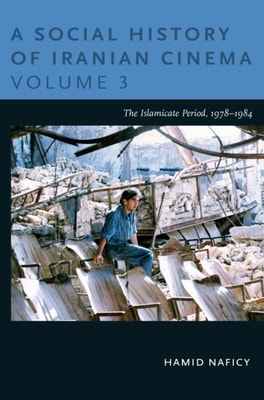
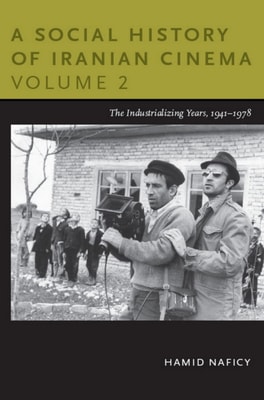
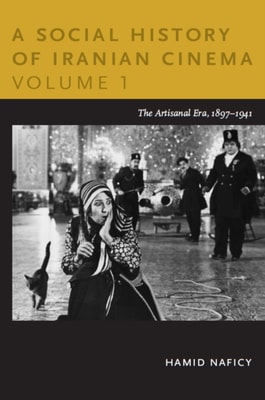
Following the 1979 Iranian Revolution, Iran's film industry, in conforming to the Islamic Republic's system of modesty, had to ensure that women on-screen were veiled from the view of men.
In Arguing Sainthood, Katherine Pratt Ewing examines Sufi religious meanings and practices in Pakistan and their relation to the Westernizing influences of modernity and the shaping of the postcolonial self.
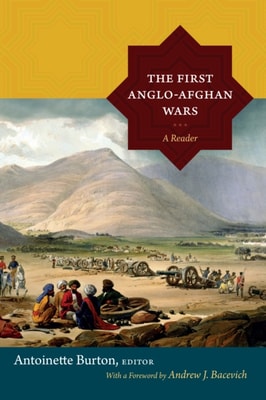
Designed for classroom use, The First Anglo-Afghan Wars gathers in one volume primary source materials related to the first two wars that Great Britain launched against native leaders of the Afghan region.