For most Americans, the war against Iraq lingers in memory as a vast morality play, a drama offering ready made heroes and villains: a glowering dictator in military uniform, hapless Kuwaiti refugees with tales of persecution, plucky pilots with high-tech wizardry, and a defiant American president, ringing Churchillian as he drew a line in the sand.
In just over a hundred years--from the death of the Mohammed in 632 to the beginning of the Abbasid Caliphate in 750--the followers of the Prophet swept across the whole of the Middle East, North Africa, and Spain.
Routes and Realms explores the ways in which Muslims expressed attachment to land from the ninth through the eleventh centuries, the earliest period of intensive written production in Arabic.
From Morocco to Iran and the Black Sea to the Red, Water on Sand rewrites the history of the Middle East and North Africa from the Little Ice Age to the Cold War era.
Trouble in the West provides the first full and continuous account of the Persian-Egyptian War, a conflict that continued for nearly the two-hundred-year duration of the Persian Empire.
In popular and academic literature, jihad is predominantly assumed to refer exclusively to armed combat, and martyrdom in the Islamic context is understood to be invariably of the military kind.
Conservative evangelicalism has transformed American politics, disseminating a sometimes fearful message not just through conventional channels, but through subcultures and alternate modes of communication.
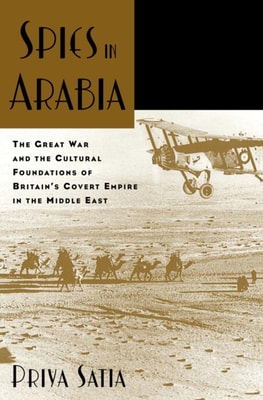
At the dawn of the twentieth century, British intelligence agents began to venture in increasing numbers to the Arab lands of the Ottoman Empire, a region of crucial geopolitical importance spanning present-day Iraq, Jordan, Syria, and Saudi Arabia.
This book is an attempt to explain how, in the face of increasing religious authoritarianism in medieval Islamic civilization, some Muslim thinkers continued to pursue essentially humanistic, rational, and scientific discourses in the quest for knowledge, meaning, and values.
Beginning in Inner Asia two thousand years ago, the Turks have migrated and expanded to form today's Turkish Republic, five post-Soviet republics, other societies across Eurasia, and a global diaspora.
In the last decade of the twentieth century and on into the twenty-first, Israelis and Palestinians saw the signing of the Oslo Peace Accords, the establishment of the Palestinian Authority, the assassination of Israeli Prime Minister Yitzhak Rabin, and the escalation of suicide bombings and retaliations in the region.
In this impressive volume, leading scholars offer compelling glimpses into the biblical world, the world in which prophets, poets, sages, and historians created one of our most important texts--the Bible.
From Morocco to Iran and the Black Sea to the Red, Water on Sand rewrites the history of the Middle East and North Africa from the Little Ice Age to the Cold War era.
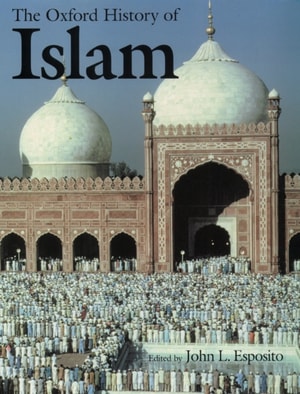
Lavishly illustrated with over 300 pictures, including more than 200 in full color, The Oxford History of Islam offers the most wide-ranging and authoritative account available of the second largest--and fastest growing--religion in the world.
"e;Operation Solomon"e; was one of the most remarkable rescue efforts in modern history, in which more than 14,000 Ethiopian Jews were airlifted to Israel in little more than a day.
Joyce Dalsheim's ethnographic study takes a ground-breaking approach to one of the most contentious issues in the Middle East: the Israeli settlement project.
Since the terrorist attacks of September 11th, there has been an overwhelming demand for information about Islam, and recent events - the war in Iraq, terrorist attacks both failed and successful, debates throughout Europe over Islamic dress, and many others - have raised new questions in the minds of policymakers and the general public.
On March 21, 1968, Yasir Arafat and his guerrillas made the fateful decision to break with conventional guerrilla tactics, choosing to stand and fight an Israeli attack on the al-Karama refugee camp in Jordan.
During the heyday of camel caravan traffic--from the eighth century CE arrival of Islam in North Africa to the early twentieth-century building of European colonial railroads that linked the Sudan with the Atlantic--the Sahara was one of the world's great commercial highways, bringing gold, slaves, and other commodities northward and sending both manufactured goods and Mediterranean culture southward into the Sudan.
In 1517, the Ottoman Sultan Selim "e;the Grim"e; conquered Egypt and brought his empire for the first time in history into direct contact with the trading world of the Indian Ocean.
Amanda Podany here takes readers on a vivid tour through a thousand years of ancient Near Eastern history, from 2300 to 1300 BCE, paying particular attention to the lively interactions that took place between the great kings of the day.
In the decade following the first Gulf War, most observers regarded it as an exemplary effort by the international community to lawfully and forcefully hold a regional aggressor in check.
Since the terrorist attacks of September 11th, there has been an overwhelming demand for information about Islam, and recent events - the war in Iraq, terrorist attacks both failed and successful, debates throughout Europe over Islamic dress, and many others - have raised new questions in the minds of policymakers and the general public.
One hundred years after the deportations and mass murder of Armenians, Greeks, Assyrians, and other peoples in the final years of the Ottoman Empire, the history of the Armenian genocide is a victim of historical distortion, state-sponsored falsification, and deep divisions between Armenians and Turks.
Self-determination, imported into the Middle East on the heels of World War I, held out the promise of democratic governance to the former territories of the Ottoman Empire.
Self-determination, imported into the Middle East on the heels of World War I, held out the promise of democratic governance to the former territories of the Ottoman Empire.
One hundred years after the deportations and mass murder of Armenians, Greeks, Assyrians, and other peoples in the final years of the Ottoman Empire, the history of the Armenian genocide is a victim of historical distortion, state-sponsored falsification, and deep divisions between Armenians and Turks.
This book is a study of the origin and development of the Ibadi Imamate ideal into its medieval Arabian and North African articulations, this study traces the distinctive features of the Ibadi imama to precedents among the early Kharijites, Rashidun Caliphs and pre-Islamic Arabs.
Europe's Angry Muslims traces the routes, expectations and destinies of immigrant parents and the plight of their children, transporting both the general reader and specialist from immigrants' ancestral villages to their new enclaves in Europe.