The Macedonian Question - the struggle for control over a territory with historically ill-defined borders and conflicting national identities - is one of the most intractable problems in modern Balkan history.
Franklin Roosevelt's good neighbour policy, coming in the wake of decades of US intervention in Central America, and following a lengthy US military occupation of Nicaragua, marked a significant shift in US policy towards Latin America.
This book provides a cultural history of Spanish politics from the civil war of 1833 to the Spanish adoption of the Euro in 2002, a period dominated for the most part by violent military interventions in the political process, a succession of weak, unstable, but repressive governments, and the ever-present threat of rebellion from below, and culminating in the victory and repressive dictatorship of General Franco.
The US decision to drop an atomic bomb on the Japanese city of Hiroshima on 6 August 1945 remains one of the most controversial events of the twentieth century.
This Very Short Introduction offers a powerfully-written explanation of the war's complex origins and course, and explores its impact on a personal and international scale.
In Music in the Holocaust Shirli Gilbert provides the first large-scale, critical account of the role of music amongst communities imprisoned under Nazism.
Medicine and Victory is the first comprehensive account of British military medicine in the Second World War since the publication of the official history in the early 1950s.
Though only one among hundreds of prison camps in which British servicemen were held between 1939 and 1945, Colditz enjoys unparalleled name recognition both in Britain and in other parts of the English-speaking world.
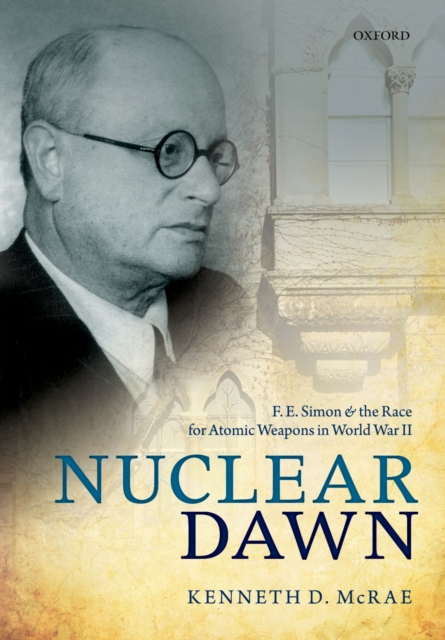
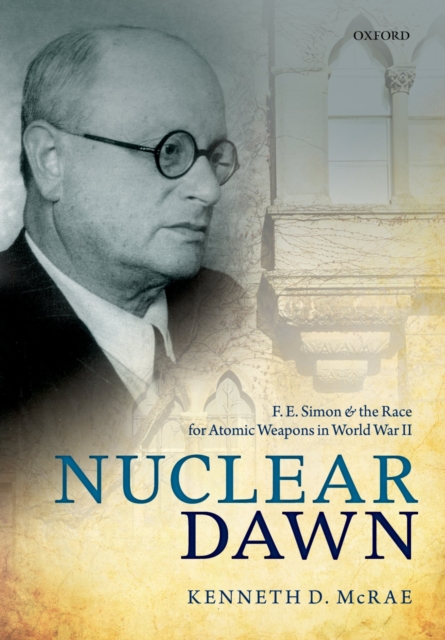
This book provides a rounded biography of Franz (later Sir Francis) Simon, his early life in Germany, his move to Oxford in 1933, and his experimental contributions to low temperature physics approximating absolute zero.
This book provides a rounded biography of Franz (later Sir Francis) Simon, his early life in Germany, his move to Oxford in 1933, and his experimental contributions to low temperature physics approximating absolute zero.
An intellectual who did not like intellectuals, a socialist who did not trust the state, a writer of the left who found it easier to forgive writers of the right, a liberal who was against free markets, a Protestant who believed in religion but not in God, a fierce opponent of nationalism who defined Englishness for a generation.
An intellectual who did not like intellectuals, a socialist who did not trust the state, a writer of the left who found it easier to forgive writers of the right, a liberal who was against free markets, a Protestant who believed in religion but not in God, a fierce opponent of nationalism who defined Englishness for a generation.
The East-West struggle for supremacy from 1945 to 1989 shaped the lives of hundreds of millions and brought the world to the brink of disaster on several occasions.
From the early 1990s, allegations that servicemen had been duped into taking part in trials with toxic agents at top-secret Allied research facilities throughout the twentieth century featured with ever greater frequency in the media.
From the early 1990s, allegations that servicemen had been duped into taking part in trials with toxic agents at top-secret Allied research facilities throughout the twentieth century featured with ever greater frequency in the media.
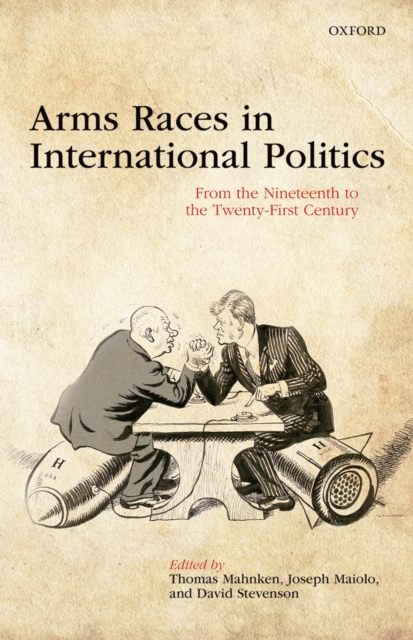
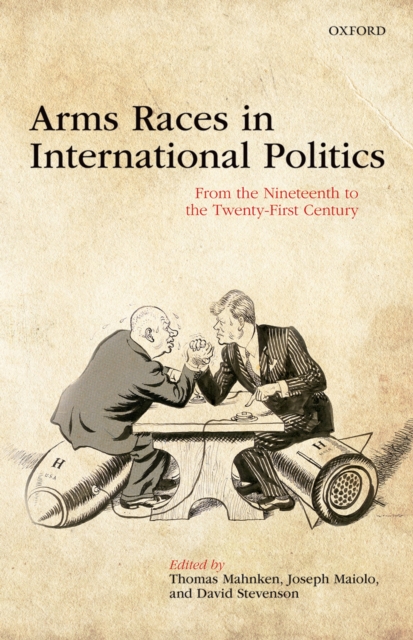
This volume provides the first comprehensive history of the arms racing phenomenon in modern international politics, drawing both on theoretical approaches and on the latest historical research.
This volume provides the first comprehensive history of the arms racing phenomenon in modern international politics, drawing both on theoretical approaches and on the latest historical research.
Drawing on material from eighty archives in six different countries worldwide, as well as eyewitness testimonies from over 100 former pupils, Helen Roche presents the first comprehensive history of the Third Reich's most prominent elite schools, the National Political Education Institutes (Napolas / NPEA).