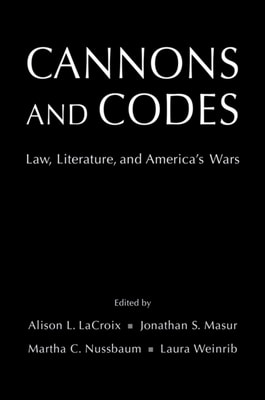
It can be said that western literature begins with a war story, the Iliad; and that this is true too of many non-Western literary traditions, such as the Mahabharata.
A collection of twelve essays by John Perry and two essays he co-authored, this book deals with various problems related to "e;self-locating beliefs"e;: the sorts of beliefs one expresses with indexicals and demonstratives, like "e;I"e; and "e;this.
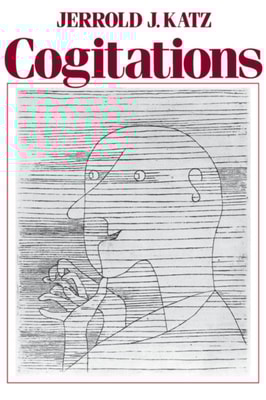
The cogito ergo sum of Descartes is one of the best-known (and simplest) of all philosophical formulations, but ever since it was first propounded it has defied any formal accounting of its validity.
The central question in this book is why it seems reasonable for the words of our language to divide up the world in ordinary ways rather than other imaginable ways.
This pathbreaking study integrates the histories of rhetoric, literacy, and literary aesthetics up to the time of Augustine, focusing on Western concepts of rhetoric as dissembling and of language as deceptive that Swearingen argues have received curiously prominent emphasis in Western aesthetics and language theory.
As a field of inquiry, interlanguage pragmatics reflects the growing interest in recent years in understanding the social and pragmatic aspects of second language acquisition.
"e;Language ideologies"e; are cultural representations, whether explicit or implicit, of the intersection of language and human beings in a social world.
A distinction is made in formal semantics between "e;stage-level predicates,"e; predicates that describe the general state of a noun, and "e;individual-level predicates,"e; predicates that specify the specific properties of a noun.
The media frenzy surrounding the 1996 resolution by the Oakland School Board brought public attention to the term "e;Ebonics"e;, however the idea remains a mystery to most.
In recent years the idea that an adequate semantics of ordinary language calls for some theory of events has sparked considerable debate among linguists and philosophers.
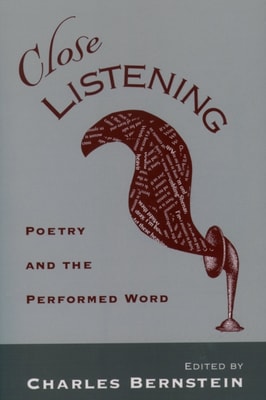
Close Listening brings together seventeen strikingly original essays, especially written for this volume, on the poetry reading, the sound of poetry, and the visual performance of poetry.
This fresh look at the philosophy of language focuses on the interface between a theory of literal meaning and pragmatics--a philosophical examination of the relationship between meaning and language use and its contexts.
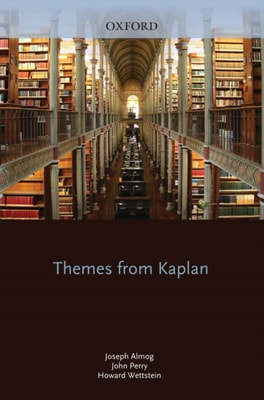
This anthology of essays on the work of David Kaplan, a leading contemporary philosopher of language, sprang from a conference, "e;Themes from Kaplan,"e; organized by the Center for the Study of Language and Information at Stanford University.
This book develops a unified account of expressions involving the notions of "e;part"e; and "e;whole "e; in which principles of the individuation of part structures play a central role.
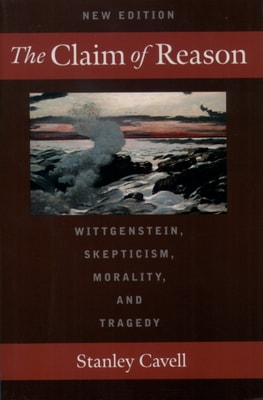
This handsome new edition of Stanley Cavell's landmark text, first published 20 years ago, provides a new preface that discusses the reception and influence of his work, which occupies a unique niche between philosophy and literary studies.
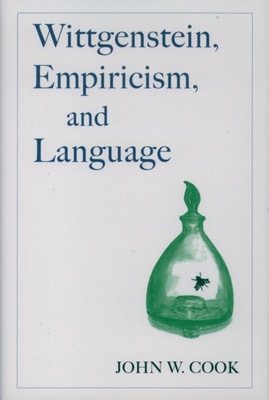
This provocative study exposes the ways in which Wittgenstein's philosophical views have been misunderstood, including the failure to recognize the reductionist character of Wittgenstein's work.
Sense, Reference, and Philosophy develops the far-reaching consequences for philosophy of adopting non-Fregean intensionalism, showing that long-standing problems in the philosophy of language, and indeed other areas, that appeared intractable can now be solved.
In The Open Future: Why Future Contingents are all False, Patrick Todd launches a sustained defense of a radical interpretation of the doctrine of the open future.
In The Open Future: Why Future Contingents are all False, Patrick Todd launches a sustained defense of a radical interpretation of the doctrine of the open future.
Essays on Existence and Essence presents a series of writings--including several previously unpublished--by Bob Hale on the topics of ontology and modality.
Essays on Existence and Essence presents a series of writings--including several previously unpublished--by Bob Hale on the topics of ontology and modality.
Fictional Discourse: A Radical Fictionalist Semantics combines the insight of linguistic and philosophical semantics with the study of fictional language.
Fictional Discourse: A Radical Fictionalist Semantics combines the insight of linguistic and philosophical semantics with the study of fictional language.