John Hawthorne and David Manley present an original treatment of the semantic phenomenon of reference and the cognitive phenomenon of singular thought.
A User's Guide to Thought and Meaning presents a profound and arresting integration of the faculties of the mind - of how we think, speak, and see the world.
It's an obvious enough observation that the standards that govern whether ordinary speakers will say that someone knows something vary with context: What we are happy to call "e;knowledge"e; in some ("e;low-standards"e;) contexts we'll deny is "e;knowledge"e; in other ("e;high-standards"e;) contexts.
To clarify and facilitate our inquiries we need to define a disquotational truth predicate that we are directly licensed to apply not only to our own sentences as we use them now, but also to other speakers' sentences and our own sentences as we used them in the past.
A User's Guide to Thought and Meaning presents a profound and arresting integration of the faculties of the mind - of how we think, speak, and see the world.
At least since Locke, philosophers and psychologists have usually held that concepts arise out of sensory perceptions, thoughts are built from concepts, and language enables speakers to convey their thoughts to hearers.
Since the middle of the 20th century Ludwig Wittgenstein has been an exceptionally influential and controversial figure wherever philosophy is studied.
One of the most important philosophers of recent times, Elizabeth Anscombe wrote books and articles on a wide range of topics, including the ground-breaking monograph Intention.
Jerry Fodor presents a new development of his famous Language of Thought hypothesis, which has since the 1970s been at the centre of interdisciplinary debate about how the mind works.
Expressivism - the sophisticated contemporary incarnation of the noncognitivist research program of Ayer, Stevenson, and Hare - is no longer the province of metaethicists alone.
Philosophers on Music: Experience, Meaning, and Work presents significant new contributions to central issues in the philosophy of music, written by leading philosophers working in the analytic tradition.
Artworld Metaphysics turns a critical eye upon aspects of the artworld, and articulates some of the problems, principles, and norms implicit in the actual practices of artistic creation, interpretation, evaluation, and commodification.
In Truly Understood, Christopher Peacocke argues that truth and reference have a much deeper role in the explanation of meaning and understanding than has hitherto been appreciated.
This book offers a systematic account of syntactic categories - the building blocks of sentences and the units of grammatical analysis - and explains their place in different theories of language.
Among the various conceptions of truth is one according to which 'is true' is a transparent, entirely see-through device introduced for only practical (expressive) reasons.
This volume explores the expression of the concepts count and mass in human language and probes the complex relation between seemingly incontrovertible aspects of meaning and their varied grammatical realizations across languages.
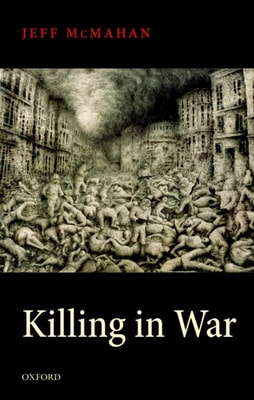
Killing a person is in general among the most seriously wrongful forms of action, yet most of us accept that it can be permissible to kill people on a large scale in war.
Kathrin Koslicki offers an analysis of ordinary materials objects, those material objects to which we take ourselves to be committed in ordinary, scientifically informed discourse.
Internalism in philosophy of mind is the thesis that all conditions that constitute a person's current thoughts and sensations, with their characteristic contents, are internal to that person's skin and contemporaneous.
This volume presents a series of essays published by Charles Kahn over a period of forty years, in which he seeks to explicate the ancient Greek concept of Being.
In 1945 Alonzo Church issued a pair of referee reports in which he anonymously conveyed to Frederic Fitch a surprising proof showing that wherever there is (empirical) ignorance there is also logically unknowable truth.
Ludwig Wittgenstein (1889-1951) was an extraordinarily original philospher, whose influence on twentieth-century thinking goes well beyond philosophy itself.