Language Acquisition in CLIL and Non-CLIL Settings builds a bridge between Second Language Acquisition and Learner Corpus Research (LCR) methodologies to take the evaluation of Content and Language Integrated Learning (CLIL) to a new level.
This volume presents a range of studies testing some of the latest models and hypotheses in the field of second/third language acquisition, such as the Bottleneck Hypothesis (Slabakova, 2008, 2016), the Scalpel Model (Slabakova, 2017), and the Interface Hypothesis (Sorace & Serratrice, 2009) to name a few.
This volume presents eleven papers on the acquisition of Romance, most of them presented at the Romance Turn VIII, held in Bellaterra, Catalonia, Spain, in September 2016.
This monograph examines the first syntactic unit in child language by presenting a longitudinal multiple-case study that focuses on the inner structure of nominal expressions in bilingual or monolingual child Spanish.
Teachability and Learnability across Languages addresses key issues in second, foreign and heritage language acquisition, as well as in language teaching.
English Pronunciation Instruction: Research-based insights presents recent research on L2 English pronunciation including pedagogical implications and applications, and seeks to bridge the gulf between pronunciation research and teaching practice.
This volume includes fourteen papers on the acquisition of Romance languages, eleven of which were presented at the Romance Turn 9, held in Bucharest in September 2018.
This book offers the first systematic study of the early phases in the acquisition of derivational morphology from a cross-linguistic and typological perspective.
This book provides a comprehensive, research-based account of how people learn a second/foreign language and shows how classroom practice can be organised around research-based principles.
Inspired by Murray Munro and Tracey Derwing's 1995 seminal study of intelligibility, comprehensibility, and accentedness, this book revisits the insights of their original research and presents subsequent studies extending this work to new ways of understanding second language speech.
This volume brings together empirical studies and keynote addresses presented at the 15th Generative Approaches to Second Language Acquisition conference hosted by the University of Nevada, Reno in 2019.
Written for novice and established scholars alike, Instructed Second Language Acquisition Research Methods is a stand-alone research methods guide from an Instructed Second Language Acquisition (ISLA) lens.
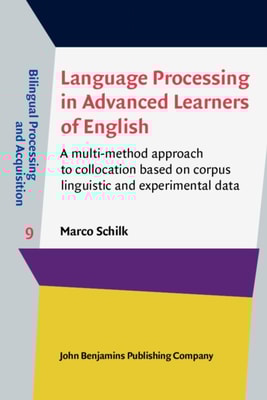
The production and processing of collocations and formulaic language is a field of growing interest in corpus linguistics and experimental psycholinguistics.
Differential Object marking (DOM), a linguistic phenomenon in which a direct object is morphologically marked for semantic and pragmatic reasons, has attracted the attention of several subfields of linguistics in the past few years.
In recent years the field has seen an increasing realisation that the full complexity of language acquisition demands theories that (a) explain how children integrate information from multiple sources in the environment, (b) build linguistic representations at a number of different levels, and (c) learn how to combine these representations in order to communicate effectively.
The expression of temporal relations, notably through tense and aspect, is central in all processes of communication, but commonly perceived and described as a major hurdle for non-native speakers.
The current volume aspires to add to previous research on the connection between writing and language learning from a dual perspective: It seeks to reflect current progress in the domain as well as to foster future developments in theory and research.
This book analyzes the construct of advanced proficiency in second language learning by bringing together empirical research from numerous linguistic domains and methodological traditions.
Estimating native-speaker vocabulary size is important for guiding interventions to support native-speaker vocabulary growth and for setting goals for learners of English as a foreign language.
This book describes the repertoire and uses of referring expressions by French-speaking children and their interlocutors in naturally occurring dialogues at home and at school, in a wide range of communicative situations and activities.
This edited volume contains a representative sample of papers presented at the 7th meeting of the Generative Approaches to Language Acquisition - North America (GALANA-7) conference.
Syntactic priming is a naturally-occurring psycholinguistic phenomenon that has been used as an experimental manipulation to great effect: over the last 20 years, syntactic priming research with children of different backgrounds has added to our understanding of the mechanisms and stages of syntactic development and priming.
How does knowledge of a first or second language develop, and how is that knowledge used in real time comprehension and production of one or two languages?
Comprender la capacidad del lenguaje y cómo funcionan la(s) lengua(s) que nuestros alumnos hablan es el objetivo último de las clases de Lengua en Secundaria.
Este libro está dirigido a cualquier estudiante, investigador o lector interesado en la perspectiva generativista del lenguaje, desde quien simplemente quiere ponerse al día con las últimas propuestas de Chomsky hasta quien se sienta intrigado por la implementación de un programa minimista en la teoría lingüística.
This fourth edition of the best-selling Theories in Second Language Acquisition surveys the major theories and frameworks currently used in second language acquisition (SLA) research, serving as an ideal introductory text for graduate students in SLA and language teaching.
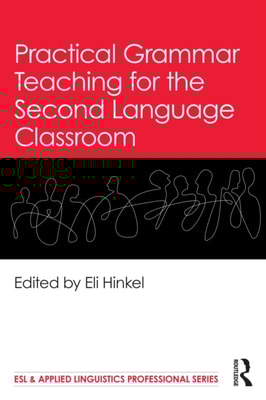
Practical Grammar Teaching for the Second Language Classroom provides a well-rounded foundation for teaching second language (L2) grammar for pre-service, novice, and practicing teachers, as well as for teacher educators who seek to develop their professional knowledge and skills.