Prophetic sayings are generally a reaction to immediate realities, and therefore attempts to understand prophetic literature without the benefit of the prophet's historical milieu are limited or inaccurate.
This study not only carefully investigates the Jewish tradition of water and Spirit as the normative background of John 4, but also develops temple Christology by connecting these distinct traditions of water and the Spirit as eschatological life for John's use of Spirit as the source of new creational life.
Brian Abasciano continues his project examining the use of the Old Testament in Romans 9, building upon his previous two volumes and their intertextual methodology.
Scholarly studies consider Paul's views on leadership tend to fall into one of three camps: 1) the historical development view, which in large measure identifies developments in church practice with developments in Pauline and deutero-Pauline ecclesiology; 2) the synchronic, historical reconstruction, typically making use of Graeco-Roman, social context sources, or social-scientific modelling, focusing on a single congregation, and sometimes distinguishing between the situation to which Paul was responding and the pattern he sought to impose; and 3) the theological/hermeneutical analysis, identifying Paul's particular approach to power and authority, often independently of any detailed reconstruction of the situations to which Paul was responding.
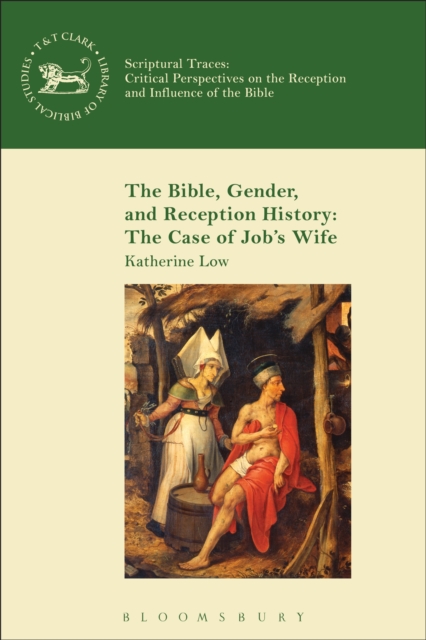
The Bible, Gender, and Reception History: The Case of Job's Wife investigates the fleeting appearance in the Bible of Job's wife and its impact on the imaginations of readers throughout history.
This accessible guide to the Gospel and Letters of John introduces readers to key issues arising from historical, literary, and theological approaches to the Johannine literature, also discussing the methodological rationale underlying each of these approaches.
This work studies the literary and socio-discursive contexts of 'the Ananias and Sapphira episode' in Acts as a narrative illustrating the negative-ethos of community goods.
New Testament theology raises many questions, not only within its own boundaries, but also in relation to other fields such as history, literary criticism, sociology, psychology, history, politics, philosophy, and religious studies.
In recent years, Old Testament scholars have come to see that the aesthetic and rhetorical richness of Hebrew poetry goes far beyond simple synonymous, antithetic, and synthetic parallelism.
This work identifies two distinct methodological approaches in Jesus studies, as represented by the work of two prominent historical Jesus scholars, Dominic Crossan and Ben Meyer.
This volume had its origins in a session presented to the Society of Biblical Literature in Washington in 2006 in order to examine the legacy of Peter Ackroyd to the field of biblical studies.
Paul as Missionary: Identity, Activity, Theology and Practice takes the view that before anything else Paul must first and foremost be identified as a missionary.
Through exegetical studies of 1 Corinthians and Galatians, John Lewis shows how Paul synthesises theology and ethics - which interpreters frequently separate - as integrated aspects of Christian thinking and living.
Decisive Meals discusses various aspects of meal traditions and their relevance in terms of boundaries between different groups in the context of first century Judaism and the early Christ-movement.
Paul and Ancient Views of Sexual Desire refutes the argument put forward by some scholars that Paul, in his sexual ethics, is in partial agreement with a current of thought in the Greco-Roman world that condemns sexual desire and advocates the elimination of such desire from marital sex.
In this book Sigurd Grindheim argues that Jesus implicitly claimed to be God's equal and that his claim to be God's son must be understood in this light.
Douglas Campbell gives a clear account of why much current description of Paul's theology, and of his gospel and of his theory of salvation, is so confused.
This work studies the word order of the Gospel of Luke and some of its prominent messages with consideration of systemic functional linguistic theories.
This book identifies the source of the Colossian error as from within Jewish mystical movements and shows how both the theology and practice which is taught in the epistle is to be understood from this context.
This volume discusses conceptual elements of messianic traditions that are identified in the Parables of Enoch and the Letters of Paul by examining the nature and functions of the divine figure and of the messiah figure.
Stefanos Mihalios examines the uses of the 'hour' in the writings of John and demonstrates the contribution of Danielic eschatology to John's understanding of this concept.
These essays explore new methods and overlooked traditions that appear to shed light on how the founders of the Christian movement understood the older sacred tradition and sought new and creative ways to let it speak to their own times.
The passing of Professor Graham Stanton, former Lady Margaret chair of divinity at Cambridge University, in 2009 marked the passing of an era in Matthean scholarship and studies of early Christianity.
This study attempts to analyse the text of Hebrews with a method of discourse analysis primarily based on a form of systemic functional linguistics developed for Hellenistic Greek, but it is also informed by other linguistic studies.