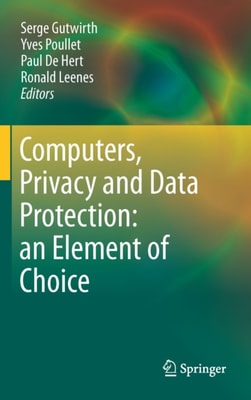
More and more transactions, whether in business or related to leisure activities, are mediated automatically by computers and computer networks, and this trend is having a significant impact on the conception and design of new computer applications.
This book explains strategies, techniques, legal issues and the relationships between digital resistance activities, information warfare actions, liberation technology and human rights.
The metaphor of the monster or predator-usually a sexual predator, drug dealer in areas frequented by children, or psychopathic murderer-is a powerful framing device in public discourse about how the criminal justice system should respond to serious violent crimes.
Determining the earliest point in time at which international law authorises a state to exercise its inherent right of self-defence is an issue which has been debated, but unsatisfactorily reasoned, by scholars and states since the 1960's.
Human rights have transformed the way in which we conceive the place of the individual within the community and in relation to the state in a vast array of disciplines, including law, philosophy, politics, sociology, geography.
This book offers its readers an overview of recent developments in the theory of legal argumentation written by representatives from various disciplines, including argumentation theory, philosophy of law, logic and artificial intelligence.
This collection of essays is the outcome of a workshop with Scott Shapiro on The Planning Theory of Law that took place in December 2009 at Bocconi University.
The book investigates the role of law and legal experts in the organisational dynamics of a population, demonstrating that law is a stable practice among those who (in virtue of the special knowledge they master) are called upon to select the 'normative facts' of a population, i.
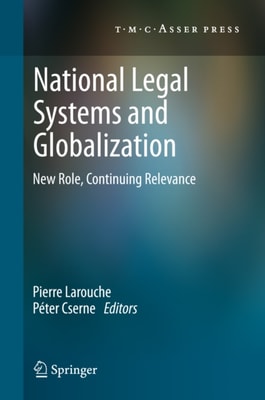
Globalisation turns out to be untenable because it does not guarantee minimum social equity, peace and respect for the environment, and therefore does not guarantee the effective accomplishment of human rights.
Although Europe has a significant legal data protection framework, built up around EU Directive 95/46/EC and the Charter of Fundamental Rights, the question of whether data protection and its legal framework are 'in good health' is increasingly being posed.
The terrorist attacks occurred in the United States on 11 September 2001 have profoundly altered and reshaped the priorities of criminal justice systems around the world.
This title presents twenty-nine topics, prepared by leading scholars in more than 20 countries, providing a comparative analysis of cutting-edge legal topics of the 21st century.
A collaboration of leading historians of European law and philosophers of law and politics identifying and explaining the practice of interpretation of law in the 18th century.
Enabling information interoperability, fostering legal knowledge usability and reuse, enhancing legal information search, in short, formalizing the complexity of legal knowledge to enhance legal knowledge management are challenging tasks, for which different solutions and lines of research have been proposed.
At the same time that the pace of science and technology has greatly accelerated in recent decades, our legal and ethical oversight mechanisms have become bogged down and slower.
This book offers educational experiences, including reflections and the resulting essays, from the Roberta Kevelson Seminar on Law and Semiotics held during 2008 - 2011 at Penn State University's Dickinson School of Law.
Fifty years after the famous essay "e;The Problem of Social Cost"e; (1960) by the Nobel laureate Ronald Coase, Law and Economics seems to have become the lingua franca of American jurisprudence, and although its influence on European jurisprudence is only moderate by comparison, it has also gained popularity in Europe.
It is well over a decade since John Fischer and Mark Ravizza - and before them, Jay Wallace and Daniel Dennett - defended responsibility from the threat of determinism.
At the heart of this book, a question: what to make of the creeping competences of the EU and of the role the European Court of Justice plays in this respect?
This timely interdisciplinary work on current developments in ICT and privacy/data protection, coincides as it does with the rethinking of the Data Protection Directive, the contentious debates on data sharing with the USA (SWIFT, PNR) and the judicial and political resistance against data retention.
The book provides the reader with a unique source regarding the current theoretical landscape in legal ontology engineering as well as on foreseeable future trends for the definition of conceptual structures to enhance the automatic processing and retrieval of legal information in the Semantic Web framework.
This book presents the results of research project financed by the Hague Institute for the Internationalization of Law (HiiL) and carried out at the Tilburg Law and Economics Center (TILEC) of Tilburg University.