This volume offers a unique reflection on the historic and contemporary influence of the New Approaches to International Law (NAIL) movement within the context of Europe and America.
Degradation, dehumanization, instrumentalization, humiliation, and nonrecognition - these concepts point to ways in which we understand human beings to be violated in their dignity.
How should liberal democratic governments respond to citizens as religious believers whose values, norms and practices might lie outside the cultural mainstream?
The concept of religious freedom is the favoured modern human rights concept, with which the modern world hopes to tackle the phenomenon of religious pluralism, as our modern existence in an electronically shrinking globe comes to be increasingly characterised by this phenomenon.
Volume 11, the sixth of the historical volumes of A Treatise of Legal Philosophy and General Jurisprudence, offers a fresh, philosophically engaged, critical interpretation of the main currents of jurisprudential thought in the English-speaking world of the 20th century.
One of the most challenging issues facing our current information society is the accelerating accumulation of data trails in transactional and communication systems, which may be used not only to profile the behaviour of individuals for commercial, marketing and law enforcement purposes, but also to locate and follow things and actions.
This comprehensive presentation of Axel Hagerstrom (1868-1939) fills a void in nearly a century of literature, providing both the legal and political scholar and the non-expert reader with a proper introduction to the father of Scandinavian realism.
Substate nationalism, especially in the past fifteen years, has noticeably affected the political and territorial stability of many countries, both democratic and democratizing.
This volume functions as a guide to the multidisciplinary nature of Forensic Linguistics understood in its broadest sense as the interface between language and the law.
The concept of human dignity is already embedded in the constitutional architecture of the European Union and throughout the world, but it remains a slippery and elusive concept.
Luigi Ferrajoli es sin duda el teórico del derecho que, después de Hans Kelsen y de Norberto Bobbio, mayores energías intelectuales ha dedicado a la reflexión filosófica sobre la democracia.
Las imágenes de la Justicia, estatuas, pinturas, grabados, dibujos constituyen un patrimonio importante en la historia del arte y ofrecen abundante información sobre las diferentes concepciones de la Justicia.
En este breve ensayo se analizan cinco cuestiones fundamentales para la comprensión de este elemento del tipo subjetivo: (a) la dimensión teórica del dolo eventual en la que se analizan los tres bloques teóricos más importantes: teorías volitivas, teorías cognitivas y teorías normativas; (b) el diagnóstico de la situación sobre la consistencia teórica del dolo eventual, lo que implica la valoración de las distintas teorías, tanto en sus fortalezas como en sus debilidades; (c) la caracterización de los elementos estructurales que intervienen en el dolo eventual.
"Este enriquecedor aporte jurídico literario nos ofrece una rica investigación conducente a profundizar el desiderátum propuesto: cuáles son los matices de los derechos convencionales, constitucionales y fundamentales.
La presente obra ha procurado ser fruto de una reflexión y análisis filosóficos de carácter ético, político y jurídico, en torno a dos nociones:"lo justo" y "el don".
"El libro de autoría del ilustre jurista Jorge Isaac Torres Manrique presenta aportes al Derecho, especialmente en lo que se refiere a los derechos fundamentales y la perspectiva interdisciplinar, permitiendo nuevos aspectos al ordenamiento jurídico actual.
La presente monografía conmemora el cuarenta aniversario de JUSTICIA, la revista de derecho procesal más antigua que se edita en España, en la que se han publicado 1.
El filósofo y jurista americano Ronald Dworkin (1931-2013) presenta en este libro, una de las obras cumbre de la teoría del derecho actual, la articulación más acabada de su pensamiento jurídico.
Gorgias - Plato - Plato is a Classical Greek philosopher, mathematician, student of Socrates, writer of philosophical dialogues, and founder of the Academy in Athens, the first institution of higher learning in the Western world.
A pesar de que el concepto de dignidad humana sea probablemente el más básico del Derecho del Estado constitucional, los juristas no se han preocupado, hasta hace muy poco, por aclarar esa noción; en muy buena medida, eso se debe al predominio —en la teoría y en la práctica del Derecho—, también hasta fechas muy recientes, del paradigma iuspositivista, con su tesis de la separación conceptual (radical) entre el Derecho y la moral.
Esta obra está compuesta por once trabajos escritos por filósofos y juristas-filósofos de diversas universidades y países, cada uno de ellos dedicado a una rama de la filosofía o a un aspecto de la relación entre la filosofía y el Derecho.
«La obra imponente de Luigi Ferrajoli —tras más de medio siglo de producción teórica y de un esfuerzo titánico, generoso y cristalino, volcado en la teorización y la lucha por el mejor derecho y por los derechos de todos— expresa la convergencia de tres vectores, tres almas que no suelen presentarse juntas, y menos con tan buenos resultados.
Impolítica e irrepresentable: así define este ensayo la sociedad del presente con la vista puesta en varios procesos complementarios que han discurrido durante las últimas décadas.
Un enfoque integral de la obra de un autor controvertido y original se beneficia enormemente de la comprensión de los contextos teóricos y sociales donde surgió.
Derecho e Historia indisolublemente unidas en esta obra El Derecho Natural y el Reinado de Edipo Rey; dos Ciencias que tienen en común mucho más de lo que parece, son dinámicas, para nada estáticas, en continuo cambio con continuas aportaciones que nos hacen pensar que ambas son, un continuo volver a empezar; cuyos objetivos principales son el conocimiento y la mejora del ser humano en sociedad.
La historia juridica que presenta este libro comienza en la Alta Edad Media describiendo las condiciones del renacimiento de la ciencia juridica europea en tiempos de Glosadores, cuando se comienza a aplicar la critica exegetica al corpus iuris justinianeo siguiendo un hilo intelectual que se prolonga desde tiempos medievales hasta nuestros dias.
El presente volumen reúne cuatro ensayos publicados en sedes dispersas a las que une un mismo hilo conductor: la aproximación, siquiera desde un ángulo concreto, a la recepción del derecho romano y su tradición jurídica y cultural en cuatro pensadores muy distintos pero profundamente significativos del espíritu europeo de su tiempo, que podrían agruparse por su procedencia cultural (dos meridionales, Vico y Ortega, y dos germánicos, Kant y Savigny), pero también por el uso y en el fondo la proximidad a la cultura jurídica romanística de su tiempo: dos que tejieron su obra desde dentro de ella (Vico y Savigny) y dos que lo hicieron desde fuera: un afuera cercano (Kant y Ortega).
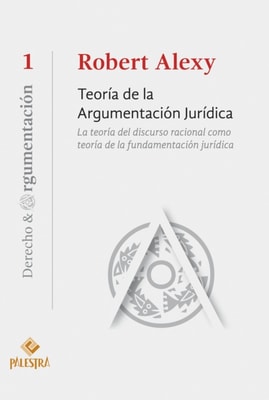
"La Teoría de la argumentación jurídica" de Robert Alexy, publicada por primera vez en 1978 y traducida luego a varios idiomas, es, sin duda, una de las obras más influyentes en la cultura jurídica de las últimas décadas.
El objetivo de este libro es explicar que los aplicadores del derecho, al crear una excepción implícita a una norma, están realizando una reinterpretación restrictiva de una disposición normativa.