One of today's leading astronomers takes readers inside the decades-long search for the first galaxies and the origin of starlightAstronomers are like time travelers, scanning the night sky for the outermost galaxies that first came into being when our universe was a mere fraction of its present age.
How the concept of ';deep time' began as a metaphor used by philosophers, poets, and naturalists in the eighteenth and nineteenth centuriesIn this interdisciplinary book, Noah Heringman argues that the concept of ';deep time'most often associated with geological epochsbegan as a metaphorical language used by philosophers, poets, and naturalists of the eighteenth and nineteenth centuries to explore the origins of life beyond the written record.
From the Nobel Prizewinning physicist, a personal meditation on the quest for objective reality in natural scienceA century ago, thoughtful people questioned how reality could agree with physical theories that kept changing, from a mechanical model of the ether to electric and magnetic fields, and from homogeneous matter to electrons and atoms.
In a lively investigation into the boundaries between popular culture and early-modern science, Sara Schechner presents a case study that challenges the view that rationalism was at odds with popular belief in the development of scientific theories.
Astronomers believe that a supernova is a massive explosion signaling the death of a star, causing a cosmic recycling of the chemical elements and leaving behind a pulsar, black hole, or nothing at all.
A pocket-style edition based on the New York Times bestsellerA Brief Welcome to the Universe offers a breathtaking tour of the cosmos, from planets, stars, and galaxies to black holes and time loops.
The cutting-edge science that is taking the measure of the universeThe Little Book of Cosmology provides a breathtaking look at our universe on the grandest scales imaginable.
A Physics Today Best Book of the YearThe first biography of a pioneering scientist who made significant contributions to our understanding of dark matter and championed the advancement of women in science.
The opening of the Parkes radio telescope in October 1961 placed Australia at the forefront of international research in radio astronomy and ushered in an era of rapid developments in our understanding of the origin and nature of the Universe and our place within it.
This book describes the evolution and development of the Division's research throughout the years and the ways in which scientists responded to the needs of the community.
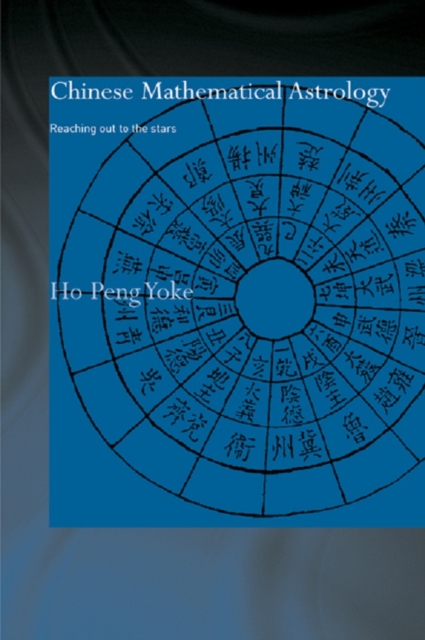
Many books today simply widen the field of astrology by promoting newly created techniques or championing older historical methods for investigating every possible nook and cranny of a horoscope.
Intelligent information Retrieval comprehensively surveys scientific information retrieval, which is characterized by growing convergence of information expressed in varying complementary forms of data - textual, numerical, image, and graphics; by the fundamental transformation which the scientific library is currently being subjected to; and by computer networking which as become an essential element of the research fabric.
From the Nobel Prizewinning physicist, a personal meditation on the quest for objective reality in natural scienceA century ago, thoughtful people questioned how reality could agree with physical theories that kept changing, from a mechanical model of the ether to electric and magnetic fields, and from homogeneous matter to electrons and atoms.
Stephen Hawking described it as 'the discovery of the century, if not of all time', yet the scientists who first detected the cosmic radiation that was identified as the afterglow of the big bang had to admit that it was more by accident than intention.
How all philosophical explanations of human consciousness and the fundamental structure of the cosmos are bizarreand why that's a good thingDo we live inside a simulated reality or a pocket universe embedded in a larger structure about which we know virtually nothing?
Big History is a new field on a grand scale: it tells the story of the universe over time through a diverse range of disciplines that spans cosmology, physics, chemistry, astronomy, geology, evolutionary biology, anthropology, and archaeology, thereby reconciling traditional human history with environmental geography and natural history.
In 1633, at the end of one of the most famous trials in history, the Inquisition condemned Galileo for contending that the Earth moves and that the Bible is not a scientific authority.
Unified treatment of physical principles of planetary climates for advanced students and researchers in atmospheric science, Earth and planetary science.