With one volume each year, this series keeps scientists and advanced students informed of the latest developments and results in all areas of the plant sciences.
This book discusses central concepts and theories in cell biology from the ancient past to the 21st century, based on the premise that understanding the works of scientists like Hooke, Hofmeister, Caspary, Strasburger, Sachs, Schleiden, Schwann, Mendel, Nemec, McClintock, etc.
This book provides the latest information about hairy root culture and its several applications, with special emphasis on potential of hairy roots for the production of bioactive compounds.
There are currently intense efforts devoted to understand plant respiration (from genes toecosystems) and its regulatory mechanisms; this is because respiratory CO2 productionrepresents a substantial carbon loss in crops and in natural ecosystems.
This book provides in-depth information on Caatinga's geographical boundaries and ecological systems, including plants, insects, fishes, amphibians, reptiles, birds, and mammals.
This volume gathers case studies on plant diversity from selected, representative mountain systems of Italy (Mediterranean and temperate zones), while also addressing the biodiversity of avian fauna.
This book highlights classification patterns and underlying ecological drivers structuring the vegetation of selected indigenous subtropical forests in South Africa.
Glutathione (y-glutamyl-cysteinyl-glycine) is a ubiquitously distributed sulfurcontaining antioxidant molecule that plays key roles in the regulation of plant growth, development, and abiotic and biotic stress tolerance.
This book describes important anatomical adaptations in halophytes, based on a large review of relevant literature (since the 17th century) and recent research findings.
This book presents up-to-date information on foxtail millet genomics, with a particular focus on its agronomic importance, genome architecture, marker development, evolutionary and diversity studies, comparative genomics and stress biology.
The book covers the latest development in the biosciences field covering key topics in crop improvement including 'omic approaches to improving sustainable crop production, advancement in marker technology, strategies in genetic manipulation, crop quality and sustainability and plant microbe interaction detailing on proven technologies to address critical issue for agricultural sustainability which are beneficial for researchers and students.
Fungi are an essential, fascinating and biotechnologically useful group of organisms with an incredible biotechnological potential for industrial exploitation.
This book sheds new light on the chickpea genome sequencing and resequencing of chickpea germplasm lines and provides insights into classical genetics, cytogenetics, and trait mapping.
This book analyzes the right pathway to solve the controversial identifications of some Trichoderma species on the basis of sampling procedures, slide culture techniques, macroscopic and microscopic analysis, and molecular tools.
The book focuses on the principles and practices of tropical maize improvement with special emphasis on early and extra-early maize to feed the increasing population in Sub-Saharan Africa.
Plant improvement has shifted its focus from yield, quality and disease resistance to factors that will enhance commercial export, such as early maturity, shelf life and better processing quality.
This book presents the current state of the art in peanut genomics, focusing particularly on the latest genomic findings, tools and strategies employed in genome sequencing, transcriptomes and analysis, availability of public and private genomic resources, and ways to maximize the use of this information in peanut breeding programs.
This book provides insights into the genetics and the latest advances in genomics research on the common bean, offering a timely overview of topics that are pertinent for future developments in legume genomics.
This book provides basic information on the botanical diversity in the Czech Republic and relates the patterns in flora and vegetation to environmental factors, biogeographical history and human impact.
Aspects of Brazilian Floristic Diversity: From Botany to Traditional Communities offers a unique approach in floristic diversity of the Neotropical region, specifically encompassing the Brazilian flora.
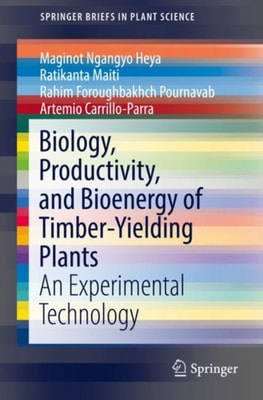
Face to the current global energy crisis, there is an urgent necessity of searching for alternatives to fossil fuels, and this book shows how timber is a promising resource for sustainable energy production.
Dendroecologists apply the principles and methods of tree-ring science to address ecological questions and resolve problems related to global environmental change.
Providing a comprehensive overview of cutting-edge research on Omics applications in plant sciences field,"e;Plant Stress Tolerance"e; focuses on different approaches towards plant stress tolerance including both biotic stresses and abiotic stresses.
This book summarizes the latest information and the status quo of radish genome studies to stimulate innovations and improvements in breeding techniques and to promote further advances in the field.
This volume reviews our current knowledge and novel research areas on Pochonia chlamydosporia, a cosmopolitan fungus occurring in soils as a saprophyte yet capable of colonizing the rhizosphere of crops as an endophyte and behaving as a parasite of eggs of plant-parasitic nematodes.
This book provides exhaustive information on several recent technologies that are employed for sugarcane improvement through biotechnology and will be of great interest to plant scientists, biotechnologists, molecular biologists and breeders who work on sugarcane crop.
This book discusses the controversial and conflicting hypotheses on the origin of angiosperms, which was generally assumed to be restricted to the Cretaceous and later ages.
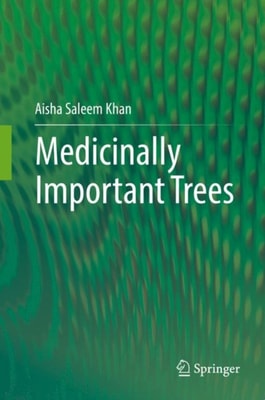
This book provides researchers and advanced students associated with plant and pharmaceutical sciences with comprehensive information on medicinal trees, including their identification, morphological characteristics, traditional and economic uses, along with the latest research on their medicinal compounds.
This proceedings volume contains a selection of invited and contributed papers of the 10th International Workshop on Sulfur Metabolism in Plants, which was held in Goslar, Germany September 1-4, 2015.
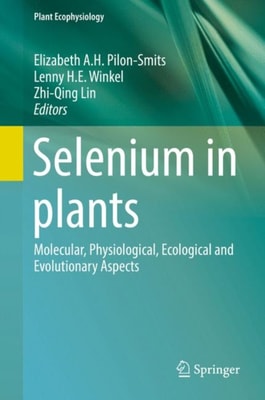
This book covers many facets of plant selenium (Se) accumulation: molecular genetics, biochemistry, physiology, and ecological and evolutionary aspects.