Nature's Machines: An Introduction to Organismal Biomechanics presents the fundamental principles of biomechanics in a concise, accessible way while maintaining necessary rigor.
Behavioral Ecology of Tropical Birds, Second Edition provides the most updated and comprehensive review on the evolution of behavior in tropical landbirds.
Over the last decade considerable progress has been made in white biotechnology research and further major scientific and technological breakthroughs are expected in the future.
From Eve to Evolution provides the first full-length study of American women's responses to evolutionary theory and illuminates the role science played in the nineteenth-century women's rights movement.
Ein neuer Blick auf die Entwicklung der Religionen
In diesem Buch geht es um die Evolution der Religionen, also um die Frage, wie und warum sich Religionen im Laufe ihrer geschichtlichen Entwicklung verändern und welche Gesetzmäßigkeiten diesen Veränderungen zugrunde liegen.
Why Penguins Communicate: The Evolution of Visual and Vocal Signals is a comprehensive and condensed review of several hundred publications on the evolution of penguin behaviors, particularly signaling, linking genetics and ecology via such behavioral adaptations as nuptial displays.
This two-volume edited book highlights and reviews the potential of the fossil record to calibrate the origin and evolution of parasitism, and the techniques to understand the development of parasite-host associations and their relationships with environmental and ecological changes.
Natural resources and associated biological diversity provide the basis of livelihood for human population, particularly in the rural areas and mountain regions across the globe.
In the past few decades, it has been realized through research that fungal siderophores epitomize the uptake of iron as well as other essential elements like zinc, magnesium, copper, nickel and arsenic.
This comprehensive book, rich with applications, offers a quantitative framework for the analysis of the various capture-recapture models for open animal populations, while also addressing associated computational methods.
It is widely acknowledged that life has adapted to its environment, but the precise mechanism remains unknown since Natural Selection, Descent with Modification and Survival of the Fittest are metaphors that cannot be scientifically tested.
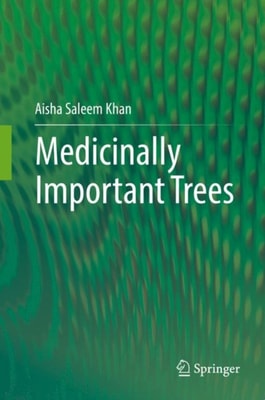
This book provides researchers and advanced students associated with plant and pharmaceutical sciences with comprehensive information on medicinal trees, including their identification, morphological characteristics, traditional and economic uses, along with the latest research on their medicinal compounds.
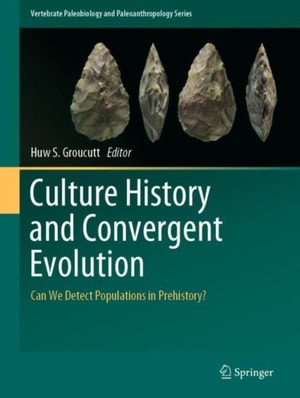
This volume brings together diverse contributions from leading archaeologists and paleoanthropologists, covering various spatial and temporal periods to distinguish convergent evolution from cultural transmission in order to see if we can discover ancient human populations.
An essential introduction to microbiome science, a new cutting-edge discipline that is transforming the life sciencesThis book provides an accessible and authoritative guide to the fundamental principles of microbiome science, an exciting and fast-emerging new discipline that is reshaping many aspects of the life sciences.
How our ability to learn from each other has been the essential ingredient to our remarkable success as a speciesHuman beings are a very different kind of animal.
Myxomycetes: Biology, Systematics, Biogeography, and Ecology is a comprehensive overview of the body of accumulated knowledge that now exists on myxomycetes.
Evolution since Coding: Cradles, Halos, Barrels, and Wings describes genesis of metabolism, transcription, translation, cell structure, eukaryotic complexity, LUCA (the last universal common (cellular) ancestor), the great divergence of archaea and bacteria, LECA (the last eukaryotic common ancestor), extinction, and cancer in very simple ways.
Habitability of the Universe before Earth: Astrobiology: Exploring Life on Earth and Beyond (series) examines the times and places-before life existed on Earth-that might have provided suitable environments for life to occur, addressing the question: Is life on Earth de novo, or derived from previous life?
Why Penguins Communicate: The Evolution of Visual and Vocal Signals is a comprehensive and condensed review of several hundred publications on the evolution of penguin behaviors, particularly signaling, linking genetics and ecology via such behavioral adaptations as nuptial displays.
Examining Ecology: Exercises in Environmental Biology and Conservation explains foundational ecological principles using a hands-on approach that features analyzing data, drawing graphs, and undertaking practical exercises that simulate field work.
Mixed-Species Groups of Animals: Behavior, Community Structure, and Conservation presents a comprehensive discussion on the mixed-species groups of animals, a spectacular and accessible example of the complexity of species interactions.
The Encyclopedia of Marine Mammals, Third Edition covers the ecology, behavior, conservation, evolution, form and function of whales, dolphins, seals, sea lions, manatees, dugongs, otters and polar bears.
This visually appealing book recounts the history of molecular ecology and evolution as seen through the personal lens of one of its most prolific practitioners, who has studied a panorama of creatures ranging from corals, sponges, and other invertebrates to a wide variety of vertebrate animals including numerous birds, mammals, herps, and fishes.
Evolution: Components and Mechanisms introduces the many recent discoveries and insights that have added to the discipline of organic evolution, and combines them with the key topics needed to gain a fundamental understanding of the mechanisms of evolution.
Microbial Nanobionics: Volume 1, State of the Art, discusses a wide range of microbial systems and their utilization in biogenic synthesis of metallic nanoparticles.
On Human Nature: Biology, Psychology, Ethics, Politics, and Religion covers the present state of knowledge on human diversity and its adaptative significance through a broad and eclectic selection of representative chapters.
This work is a large, powerfully illustrated interdisciplinary natural sciences volume, the first of its kind to examine the critically important nature of ecological paradox, through an abundance of lenses: the biological sciences, taxonomy, archaeology, geopolitical history, comparative ethics, literature, philosophy, the history of science, human geography, population ecology, epistemology, anthropology, demographics, and futurism.