Although researchers have long been aware that the species-typical architecture of the human mind is the product of our evolutionary history, it has only been in the last three decades that advances in such fields as evolutionary biology, cognitive psychology, and paleoanthropology have made the fact of our evolution illuminating.
This unique book looks at the biology of aging from a fundamentally new perspective, one based on evolutionary theory rather than traditional concepts which emphasize molecular and cellular processes.
A World From Dust describes how a set of chemical rules combined with the principles of evolution in order to create an environment in which life as we know it could unfold.
A World From Dust describes how a set of chemical rules combined with the principles of evolution in order to create an environment in which life as we know it could unfold.
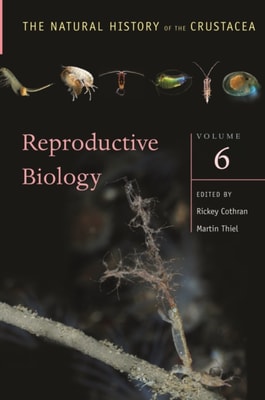
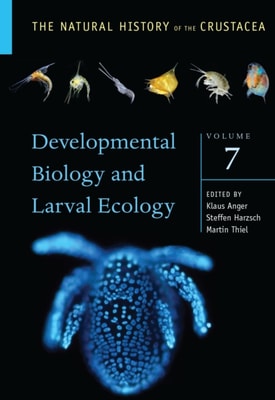
The Crustacea is one of the dominant invertebrate groups, displaying staggering diversity in form and function, and spanning the full spectrum of Earth's environments.
In order to describe the logic of morality, "e;contractualist"e; philosophers have studied how individuals behave when they choose to follow their moral intuitions.
"e;It's a rare author who can combine literary erudition and an easy fluency of style together with expert knowledge of psychology and evolutionary biology.
"e;It's a rare author who can combine literary erudition and an easy fluency of style together with expert knowledge of psychology and evolutionary biology.
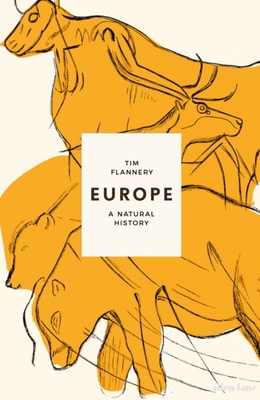
A place of exceptional diversity, rapid change, and high energy, Europe has literally been at the crossroads of the world ever since the interaction of Asia, North America and Africa formed the tropical island archipelago that would become the continent of today.
'Required reading for anyone remotely curious about how they came to be remotely curious' Observer'Enthralling' Spectator What is human consciousness and how is it possible?
Acclaimed as the most influential work on evolution written in the last hundred years, The Blind Watchmaker offers an inspiring and accessible introduction to one of the most important scientific discoveries of all time.
Charles Darwin transformed our understanding of the world with the idea of natural selection, challenging the notion that species are fixed and unchanging.
This biography of Charles Darwin attempts to capture the private unknown life of the real man - the gambling and gluttony at Cambridge, his gruelling trip round the globe, his intimate family life, worries about persecution and thoughts about God.
One of the key works in the nineteenth-century battle between science and Scripture, Charles Lyell's Principles of Geology (1830-33) sought to explain the geological state of the modern Earth by considering the long-term effects of observable natural phenomena.
"e;Not since Darwin has an author so lifted the science of ecology with insight and delightful imagery"e; - Richard Dawkins In this book a master scientist tells the great story of how life on earth evolved.
Published in 1872, The Expression of the Emotions in Man and Animals was a book at the very heart of Darwin's research interests - a central pillar of his 'human' series.
In The Universe Within, Neil Shubin, one of the world's leading experts, reveals to us the extraordinary cosmic and evolutionary adventure of our own bodies.
In this remarkable book Adrian Desmond and James Moore, world authorities on Darwin, give a completely new explanation of how Darwin came to his famous view of evolution, which traced all life to an ancient common ancestor.
With his revolutionary work The Origin of Species Charles Darwin overthrew contemporary beliefs about Divine Providence and the beginnings of life on earth.
How Cold War America came to attribute human evolutionary success to our species' unique capacity for murderAfter World War II, the question of how to define a universal human nature took on new urgency.
'The vessel drove before her bows two billows of liquid phosphorus'A selection of Darwin's extraordinary adventures during the voyage of the Beagle Introducing Little Black Classics: 80 books for Penguin's 80th birthday.
On Human Nature: Biology, Psychology, Ethics, Politics, and Religion covers the present state of knowledge on human diversity and its adaptative significance through a broad and eclectic selection of representative chapters.