This book presents a comprehensive overview of our current understanding of mutualism origin, plant-pollinator specificity, mutualism stability, and reciprocal diversification.
This new book shows the work done by researchers dedicated to the study of different mycorrhizas types, the fungal species associated and their distribution influenced by geographical and environmental factors among the different South American biogeographic regions.
A groundbreaking book that examines all aspects of male aging through an evolutionary lensWhile the health of aging men has been a focus of biomedical research for years, evolutionary biology has not been part of the conversation-until now.
A groundbreaking theory of what makes the human mind uniqueThe Recursive Mind challenges the commonly held notion that language is what makes us uniquely human.
A major synthesis of homology, written by a top researcher in the fieldHomology-a similar trait shared by different species and derived from common ancestry, such as a seal's fin and a bird's wing-is one of the most fundamental yet challenging concepts in evolutionary biology.
Evolutionary Neuroscience is a collection of articles in brain evolution selected from the recent comprehensive reference, Evolution of Nervous Systems (Elsevier, Academic Press, 2007).
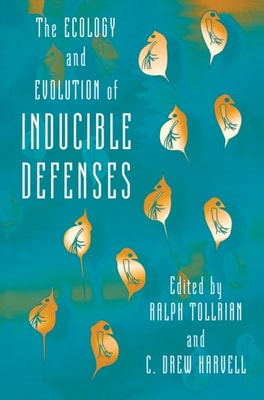
Inducible defenses--those often dramatic phenotypic shifts in prey activated by biological agents ranging from predators to pathogens--are widespread in the natural world.
The fossil record of giant flightless birds extends back to the Late Cretaceous, more than 70 million years ago, but our understanding of these extinct birds is still incomplete.
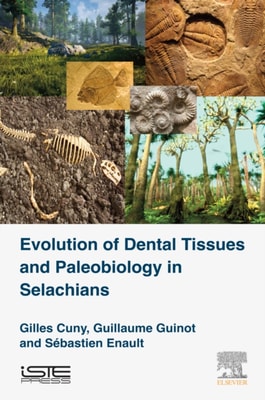
Chondrichthyans possess unique anatomical features compared to other vertebrates, in particular a fully cartilaginous skeleton and a permanently renewed dentition.
Bringing together the latest methodological and scientific progress in the various research areas in the field of Environmental Genomics, this book discusses the characterization of the structure and dynamics of life, the study of the evolution and adaptation of genes and genomes, the analysis of degraded and/or old DNA, and the functional and genomic ecology of populations and communities.
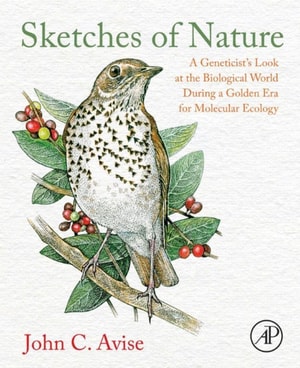
This visually appealing book recounts the history of molecular ecology and evolution as seen through the personal lens of one of its most prolific practitioners, who has studied a panorama of creatures ranging from corals, sponges, and other invertebrates to a wide variety of vertebrate animals including numerous birds, mammals, herps, and fishes.
Computer-Assisted Bacterial Systematics examines the theoretical basis of numerical taxonomy and its impact on microbial classification and identification.
This book should be of value to anyone interested in bird evolution and taxonomy, biogeography, distributional history, dispersal and migration patterns.
The marriage of evolutionary biology with developmental biology has resulted in the formation of a new field, evolutionary developmental biology, or "e;evo-devo.
This book presents an evolutionary theory of the origin and step-by-step development of linguistic structures and cognitive abilities from the early stages of anthropogenesis to the Upper Paleolithic.
This is a tale of human obsession, one intrepid tuna, the dedicated fisherman who caught and set her free, the promises and limits of ocean science and the big truth of how our insatiable appetite for bluefin transformed a cottage industry into a global dilemma.
A major biography of the brilliant naturalist, traveler, humanitarian, and codiscoverer of natural selectionAlfred Russel Wallace (18231913) was perhaps the most famed naturalist of the Victorian age.
In 1929, Charles Upson Clark (1875-1960), a history Professor at Columbia University carrying out bibliographic research on the early history of the Americas in the Vatican Library, came across a remarkable illustrated Latin manuscript entitled Libellus de Medicinalibus Indorum Herbis (Little Book of Indian Medicinal Herbs) completed in 1552.
In the pursuit of technological advancement in the field of biotechnology and pharmaceutical industries to counteract health issues, bacterial infections remain a major cause of morbidity and mortality.
The data of evolutionary biology have changed in a very radical way in recent years, the most significant input to this revolution being the advances made in developmental genetics.
Sperm Competition and Sexual Selection presents the intricate ways in which sperm compete to fertilize eggs and how this has prompted reinterpretations of breeding behavior.
Amniote Origins integrates modern systematic methods with studies of functional and physiological processes, and illustrates how studies of paleobiology can be illuminated by studies of neonatology.
Geometric Morphometrics for Biologists is an introductory textbook for a course on geometric morphometrics, written for graduate students and upper division undergraduates, covering both theory of shape analysis and methods of multivariate analysis.