Darwin's Origin of Species and Dobzhansky's Genetics and the Origin of Species have been the cornerstones of modern evolutionary and population genetic theory for the past hundred years, but in the twenty-first century, biologists will face graver problems of extinction.
John Tyler Bonner makes a new attack on an old problem: the question of how progressive increase in the size and complexity of animals and plants has occurred.
The first ethnographic exploration of the contentious debate over whether nonhuman primates are capable of cultureIn the 1950s, Japanese zoologists took note when a number of macaques invented and passed on new food-washing behaviors within their troop.
Leading ecologists discuss some of the most compelling open questions in the field todayUnsolved Problems in Ecology brings together many of the world's leading ecologists to discuss the most fundamental research questions confronting the field today.
There's no easier, faster, or more practical way to learn the really tough subjectsGenetics Demystified offers an up-to-date, highly readable explanation of the basic principles of genetics, covering key topics such as human genetics, DNA, heredity, mutations, traits, chromosomes, and much more.
The fossil record of giant flightless birds extends back to the Late Cretaceous, more than 70 million years ago, but our understanding of these extinct birds is still incomplete.
Chondrichthyans possess unique anatomical features compared to other vertebrates, in particular a fully cartilaginous skeleton and a permanently renewed dentition.
Bringing together the latest methodological and scientific progress in the various research areas in the field of Environmental Genomics, this book discusses the characterization of the structure and dynamics of life, the study of the evolution and adaptation of genes and genomes, the analysis of degraded and/or old DNA, and the functional and genomic ecology of populations and communities.
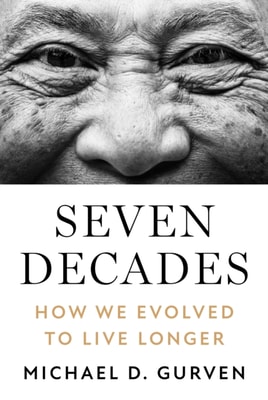
An anthropologist uncovers new evidence for the evolutionary origins of human longevityand explains why growing old is an opportunity, not a burdenOur ability to live for decades may seem like a modern luxury made possible by clean water and advances in medicine.
The book focuses on the evolutionary impact of horizontal gene transfer processes on pathogenicity, environmental adaptation and biological speciation.
From one of the world's leading authorities on animal behavior, the astonishing story of how the female brain drives the evolution of beauty in animals and humansDarwin developed the theory of sexual selection to explain why the animal world abounds in stunning beauty, from the brilliant colors of butterflies and fishes to the songs of birds and frogs.
Over millions of years, terrestrial plants have competed for limited resources, defended themselves against herbivores, and resisted a myriad of environmental stresses.
Hailed as a breakthrough in 12 pages of pre-publication reviews by leading evolutionary thinkers, this new book has been rushed into print for impact in the wake of both the honoring and the dishonoring of Darwin's 209th birthday on February 12.
Prior to the First World War, more people learned of evolutionary theory from the voluminous writings of Charles Darwin's foremost champion in Germany, Ernst Haeckel (1834-1919), than from any other source, including the writings of Darwin himself.
This book re-examines the endosymbiotic theory, and presents various related theories and hypotheses since the first proposal in 1905 by a Russian biologist.
El trabajo de investigación que este libro presenta tiene como objetivo principal demostrar que no hay ninguna posibilidad de encontrar algún resto fósil humanoide que se reconozca como el eslabón perdido.
Cuando el joven Marcos pasa la noche en el Museo de Ciencias Naturales comienzan a ocurrir fenómenos muy extraños… Pero todos se enmarcan dentro de la teoría de la evolución: cambia, todo cambia, y las salas del museo, junto con los fantásticos personajes que cobran vida en este libro, nos van guiando por esta aventura nocturna.
In the year 2015, 100 years after Fred Hoyle was born, the ideas relating to the cosmic origins of life are slowly gaining credence in scientific circles.