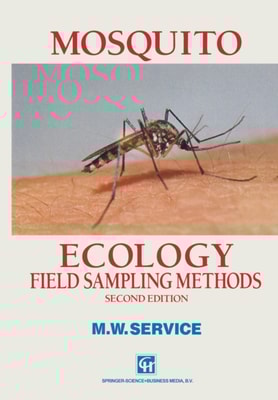
Numerous methods have been devised to catch mosquitoes and many approaches employed to study their ecology and behaviour but until the first edition of this book in 1976 there was no comprehensive guide to mosquito ecology.
The main intention of this book is to bring together contributions from biology, cognitive science, and the humanities for a joint exploration of some of the main contemporary notions dealing with the understanding of origins in life,mind and society.
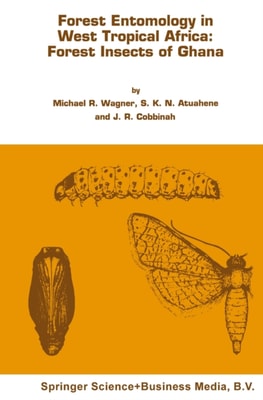
It is a great honor and indeed a privilege for me to write the Foreword to this book, the first of its kind from the Forest Products Research Institute The study of forest insects is now becoming a matter of great concern to many people all over the world because insects damage the already depleted forests and forest resources.
Many changes that occur during the embryonic development of an individual animal can be seen as a parallel to changes that have occurred in species or groups of species during evolutionary time.
The development of specialised feeding habits during the course of time by human beings is paralleled in the majority of animals, in particular have developed special peculiarities, and insect larvae which in most cases are quite characteristic of the species concerned.
It is forty years since Burgeff published, in 1926, the first comprehensive catalogue of the genus Zygaena Fabricius, forming part 33 of the Lepidopterorum Catalogus.
Although usually treated as unified subject, in many respects the two components of what is broadly described as 'medical and veterinary is usual, the term entomology is entomology' are clearly distinct.
Recent studies on diverse aspects of the biology of clitellate works (oligochaetes and leeches) are found in the Proceedings of the most recent International Symposium on Aquatic Oligochaete Biology - from development to population dynamics and from ultrastructure to evolution.
Mosquitoes and black flies are a constant threat to health and comfort, yet the modern chemical pesticides used to control them have cre- ated serious ecological problems.
This volume provides a selection of the most significant papers presented at the Second Conference on Fish Telemetry in Europe in La Rochelle, France, in April 1997.
Leading researchers in the area of the origin, evolution and distribution of life in the universe contributed to Exobiology: Matter, Energy, and Information in the Origin and Evolution of Life in the Universe.
Modern methods and approaches, such as the analysis of molecular sequences to infer evolutionary relationships among organisms, have provided vast new sets of data to further our understanding ofliving organisms, but there remain enigmas in the biological world that will keep scientists working and thinking for decades.
The erratic motion of pollen grains and other tiny particles suspended in liquid is known as Brownian motion, after its discoverer, Robert Brown, a botanist who worked in 1828, in London.
Rotifera VIII: A Comparative Approach is a record of the proceedings of the VIIIth International Rotifer Symposium which was held in Collegeville, Minnesota, USA, on June 22-27, 1997.
Insects are by far the largest group of animals on Earth, with over a million described species, and they occupy a wide range of ecological niches - they may be herbivores, predators, parasites or decomposers.
The arthropods contain more species than any other animal group, but the evolutionary pathways which led to their current diversity are still an issue of controversy.
During the last 50 years, the perception oftransposable elements (TEs) has changed considerably from selfish DNA to sequences that may contribute significantly to genome function and evolution.
Judged by a dismaying track record and a consequent downturn in the reputation of fisheries scientists, fisheries management is certainly a candidate for calls for reinvention, with many of the world leaders in this area holding the view that no fishery has ever been properly understood or managed.
The rapidly growing human population has increased the dependence on fossil fuel based agrochemicals such as fertilizers and pesticides to produce the required agricultural and forestry products.