Interfaces between media, whether air-water or sediment-water interfaces or organisms themselves, pose considerable problems to marine organisms attempting to live at these boundaries.
It is a distressing truism that the human race during the last millennium has caused the exponential loss of plant genetic diversity throughout the world.
Modern approaches to microbial classification and identification, particularly those based on nucleic acid analysis, have raised the awareness and interest of microbiologists in systematics during the past decade.
Referred to in the Bible, pictured on the wall-friezes of ancient Egyptian tombs, and a subject of fascination for generations of scientists, the tilapias (Cichlidae: Tilapiini) have featured in the diet and culture of humankind for thousands of years.
Although evolutionary developmental biology is a new field, its origins lie in the last century; the search for connections between embryonic development (ontogeny) and evolutionary change (phylogeny) has been a long one.
In 1984, a conference called Wildlife 2000: Modeling habitat relationships of terrestrial vertebrates, was held at Stanford Sierra Camp at Fallen Leaf Lake in the Sierra Nevada Mountains of California.
In all fields of science today, data are collected and theories are developed and published faster than scientists can keep up with, let alone thoroughly digest.
Diversity and Evolution of Land Plants provides a fresh and long overdue treatment of plant anatomy and morphology for the biology undergraduate of today.
In the summer of 1992 a distinguished group of molecular, population and evolutionary geneticists assembled on the campus of the University of Georgia in Athens, USA to discuss the relevance of their research to the role played by transposable elements (TEs) in evolution.
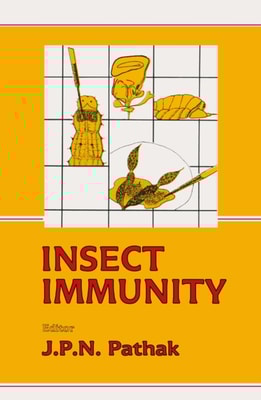
Surprising though it seems, the world faces almost as great a threat today from arthropod-borne diseases as it did in the heady days of the 1950s when global eradication of such diseases by eliminating their vectors with synthetic insecticides, particularly DDT, seemed a real possibility.
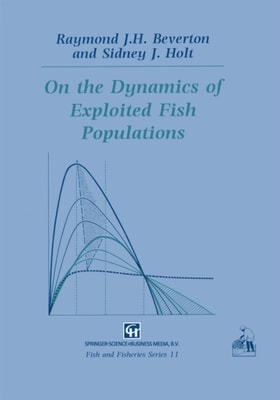
The Chapman and Hall Fish and Fisheries Series occasionally includes books devoted to a single taxon of fish that are of particular interest to fish and fisheries science.
Phoridae are probably the insect family with the greatest diversity of larval habits, but the least studied of the large families of flies due to identification difficulties.
The climate of the Earth has undergone many changes and for those times when geologic data are widespread and abundant the Mesozoic appears to have been one of the warmest intervals.
This most important book fully examines the welfare of captive reptiles and discusses the positive and negative implications of general husbandry and research programmes.
Birds are an integral part of most freshwater ecosystems (lakes, rivers, wetlands) but their role in the trophic dynamics of these water bodies has often been overlooked.
Developmental Instability: Its Origins and Evolutionary Implications is a collection of papers and transcribed discussions from a conference held in Tempe, Arizona in June 1993.