Love, one of the most profound of human emotions, love that accompanies us from puberty to old age, love that follows us from ancient times to modern, from ancient writings, through the Bible and the texts of medieval scribes to modern day books and movies.
This volume focuses on the huge advances in the last 25 years on the use of this animal model for biomedical research (cancer, heart disease and neurodegeneration), fundamental neuroscience and basic subterranean biology.
The range of nanomaterial applications has expanded recently from catalysis, electronics, and filtration to therapeutics, diagnostics, agriculture, and food because of unique properties and potentials of different nanoparticles and nanomaterials.
This book presents a collection of cross-disciplinary research, with contributions addressing all key features of the plant/microbe/ENP nexus in agro-ecosystems.
This book presents a selection of the talks resulting from research carried out by different groups at the Centre de Recerca Matematica and presented at the International Congress on Industrial and Applied Mathematics, held in Valencia in 2019.
This work is a large, powerfully illustrated interdisciplinary natural sciences volume, the first of its kind to examine the critically important nature of ecological paradox, through an abundance of lenses: the biological sciences, taxonomy, archaeology, geopolitical history, comparative ethics, literature, philosophy, the history of science, human geography, population ecology, epistemology, anthropology, demographics, and futurism.
Changes in atmospheric carbon dioxide concentrations and global climate conditions have altered photosynthesis and plant respiration across both geologic and contemporary time scales.
Population genomics is revolutionizing wildlife biology, conservation, and management by providing key and novel insights into genetic, population and landscape-level processes in wildlife, with unprecedented power and accuracy.
Philosophy in Reality offers a new vision of the relation between science and philosophy in the framework of a non-propositional logic of real processes, grounded in the physics of the real world.
This volume on astrobiology of the Springer Briefs in Life Sciences book series addresses the three fundamental questions on origin, evolution, distribution and future of life in the universe: how does life begin and evolve?
This textbook provides a concise introduction and useful overview of the field of human population genomics, making the highly technical and contemporary aspects more accessible to students and researchers from various fields.
This book comprises selected papers of the 25th International Conference on Difference Equations and Applications, ICDEA 2019, held at UCL, London, UK, in June 2019.
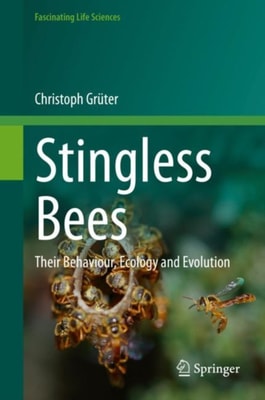
Stingless bees (Meliponini) are the largest and most diverse group of social bees, yet their largely tropical distribution means that they are less studied than their relatives, the bumble bees and honey bees.
Blast is an important foliar disease that infects the majority of cereal crops like rice, finger millet, pearl millet, foxtail millet and wheat, and thus resulting in a huge economic impact.
This monograph is the result of eight years of bibliographical and field research concerning several behavioural ecology aspects of the Palaearctic falcons.
This book presents coverage of the principles and practice of molecular clocks, which have provided fascinating and unprecedented insights into the evolutionary timescale of life on earth.
This book focuses on the significance and implications of Calcium (Ca2+) transport machinery in the plant cell in generating alternating Ca2+ levels and impacting the cell's physiological, biochemical and developmental processes.
A presentation of 491 popular orchid species with 13 varieties and 3 natural hybrids in 51 genera with names beginning with A to E carefully detailed with beautiful photographs and concise descriptions of the plants, their distribution and habitats by a well-known author and photographer.
This book provides essential information on 12 cockroach assemblages with more than a thousand specimens analyzed and investigates the Jurassic site in Bakhar, Mongolia, as one of the most diverse fossil insect sites worldwide.
Natural resources and associated biological diversity provide the basis of livelihood for human population, particularly in the rural areas and mountain regions across the globe.
This is the first book to provide comprehensive information on the anatomy and ecology of arctic and alpine plants from cold sites around the globe, including representative species from Greenland, Iceland, Svalbard, Himalaya, Japan, Argentina, Ecuador and Western USA.
This book presents a concise yet comprehensive survey of methods used in the expanding studies of human evolution, paying particular attention to new work on social evolution.
In the past few decades, it has been realized through research that fungal siderophores epitomize the uptake of iron as well as other essential elements like zinc, magnesium, copper, nickel and arsenic.
This two-volume edited book highlights and reviews the potential of the fossil record to calibrate the origin and evolution of parasitism, and the techniques to understand the development of parasite-host associations and their relationships with environmental and ecological changes.
This book presents a unified evolutionary framework based on three sets of metaphors that will help to consolidate discussions on evolutionary transitions.
The Tropics are home to the greatest biodiversity in the world, but tropical species are at risk due to anthropogenic activities, mainly land use change, habitat loss, invasive species, and pathogens.
Tectonic plates are constantly moving, either crashing into one another creating a mosaic of mountains and shallow seas, or tearing apart and isolating large swathes of land.