Natural resources and associated biological diversity provide the basis of livelihood for humans, particularly in rural areas and mountain regions around the world.
In this enchanting work of scientific exploration, acclaimed science author Frank Ryan explains how metamorphosis - the intricate trick of nature by which caterpillars transform into butterflies - reveals secrets that are shaking the scientific world.
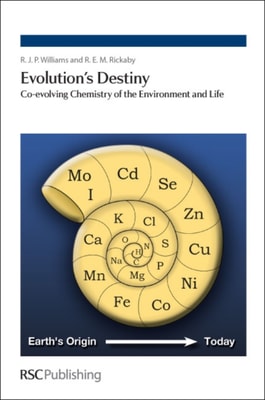
This book is written as an addition to Darwin's work and that of molecular biologists on evolution so as to include views of it from the point of view of chemistry rather than just from our knowledge of the biology and genes of organisms.
'From your brain to your fingertips, you emerge from her book entertained and with a deeper understanding of yourself' Richard Dawkins'A masterful account of why our bodies are the way they are .
The three greatest scientific mysteries, which remain poorly understood, are the origin of the universe, the origin of life and the development of consciousness.
Jerry Fodor and Massimo Piatelli-Palmarini, a distinguished philosopher and scientist working in tandem, reveal major flaws at the heart of Darwinian evolutionary theory.
How life originated from the inanimate mixture of organic and inorganic compounds on the priomordial earth remains one of the great unknowns in science.
How life originated from the inanimate mixture of organic and inorganic compounds on the priomordial earth remains one of the great unknowns in science.
This book provides an interdisciplinary review of one of the great unsolved mysteries that has fascinated scientists for over 150 years: the origin of chirality in biomolecules.
This book provides an interdisciplinary review of one of the great unsolved mysteries that has fascinated scientists for over 150 years: the origin of chirality in biomolecules.
Understanding how simple molecules have given rise to the complex biochemical systems and processes of contemporary biology is widely regarded as one of chemistry's great unsolved questions.
Understanding how simple molecules have given rise to the complex biochemical systems and processes of contemporary biology is widely regarded as one of chemistry's great unsolved questions.
The Dutch bestseller Nominated for Le Prix Nicolas Bouvier'A masterclass in storytelling, exploring who we are and where we came from' Danielle Clode 'Gripping and brilliantly told, We Hominids deftly blends personal experience with a journalist's eye for a remarkable story' Mark McKennaWHO ARE WE?
A specialist on social insects writes about the origins and implications of our own vast social organisation, and the ways in which our ethnic and national distinctions mirror those of other animals.
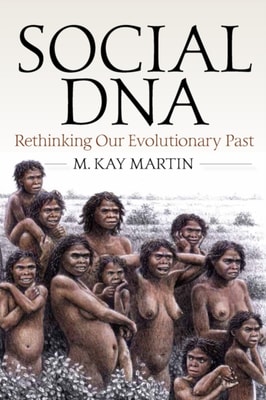
What set our ancestors off on a separate evolutionary trajectory was the ability to flex their reproductive and social strategies in response to changing environmental conditions.
See your city through fresh eyesWe are marching towards a future in which three-quarters of humans live in cities, and a large portion of the planet's landmass is urbanized.
This unique story offers an introductory conversation to genetics, embryology and evolution, taking us on a historical journey of biology through the ages.
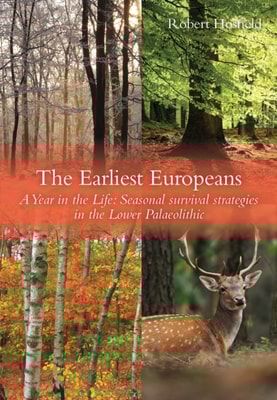
The Earliest Europeans explores the early origins of man in Europe through the perspective of ‘a year in the life’: how hominins in the Lower Palaeolithic coped with the year-round practical challenges of mid-latitude Europe with its distinctive temperatures, seasonality patterns, and available resources.
The Earliest Europeans explores the early origins of man in Europe through the perspective of ‘a year in the life’: how hominins in the Lower Palaeolithic coped with the year-round practical challenges of mid-latitude Europe with its distinctive temperatures, seasonality patterns, and available resources.