The essential one-volume reference to evolutionThe Princeton Guide to Evolution is a comprehensive, concise, and authoritative reference to the major subjects and key concepts in evolutionary biology, from genes to mass extinctions.
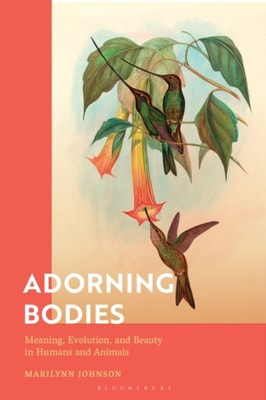
The remarkable and unique ways that male and female animals play out gender roles in natureWhile we joke that men are from Mars and women are from Venus, our gender differences can't compare to those of many other animals.
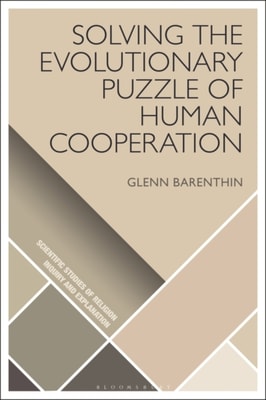
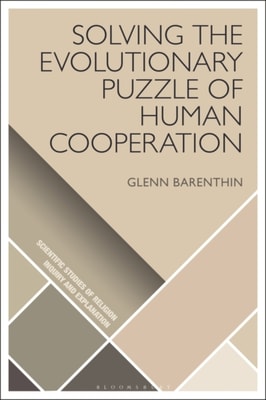
A revolutionary approach to the study of cooperation that unites evolutionary biology and the social sciencesFrom the family to the workplace to the marketplace, every facet of our lives is shaped by cooperative interactions.
The mysterious and remarkable ways that animals navigateWe know that animals cross miles of water, land, and sky with pinpoint precision on a daily basis.
The science of change from cells to cultureCells to Civilizations is the first unified account of how life transforms itself-from the production of bacteria to the emergence of complex civilizations.
How our stone-age brains made modern society, and why it matters for relationships between men and womenAs countless love songs, movies, and self-help books attest, men and women have long sought different things.
Harnessing evolution for more sustainable agricultureAs human populations grow and resources are depleted, agriculture will need to use land, water, and other resources more efficiently and without sacrificing long-term sustainability.
Pollination and Floral Ecology is the most comprehensive single-volume reference to all aspects of pollination biology--and the first fully up-to-date resource of its kind to appear in decades.
A fascinating look at the evolutionary origins of cooperationWhy do humans, uniquely among animals, cooperate in large numbers to advance projects for the common good?
A new approach to understanding animal and human cognitionWhen a chimpanzee stockpiles rocks as weapons or when a frog sends out mating calls, we might easily assume these animals know their own motivations--that they use the same psychological mechanisms that we do.
Noted biologist and author John Tyler Bonner has experimented with cellular slime molds for more than sixty years, and he has done more than anyone else to raise these peculiar collections of amoebae from a minor biological curiosity to a major model organism--one that is widely studied for clues to the development and evolution of all living things.
Over millions of years, terrestrial plants have competed for limited resources, defended themselves against herbivores, and resisted a myriad of environmental stresses.
The idea of a balance of nature has been a dominant part of Western philosophy since before Aristotle, and it persists in the public imagination and even among some ecologists today.
A sweeping account of male nurturing, explaining how and why men are biologically transformed when they care for babies It has long seemed self-evident that women care for babies and men do other things.
A major new look at the evolution of mating decisions in organisms from protozoans to humans The popular consensus on mate choice has long been that females select mates likely to pass good genes to offspring.
It is not uncommon to see in major areas of research concerned with science that historical studies are accompanied by the rise of complementary or contradictory historiographies.
Cómo los genes cambian nuestra vida, y la vida cambia nuestros genesUn reconocido divulgador de la medicina y la genética habla sobre el material codificado en nuestro ADN y sus consecuencias para la vida cotidiana.
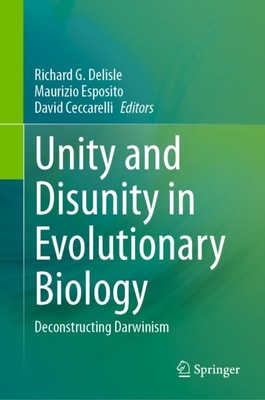
Widely seen as evolution's founding figure, Charles Darwin is taken by many evolutionists to be the first to propose a truly modern theory of evolution.
Widely seen as evolution's founding figure, Charles Darwin is taken by many evolutionists to be the first to propose a truly modern theory of evolution.
This volume reaches beyond the controversy surrounding the teaching and learning of evolution in the United States, specifically in regard to the culture, politics, and beliefs found in the Southeast.
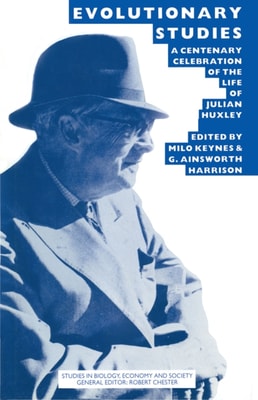
This collection of papers is in honour of Julian Huxley, President from 1959 until 1962 of the Eugenics Society, which exists to support research into genetic and social factors of human reproduction with a view to improving problems associated with heredity, human qualities and population.
The Foundations of Genetics describes the historical development of genetics with emphasis on the contributions to advancing genetical knowledge and the various applications of genetics.
A biologist's firsthand account of the hunt for life beneath earth's surfaceand how new discoveries are challenging our most basic assumptions about the nature of life on EarthLife thrives in the deepest, darkest recesses of Earth's crustfrom methane seeps in the ocean floor to the highest reaches of Arctic permafrostand it is unlike anything seen on the surface.
Chordate Origins and Evolution: The Molecular Evolutionary Road to Vertebrates focuses on echinoderms (starfish, sea urchins, and others), hemichordates (acorn worms, etc.