A marvelous journey into the world of bird evolutionHow Birds Evolve explores how evolution has shaped the distinctive characteristics and behaviors we observe in birds today.
From the critically acclaimed, multimillion-copy best-selling Little People, BIG DREAMS series, discover the life of Charles Darwin, the scientist who changed the way people see the world.
From the critically acclaimed, multimillion-copy best-selling Little People, BIG DREAMS series, discover the life of Charles Darwin, the scientist who changed the way people see the world.
An up-to-date reference book on phylogenetic methods and applications for evolutionary biologistsThe increasingly widespread availability of genomic data is transforming how biologists estimate evolutionary relationships among organisms and broadening the range of questions that researchers can test in a phylogenetic framework.
The epic story of human evolution, from our primate beginnings more than five million years ago to the agricultural eraOver the course of five million years, our primate ancestors evolved from a modest population of sub-Saharan apes into the globally dominant species Homo sapiens.
A comprehensive overview of symbiotic relationships between insects and microbesInsects and Their Beneficial Microbes is an authoritative and accessible synthesis of insect associations with beneficial microorganisms.
A biophysicist reveals the hidden unity behind nature's breathtaking complexityThe form and function of a sprinting cheetah are quite unlike those of a rooted tree.
A powerful framework for understanding how natural selection shapes adaptation and biological designDesign and diversity are the two great challenges in the study of life.
Inducible defenses--those often dramatic phenotypic shifts in prey activated by biological agents ranging from predators to pathogens--are widespread in the natural world.
A marvelous journey into the world of bird evolutionHow Birds Evolve explores how evolution has shaped the distinctive characteristics and behaviors we observe in birds today.
Darwin's Origin of Species and Dobzhansky's Genetics and the Origin of Species have been the cornerstones of modern evolutionary and population genetic theory for the past hundred years, but in the twenty-first century, biologists will face graver problems of extinction.
From famed zoologist Anthony Sinclair, an account of his decades-long quest to understand one of Earth's most spectacular ecosystemsWith its rich biodiversity, astounding wildlife, and breathtaking animal migrations, Serengeti is like no other ecosystem on the planet.
John Tyler Bonner makes a new attack on an old problem: the question of how progressive increase in the size and complexity of animals and plants has occurred.
The revolution in science that is transforming our understanding of extinct lifeWe used to think of fossils as being composed of nothing but rock and minerals, all molecular traces of life having vanished long ago.
A savory account of how the pursuit of delicious foods shaped human evolutionNature, it has been said, invites us to eat by appetite and rewards by flavor.
The first modern scholarly synthesis of animal domesticationAcross the globe and at different times in the past millennia, the evolutionary history of domesticated animals has been greatly affected by the myriad, complex, and diverse interactions humans have had with the animals closest to them.
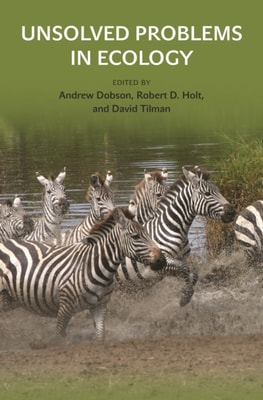
Leading ecologists discuss some of the most compelling open questions in the field todayUnsolved Problems in Ecology brings together many of the world's leading ecologists to discuss the most fundamental research questions confronting the field today.
An engaging journey into the biological principles underpinning a beloved science-fiction franchiseIn Star Trek, crew members travel to unusual planets, meet diverse beings, and encounter unique civilizations.
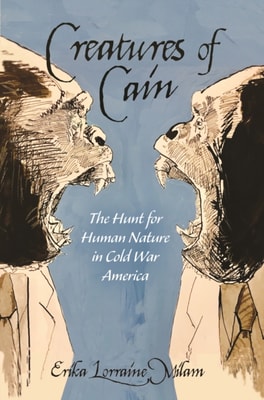
How Cold War America came to attribute human evolutionary success to our species' unique capacity for murderAfter World War II, the question of how to define a universal human nature took on new urgency.
Jean Baptiste Lamarck did not receive the respect, prestige or recognition for his contributions to science during his life long struggle with poverty, yet was still a brilliant mind in pursuit of the discovery of Evolution.
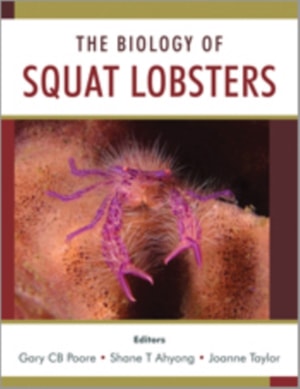
Squat lobsters of the superfamilies Chirostyloidea and Galatheoidea are highly visible crustaceans on seamounts, continental margins, shelf environments, hydrothermal vents and coral reefs.
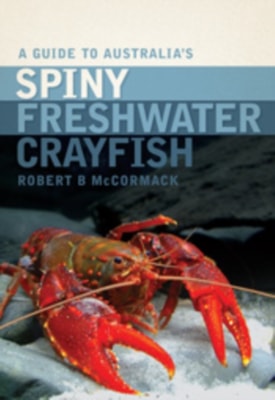
Referred to as the 'Spiny Crayfishes' due to impressive arrays of spines on their hard armoured shells, Euastacus crayfish are the largest of the 10 genera of Australian freshwater crayfish.
Grasses: Systematics and Evolution is a selection of the very best papers from the Proceedings of the Third International Symposium on Grass Systematics and Evolution held in Sydney, Australia in 1998.
Reading this book is a wild ride though the nature of sex, the history of god and religion, stellar physics, hypnotism, genetics, Roman history, theology, biology, Christianity, Islam, Judaism, heaven, hell, gambling, galaxies and Santa delivering toys.
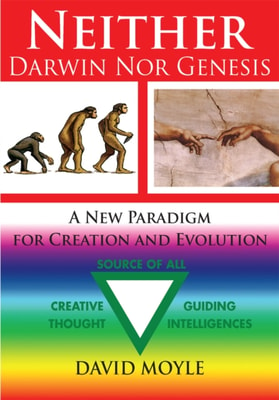
For over 150 years, a war of words has been fought between science and religion over which theory best describes life as we know it-Darwin's theory or the story as presented in the Christian Bible.
Stephen Jay Gould (1941-2002) was a leading critic of human behavioral genetics, human sociobiology, evolutionary psychology, and the modern evolutionary synthesis.
Pesticides have contributed impressively to our present-day agricultural productivity, but at the same time they are at the center of serious concerns about safety, health, and the environment.