We cannot catechise our stony ichthyolites, as did the necromantic lady of the Arabian Nights did the coloured fishes of the lake which had once been a city, when she touched their dead bodies with her wand, and they straightaway raised their heads and rephed to her queries.
In this innovative celebration of diversity and affirmation of individuality in animals and humans, Joan Roughgarden challenges accepted wisdom about gender identity and sexual orientation.
Hans Thewissen, a leading researcher in the field of whale paleontology and anatomy, gives a sweeping first-person account of the discoveries that brought to light the early fossil record of whales.
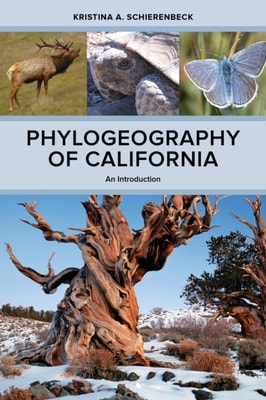
Phylogeography of California examines the evolution of a variety of taxa-ancient and recent, native and migratory-to elucidate evolutionary events both major and minor that shaped the distribution, radiation, and speciation of the biota of California.
In this innovative celebration of diversity and affirmation of individuality in animals and humans, Joan Roughgarden challenges accepted wisdom about gender identity and sexual orientation.
The Evolution of Phylogenetic Systematics aims to make sense of the rise of phylogenetic systematics-its methods, its objects of study, and its theoretical foundations-with contributions from historians, philosophers, and biologists.
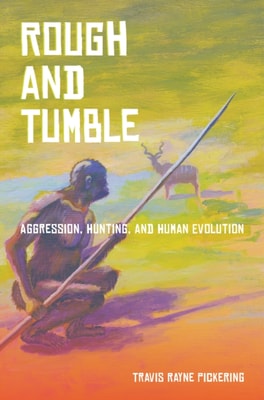
Travis Rayne Pickering argues that the advent of ambush hunting approximately two million years ago marked a milestone in human evolution, one that established the social dynamic that allowed our ancestors to expand their range and diet.
The microscopic examination of fossilized bone tissue is a sophisticated and increasingly important analytical tool for understanding the life history of ancient organisms.
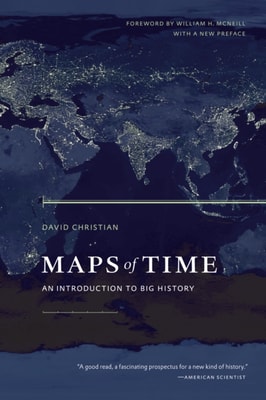
An introduction to a new way of looking at history, from a perspective that stretches from the beginning of time to the present day, Maps of Time is world history on an unprecedented scale.
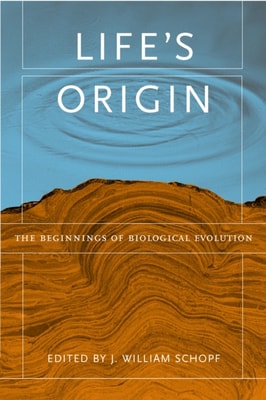
This pathbreaking book explores how life can begin, taking us from cosmic clouds of stardust, to volcanoes on Earth, to the modern chemistry laboratory.
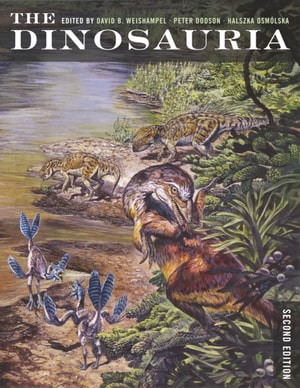
This captivating book, laced with evocative anecdotes from the field, gives the first holistic, up-to-date overview of dinosaurs and their world for a wide audience of readers.
Illuminating the processes and patterns that link genotype to phenotype, epigenetics seeks to explain features, characters, and developmental mechanisms that can only be understood in terms of interactions that arise above the level of the gene.
Cladistics, or phylogenetic systematics-an approach to discovering, unraveling, and testing hypotheses of evolutionary history-took hold during a turbulent and acrimonious time in the history of systematics.
Friends-they are generous and cooperative with each other in ways that appear to defy standard evolutionary expectations, frequently sacrificing for one another without concern for past behaviors or future consequences.
In this provocative new book, renowned educator and philosopher Nel Noddings extends her influential work on the ethics of care toward a compelling objective-global peace and justice.
Adaptive radiation, which results when a single ancestral species gives rise to many descendants, each adapted to a different part of the environment, is possibly the single most important source of biological diversity in the living world.
This volume offers an integrative approach to the application of evolutionary theory in studies of cultural transmission and social evolution and reveals the enormous range of ways in which Darwinian ideas can lead to productive empirical research, the touchstone of any worthwhile theoretical perspective.
More than 12,000 years ago, in one of the greatest triumphs of prehistory, humans colonized North America, a continent that was then truly a new world.
When the The Dinosauria was first published more than a decade ago, it was hailed as "e;the best scholarly reference work available on dinosaurs"e; and "e;an historically unparalleled compendium of information.
Arms races among invertebrates, intelligence gathering by the immune system and alarm calls by marmots are but a few of nature's security strategies that have been tested and modified over billions of years.
Mammals first evolved at about the same time as dinosaurs, and their story is perhaps the more fascinating of the two-in part because it is also our own story.
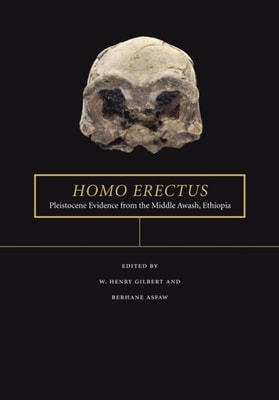
This volume, the first in a series devoted to the paleoanthropological resources of the Middle Awash Valley of Ethiopia, studies Homo erectus, a close relative of Homo sapiens.
Sauropod dinosaurs were the largest animals ever to walk the earth, and they represent a substantial portion of vertebrate biomass and biodiversity during the Mesozoic Era.
Marks presents the field of molecular anthropology-a synthesis of the holistic approach of anthropology with the reductive approach of molecular genetics-as a way of improving our understanding of the science of human evolution.
Always a controversial and compelling topic, the origin of life on Earth was considered taboo as an area of inquiry for science as recently as the 1950s.