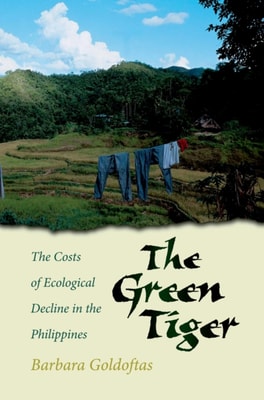
Once famous for the beauty of its white beaches, reef-ringed islands, and lush forests, today the Philippines is known as an example of the deep costs of ecological decline.
The concept of altruism, or disinterested concern for another's welfare, has been discussed by everyone from theologians to psychologists to biologists.
Oxford presents, in one convenient and coherently organized volume, 20 influential but until now relatively inaccessible articles that form the backbone of Boyd and Richerson's path-breaking work on evolution and culture.
Mothers have the ability to profoundly affect the quality of their offspring--from the size and quality of their eggs to where, when, and how eggs and young are placed, and from providing for and protecting developing young to choosing a mate.
Two of the great mysteries of biology yet to be explored concern the distribution and abundance of genetic variation in natural populations and the genetic architecture of complex traits.
This book will appeal to investigators in each of the scientific disciplines it integrates--evolutionary biology, ecology, salmonid biology, management, and conservation.
A Primer of Population Genetics and Genomics has been completely revised and updated to provide a concise but comprehensive introduction to the basic concepts of population genetics and genomics.
'Arvid Agren has undertaken the most meticulously thorough reading of the relevant literature that I have ever encountered, deploying an intelligent understanding to pull it into a coherent story.
This novel, transdisciplinary work explains how perturbations (defined as strong disturbances or deviations to a system) can affect the population dynamics of social animals, including ourselves.
Biogeography is the study of geographic variation in all characteristics of life - ranging from genetic, morphological and behavioural variation among regional populations of a species, to geographic trends in diversity of entire communities across our planet's sufrace.
Biogeography is the study of geographic variation in all characteristics of life - ranging from genetic, morphological and behavioural variation among regional populations of a species, to geographic trends in diversity of entire communities across our planet's sufrace.
The Metaphysical Society was founded in 1869 at the instigation of James Knowles (editor of the Contemporary Review and then of the Nineteenth Century) with a view to 'collect, arrange, and diffuse Knowledge (whether objective or subjective) of mental and moral phenomena' (first resolution of the society in April 1869).
The Metaphysical Society was founded in 1869 at the instigation of James Knowles (editor of the Contemporary Review and then of the Nineteenth Century) with a view to 'collect, arrange, and diffuse Knowledge (whether objective or subjective) of mental and moral phenomena' (first resolution of the society in April 1869).
Simone Marchi presents the emerging story of how cosmic collisions shaped both the solar system and our own planet, from the creation of the Moon to influencing the evolution of life on Earth.
Simone Marchi presents the emerging story of how cosmic collisions shaped both the solar system and our own planet, from the creation of the Moon to influencing the evolution of life on Earth.
Life histories can be defined as the means by which individuals (or more precisely genotypes) vary their age- or stage-specific expenditures of reproductive effort in response to genetic, phenotypic, and environmental correlates of survival and fecundity.
Since the first edition of this book published in 2005, there has been an immense amount of new and fascinating work on the history, ecology, and evolution of the Mediterranean flora.
Community ecology has undergone a transformation in recent years, from a discipline largely focused on processes occurring within a local area to a discipline encompassing a much richer domain of study, including the linkages between communities separated in space (metacommunity dynamics), niche and neutral theory, the interplay between ecology and evolution (eco-evolutionary dynamics), and the influence of historical and regional processes in shaping patterns of biodiversity.
Religion and the Philosophy of Life considers how religion as the source of civilization transforms the fundamental bio-sociology of humans through language and the somatic exploration of religious ritual and prayer.
Religion and the Philosophy of Life considers how religion as the source of civilization transforms the fundamental bio-sociology of humans through language and the somatic exploration of religious ritual and prayer.
Urban Evolutionary Biology fills an important knowledge gap on wild organismal evolution in the urban environment, whilst offering a novel exploration of the fast-growing new field of evolutionary research.
Quantitative traits-be they morphological or physiological characters, aspects of behavior, or genome-level features such as the amount of RNA or protein expression for a specific gene-usually show considerable variation within and among populations.
Population genetics is an inherently quantitative discipline, yet often focuses upon abstract concepts which can be difficult to conceptualize and appropriately visualize at first glance.
We tend to think about memory in terms of the human experience, neglecting the fact that we can trace a direct line of descent from the earliest vertebrates to modern humans.