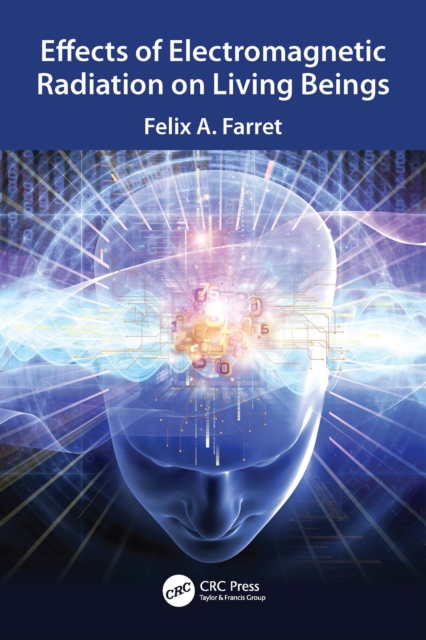
The objective of this book is to show in detail how electromagnetic waves existing in the environment can affect the electrochemical currents present in the brains and bodies of living beings that serve to communicate with their internal organs as well as with other living beings.
Brain Hypoxia and Ischemia explores the various aspects of cell death and survival that are crucial for understanding the basic mechanisms underlying brain hypoxia and ischemia.
The role of free radicals and oxidative stress in neurological disorders has only recently been recognized, leaving clinical neurologists to seek in vain for information on the subject even in major textbooks.
Creative thinking and collaborative scientific research have advanced our understanding of autism, and we are now beginning to synthesize the data into evidence and theories.
Continuing progress has been made in understanding the brain at the molecular, anatomic, and physiological levels in the years following the "e;Decade of the Brain,"e; with the results providing insight into the underlying basis of many neurological disease processes.
Functional selectivity refers to the ability of different ligands acting at one receptor subtype to activate multiple signaling pathways in unique combinations; that is, one drug can be an agonist at pathway A and an antagonist or partial agonist at pathway B, and another drug can have the reverse profile.
Despite numerous recent studies and exciting discoveries in the field, only limited treatment is available today for the victims of acute neurological injuries.
Stem cells appear to be fundamental cellular units associated with the origin of multicellular organisms and have evolved to function in safeguarding the cellular homeostasis in organ t- sues.
Novel Approaches into the Origins of Neurodevelopmental Disorders: The Fetal Physiology Foundation Over the past two decades, autism, a neurodevelopmental disorder that is defined by behavior and was once believed to be rare, became recognized in increasing numbers of children and recently received distinction as an "e;epidemic"e; [1].
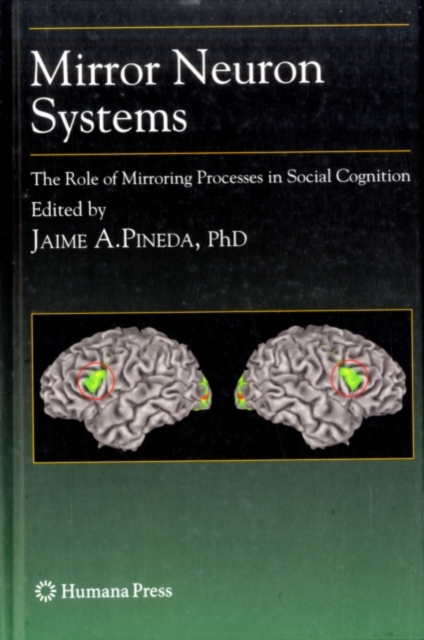
The aim of this book is to bring together social scientists, cognitive scientists, psychologists, neuroscientists, neuropsychologists and others to promote a dialogue about the variety of processes involved in social cognition, as well as the relevance of mirroring neural systems to those processes.
Significant improvements in lifestyle and medical science are leading to an ever increasing elderly population in the United States and other developed nations.
In this up-to-date survey and critical assessment of transgenic and knockout models in neuropsychiatry and behavior, a panel of leading researchers comprehensively assesses how and whether the genetic abnormalities produced from these models manifest the neuropsychiatric disorders to which they correspond.
Cell Cycle in the Central Nervous System overviews the changes in cell cycle as they relate to prenatal and post natal brain development, progression to neurological disease or tumor formation.
With the growth of combined clinical neurophysiology fellowship training programs and their corresponding "e;pan-physiology"e; board examinations, there has been an increased need for educational materials that span the range of clinical neurophysiology topics.
This book, covering many key aspects of autonomic nervous system maturation, was suggested by the success of a symposium on the developing autonomic nervous system held at the Spring 1982 meeting of the Federation of American Scientists for Experi- mental Biology (Federation Proceedings 1983, 42, 1609).
Even before the time of organized scientific investigation, hu- mans had begun pondering and attempting to explain the work- ing of the brain and the mental and behavioral states it produces.
Research into the processes of tolerance and sensitization has escalated at a substantial rate in recent years, presumably because of the fundamental importance of understanding the long-term, as opposed simply to the initial, acute effects of drugs.
Leading experts critically summarize the state of knowledge concerning the molecular, anatomical, physiological, and behavioral aspects of NPY and its congeners.
In Motor Activity and Movement Disorders thirteen state-of-the-art articles explicate forefront research methodologies for measuring and interpreting motor activity in animals, as well as their applications to preclinical and clinical research involving motor disorders.
A comprehensive survey of recent advances made in characterizing neurotransmitter transporters-including their imaging in the living brain-and in elucidating the processes underlying biological transport.
A distinguished international panel of authors define our current understanding of neuronal damage after ischemia and critically review the significant recent developments and progress in cerebrovascular accident (CVA) drug trials, both in animal models and in the clinical setting.
In this book, leading-edge investigators offer effective strategies to improve current antidepressive therapies and suggest molecular, biological, and genetic approaches that will lead to the development of novel antidepressants.
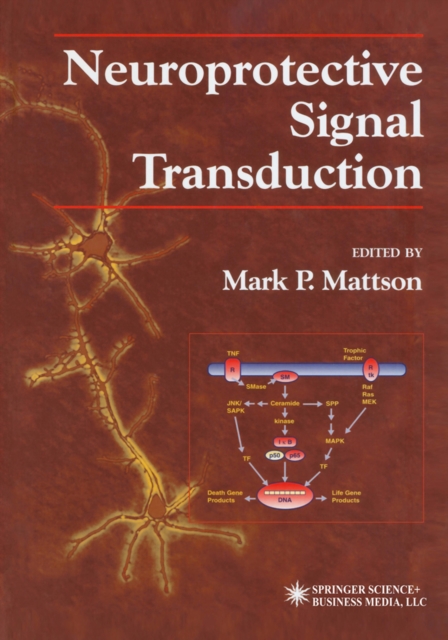
In Neuroprotective Signal Transduction prominent researchers and clinicians focus on how inter- and intracellular signaling mechanisms prevent the degeneration and death of neurons occurring in both acute and chronic neurodegenerative disorders.
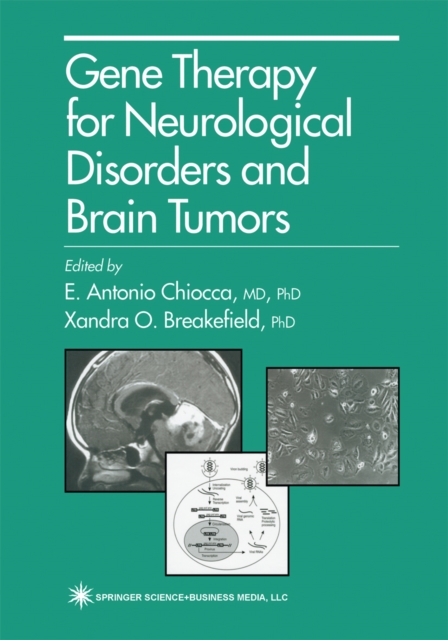
Leading gene therapy researchers and clinicians illuminate the field-from basic vector technology to current and future clinical applications in neurology.
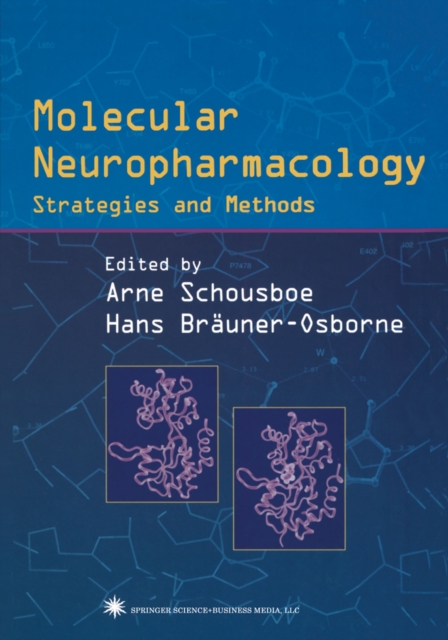
A powerful collection of readily reproducible cutting-edge techniques for characterizing the ligand or substrate binding of neurotransmitter receptors and transporters.
A richly illustrated medical atlas of the five main human sensory systems together with their neural pathways, from primary sensation to processing by the brain.
The Orexin/Hypocretin System provides an overview of all the recent exciting discoveries in the field as well as new findings such as ligand replacement and gene therapies in the animal models of narcolepsy.