This book provides the first presentation of the state-of-the-art in the application of modern Neuroscience research in predicting, preventing and alleviating the negative sequelae of neurodevelopmental, acquired, or neurodegenerative brain abnormalities on speech and language.
The book provides a comprehensive reference on the neurobiological understanding of behaviour, how behaviour is regulated by the brain, and how such behaviours in turn influence the brain.
This volume reviews the known neurobiology of depression and combines classic data on antidepressant treatments with modern theory on the physiology of depression.
This volume presents a collection of peer-reviewed contributions arising from StartUp Research: a stimulating research experience in which twenty-eight early-career researchers collaborated with seven senior international professors in order to develop novel statistical methods for complex brain imaging data.
This book presents the facet theoretical framework as a tool for facilitating the conception of complex animal behaviour research and the design of research procedures through employing mapping sentences.
This is an anthology of contemporary studies from various disciplinary perspectives written by some of the world's most renowned experts in each of the areas of mathematics, neuroscience, psychology, linguistics, semiotics, education, and more.
This book highlights the latest developments in acute and delayed neurovascular injury studies including delayed cerebral vasospasm, early brain injury, micro-circulation compromise, spreading cortical depolarization, neuroinflammation, and long-term cognitive dysfunctions after subarachnoid hemorrhage.
A fundamental goal of neuroscience is to understand how the nervous system extracts biologically relevant information from the natural environment and how it uses that information to guide and coordinate behavior necessary for reproduction and survival.
The 3rd World Congress on Genetics, Geriatrics, and Neurodegenerative Disease Research (GeNeDis 2018), focuses on recent advances in genetics, geriatrics, and neurodegeneration, ranging from basic science to clinical and pharmaceutical developments.
This book provides a unique overview on the most recent developments in initially diverse areas of behavioral genomic research that now start to intertwine to provide more detailed insights into the complex nature of behavior in health and disease.
This SpringerBrief answers the question on how birds recognize their predators using multidisciplinary approaches and outlines paths of the future research of predator recognition.
The 3rd World Congress on Genetics, Geriatrics, and Neurodegenerative Disease Research (GeNeDis 2018), focuses on recent advances in genetics, geriatrics, and neurodegeneration, ranging from basic science to clinical and pharmaceutical developments.
The book provides an overview on the different aspects of gene regulation from an mRNA centric viewpoint, including how mRNA is assembled and self-assembles in a complex consisting of RNA and proteins, and how its ability to be translated at the right time and space depends on many processes acting on the mRNAs, leading to a properly folded complex.
This book, written by members of the European network PROTEOSTASIS, provides an up-to-date review of the research regarding protein homeostasis in health and disease.
This book reports on the development and assessment of a novel framework for studying neural interactions (the connectome) and their dynamics (the chronnectome).
This book provides a comprehensive overview of the incredible advances achieved in the study of in vitro neuronal networks for use in basic and applied research.
This book covers central aspects of behavioral ecology, including sexual selection, social and genetic mating systems, cooperative breeding, brood parasitism, brood reduction, migration, personalities and communication.
This book provides students and researchers with reviews of biological questions related to the evolution of feeding by vertebrates in aquatic and terrestrial environments.
This volume discusses how environmental pollutants are involved in the pathogenesis of neurological disorders, and covers specific mechanisms and risk factors, as well as the necessary strategies to reduce the adverse impacts of environmental pollutants on the human nervous system.
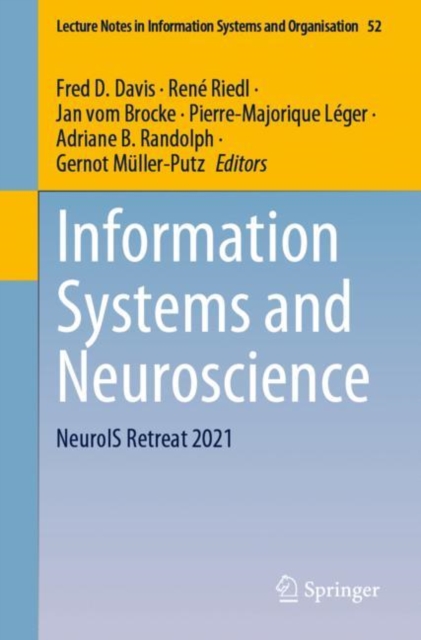
This book presents the proceedings of the NeuroIS Retreat 2021, June 1-3, virtual conference, reporting on topics at the intersection of information systems (IS) research, neurophysiology and the brain sciences.
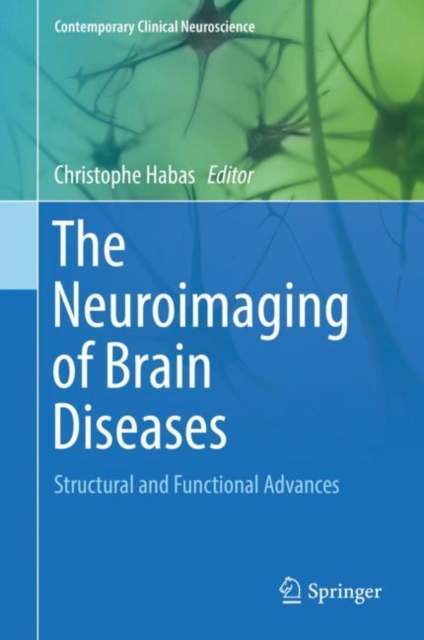
Notable experts in the field of neuroimaging provide comprehensive overviews of advances in functional and structural aspects of both common and uncommon brain disorders.
Psychedelic therapies are gaining traction as potential treatments for a wide range of indications, but the structure and delivery of psychedelic therapies are a sharp departure from more traditional models of psychotherapy and pharmacotherapy for psychiatric and other medical disorders.
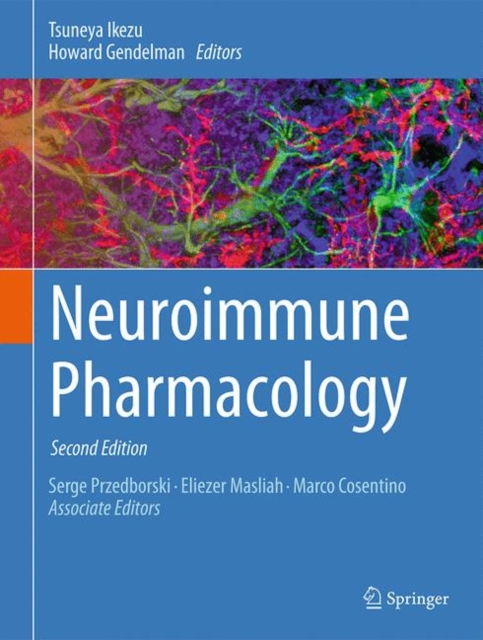
The second edition of Neuroimmune Pharmacology bridges the disciplines of neuroscience, immunology and pharmacology from the molecular to clinical levels with particular thought made to engage new research directives and clinical modalities.
This book provides comprehensive information, both for clinicians and scientists, on the basic mechanisms, clinical features, and therapeutic approaches to epilepsy as an inflammatory disease.
After years of neurohype and a neuroskeptic backlash, this book provides a systematic analysis of the contributions to self-understanding cognitive neuroscience (CNS) and philosophy can make.