Advanced Biosensors for Virus Detection: Smart Diagnostics to Combat Against the SARS-CoV2 Pandemic covers the development of biosensor-based approaches for the diagnosis and prognosis of viral infections, specifically coronaviruses.
Coronavirus Disease: From Origin to Outbreak provides a comprehensive review of coronaviruses, particularly COVID-19, its transmission, and disease pathology.
Oncogenic Viruses: Medical Applications of Viral Oncology Research, Volume Two builds on the introductory overview of Volume One, Oncogenic Viruses: Fundamentals of Oncogenic Viruses.
Oncogenic Viruses: Fundamentals of Oncoviruses provides an overview of the history of human oncoviruses, how to discover and define an oncovirus, how viruses cause cancer in general, their oncogenic mechanisms and epidemiology, and the cancer biology of oncoviruses.
Microbes in Land Use Change Management details the various roles of microbial resources in management of land uses and how the microbes can be used for the source of income due to their cultivation for the purpose of biomass and bioenergy production.
Volatiles and Metabolites of Microbes compiles the latest research and advancement in the field of volatiles, metabolites synthesized from the microbial strains such as actinomycetes, bacteria, cyanobacteria, and fungal species and their potential applications in the field of healthcare issue and sustainable agriculture.
Covid-19: Biomedical Perspectives, Volume 50 in the Methods in Microbiology series highlights new advances in the field, with this new volume presenting interesting chapters written by an international board of authors.
Microbial Management of Plant Stresses: Current Trends, Application and Challenges explores plant microbiota including isolated microbial communities that have been used to study the functional capacities, ecological structure and dynamics of the plant-microbe interaction with focus on agricultural crops.
Whisky and Other Spirits: Technology, Production and Marketing, Third Edition continues to provide details from raw materials to the finished product, including production, packaging and marketing.
Petroleum Industry Wastewater: Advanced and Sustainable Treatment Methods discusses the status of different approaches and advanced processes involved in the treatment of petrochemical and petroleum industry wastewater.
Precision Medicine and Artificial Intelligence: The Perfect Fit for Autoimmunity covers background on artificial intelligence (AI), its link to precision medicine (PM), and examples of AI in healthcare, especially autoimmunity.
Handbook of Water Purity and Quality, Second Edition provides those involved in water purification research and administration with a comprehensive resource of methods for analyzing water to assure its safety from contaminants, both natural and human caused.
Antimicrobial Nanoarchitectonics: From Synthesis to Applications brings together recent research in antimicrobial nanoparticles, specifically in the sustained and controlled delivery of antimicrobials.
Geminivirus: Detection, Diagnosis and Management focuses on the latest techniques for managing diseases caused by these circular, single-stranded (ss) DNA genomes.
Functionalized Nanomaterials for the Management of Microbial Infection: A Strategy to Address Microbial Drug Resistance introduces the reader to the newly developing use of nanotechnology to combat microbial drug resistance.
Microbiorobotics: Biologically Inspired Microscale Robotic Systems, Second Edition presents information on a new engineering discipline that takes a multidisciplinary approach to accomplish precise manipulation of microscale spaces.
Nanobiomaterials in Antimicrobial Therapy presents novel antimicrobial approaches that enable nanotechnology to be used effectively in the treatment of infections.
The Bacteria: Volume IX: Antibiotic-Producing Streptomyces explores how Streptomyces, including actinomycetes, produce a variety of antibiotics such as aminocyclitols, ansamycins, macrolides, and tetracyclines.
Continuous Cultivation of Microorganisms deals with research studies on the continuous processes in cultivation and their applications in industrial production.
The Biology of Euglena, Volume IV: Subcellular Biochemistry and Molecular Biology focuses on the subcellular biochemistry and molecular biology of eukaryotic microorganisms that belong to the genus Euglena, including Euglena gracilis.
Insect Pathology: An Advanced Treatise, Volume 2 reviews the significant progress that has been made in insect pathology, as well as the major research trends in the field.
Germfree Research: Biological Effect of Gnotobiotic Environments is an account of the Proceedings of the Fourth International Symposium on Germfree Research.
The Natural History of Rabies, Volume I explores the fundamental aspects of the rabies virus, including its growth, latency, morphology, chemistry, physical characteristics, and relationships with other viruses.
Updated and much expanded, the Second Edition of Parasitic Protozoa is designed to be useful to physicians, veterinarians, and research scientists concerned with diseases caused by protozoa in man, and in domestic and wild animals including fish, mollusks and insects, as well as the more commonly considered vertebrate animals.
Updated and much expanded, the Second Edition of Parasitic Protozoa is designed to be useful to physicians, veterinarians, and research scientists concerned with diseases caused by protozoa in man, and in domestic and wild animals including fish, mollusks and insects, as well as the more commonly considered vertebrate animals.
Genetics and Biotechnology of Bacilli, Volume 2 is a collection of papers from the "e;Fourth International Conference on Bacilli"e; held in California on June 21-24, 1987.
An expanded version of the first edition published in 1971, each section of this second edition has been updated and a new section on nematodes has been added.
This is an updated version of the popular First Edition and includes additional chapters on food and waste management, raw materials, and refrigerated foods.
This new edition of a standard reference includes classical methods and information on newer technologies, such as DNA hybridization and monoclonal antibodies.
An in-depth examination of deterioration caused by fungi and other microorganisms, Wood Microbiology explores the major damages to wood and wood products during growth, harvesting, storage, and conversion to finished lumber.
Demystified is your vaccine for tricky subjects like microbiologyIf you don't know your prokaryotes from your protozoa, or learning about fungi puts you in a funk, look no further--Microbiology Demystified, Second Edition is your cure for learning this topic's fundamental concepts and theories at your own pace.
Handbook of Algal Science, Microbiology, Technology and Medicine provides a concise introduction to the science, biology, technology and medical use of algae that is structured on the major research fronts of the last four decades, such as algal structures and properties, algal biomedicine, algal genomics, algal toxicology, and algal bioremediation, algal photosystems, algal ecology, algal bioenergy and biofuels.
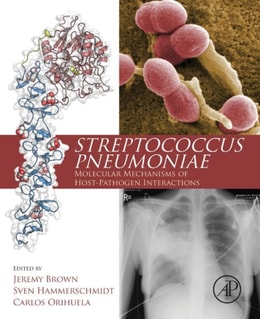
Streptococcus Pneumoniae: Molecular Mechanisms of Host-Pathogen Interactions provides a comprehensive overview of our existing knowledge on Streptococcus pneumoniae antibiotic resistance, dissemination, and pathogenesis, including immunology.
Novel Approaches to Colorectal Cancer, Volume 151 in the Advances in Cancer Research series, is composed of 11 reviews covering state-of-the-art research relating to the etiology, diagnosis, prevention and treatment of colorectal cancer.
Transfusion Medicine, Apheresis, and Hemostasis: Review Questions and Case Studies is the collaborative effort that spanned a time period of 2 years and included 50 experts, many whom are national leaders in their respected fields.
Advances in Applied Microbiology, Volume 100 continues to be one of the most widely read and authoritative review sources in microbiology, containing comprehensive reviews of the most current research in applied microbiology.