Volume 25, entitled Modern Avenues in Metal-Nucleic Acid Chemistry, of the series Metal Ions in Life Sciences (MILS), provides a timely overview of selected relevant developments in a field which previously had a pronounced focus on fundamental chemistry aspects such as coordination principles, structural chemistry, and consequences for biological processes and disease-related medicinal issues.
Volume 25, entitled Modern Avenues in Metal-Nucleic Acid Chemistry, of the series Metal Ions in Life Sciences (MILS), provides a timely overview of selected relevant developments in a field which previously had a pronounced focus on fundamental chemistry aspects such as coordination principles, structural chemistry, and consequences for biological processes and disease-related medicinal issues.
Co-chaperones are important mediators of the outcome of chaperone assisted protein homeostasis, which is the dynamic integration of the processes of protein folding, degradation and translocation to ensure that cellular function is finely tuned in space and time.
This book provides valuable coverage on various immunomodulatory research associated with nutraceutical studies, from plant to animal and marine sources.
Transcription and Translation in Health and Disease provides a detailed overview of the regulators underlying transcription and translation in relation to a variety of human diseases and disorders.
Molecular Biology: Structure and Dynamics of Genomes and Proteomes second edition illustrates the essential principles behind the transmission and expression of genetic information at the level of DNA, RNA, and proteins.
Molecular Biology: Structure and Dynamics of Genomes and Proteomes second edition illustrates the essential principles behind the transmission and expression of genetic information at the level of DNA, RNA, and proteins.
Receptor Endocytosis and Signalling in Health and Disease, Volume 194 in the Progress in Molecular Biology and Translational Science, highlights new advances in the field.
Biochemical Pathways and Environmental Responses in Plants, Part B, Volume 682 in the Methods in Enzymology series, highlights advances in the field with this new volume presenting chapters on MIE 681/682: Biochemical pathways and environmental responses in plants, Structure, function, and engineering of plant polyketide synthases, A sensitive LC-MS/MS assay for enzymatic characterization of methylthioalkylmalate synthase involved in glucosinolate side-chain elongation, Assaying formate-tetrahydrofolate ligase with monoglutamylated and polyglutamylated substrates using a fluorescence-HPLC based assay, An Approach to Nearest Neighbor Analysis of Pigmented Protein Complexes by Using Chemical Crosslinking in Combination with Mass Spectrometry, Biochemical characterization of plant aromatic aminotransferases, and much more.
An essential companion for students across a range of disciplines, including biochemistry, biomedical sciences, microbiology and molecular biology throughout your entire degree programme, this sixth edition of Practical Skills in Biomolecular Sciences, has been updated and expanded to provide you with a complete and easy-to-read guide.
Scattering Methods in Structural Biology, Part B, Volume 676 in the Methods in Enzymology serial, highlights advances in the field, presenting chapters on Quality controls, Refining biomolecular structures and ensembles by SAXS-driven molecular dynamics simulations, Data analysis and modelling of small-angle scattering data with contrast variation, Observing protein degradation in solution by the PAN-20S proteasome complex: state-of-the-art and future perspectives of TR-SANS as a complementary tool to NMR, crystallography and Cryo-EM, Extracting structural insights from chemically-specific soft X-ray scattering, Reconstruction of 3D density of biological macromolecules from solution scattering, ATSAS- present state and new developments in computational methods, and much more.
This new 2-volume set explores new research and perspectives in genetic engineering, which enables the precise control of the genetic composition and gene expression of organism.
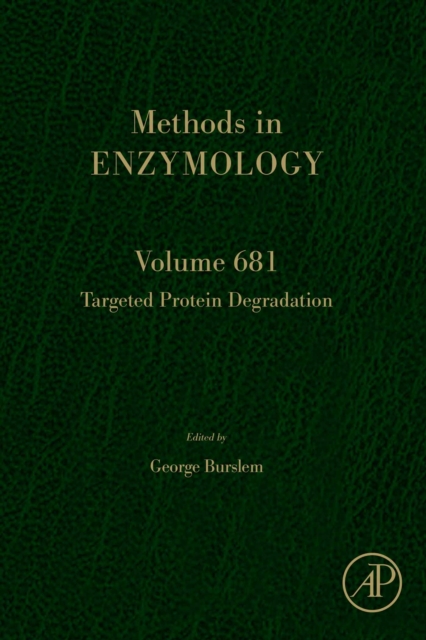
Targeted Protein Degradation, Volume 680 in the Methods in Enzymology series, highlights new advances in the field with this new volume presenting interesting chapters on a variety of timely topics, with each.
This new comprehensive two-volume set, Molecular Genetics, Structures, Mechanisms, and Functions, covers all the classical and advanced aspects of molecular genetics and gene manipulation, putting this information in one place for beginners, experts, and those venturing into the fascinating science of molecular biology.
Profiles of Drug Substances, Excipients, and Related Methodology, Volume 48 encompasses review articles and database compilations that fall within one or more of the following five broad categories: Physical Profiles of Drug Substances and Excipients; Analytical Profiles of Drug Substances and Excipients; ADME Profiles of Drug Substances and Excipients; Methodology Related to the Characterization of Drug Substances and Excipients; Methods of Chemical Synthesis.
This new volume provides an up-to-date understanding of the numerous classes of plant transposable elements, the mobile units of DNA that comprise large portions of plant genomes, which are an important contributor for gene and genome evolution.
This new volume provides an up-to-date understanding of the numerous classes of plant transposable elements, the mobile units of DNA that comprise large portions of plant genomes, which are an important contributor for gene and genome evolution.
Complex and crucially important, the senses collect the massive amount of information we need to navigate daily life, and serve as a filter between our inner selves and the larger world.
This is the companion volume to Daniel Klionsky's Autophagy: Lower Eukaryotes, which features the basic methods in autophagy covering yeasts and alternative fungi (aspergillus, podospora, magnaporthe).
The critically acclaimed laboratory standard for more than forty years, Methods in Enzymology is one of the most highly respected publications in the field of biochemistry.
Protocols in Biochemistry and Clinical Biochemistry offers clear, applied instruction to fundamental biochemistry methods and protocols, from buffer preparation to nucleic acid purification, protein, lipid, carbohydrate, and enzyme testing, and clinical testing of vitamins, glucose and cholesterol levels, among other diagnostics.
Cell Death Regulation in Health and Disease - Part C, Volume 353 in the International Review of Cell and Molecular Biology series, reviews and details current advances in cell and molecular biology.
Methods in Cell Biology, Volume 158, the latest release in this series, highlights new advances in the field, with this release covering How to orient cells in micro-cavities for high resolution imaging of cytokinesis and lumen formation, A body-on-a-chip (BOC) system for studying gut-liver interaction, Manipulating cultured mammalian cells for mitosis research, Live-cell FLIM-FRET using a commercially available system, A comparative analysis of methods to measure kinetochore-microtubule attachment stability, A workflow for visualizing human cancer biopsies using large-format electron microscopy, Isolation of stage-specific germ cells using facs in drosophila germarium, Computational analysis of filament polymerization dynamics in cytoskeletal networks, and more.
Computational Approaches for Understanding Dynamical Systems: Protein Folding and Assembly, Volume 170 in the Progress in Molecular Biology and Translational Science series, provides the most topical, informative and exciting monographs available on a wide variety of research topics.
Ion Channels, Part C, Volume 653 in the Methods in Enzymology series, highlights new advances in the field with this new volume presenting interesting chapters on a variety of topics, including Nonsense suppression in ion channels, Engineering Ion Channels Using Protein Trans-splicing, Probing Ion Channel Neighborhoods Using APEX, STX based probes for NaVs, ANAP: a versatile, fluorescent probe of ion channel gating and regulation, High Throughput Screens for Small Molecule Ion Channel Modulators, Using toxins to study ion channels, Re/de-constructing ubiquitin regulation of ion channels, Tethered Peptide Toxins for Ion Channels, Voltage-Sensing Phosphatase Molecular Engineering, and more.
mRNA 3' End Processing and Stability, Volume 655 in the Methods in Enzymology series, highlights new advances in the field, with this new volume presenting interesting chapters on a variety of timely topics.
Advances in Genetics, Volume 107, provides the latest information on the rapidly evolving field of genetics, presenting new medical breakthroughs that are occurring as a result of advances in our knowledge of the topic.