Presenting the latest molecular diagnostic techniques in one comprehensive volume The molecular diagnostics landscape has changed dramatically since the last edition of Molecular Microbiology: Diagnostic Principles and Practice in 2011.
The future is now this groundbreaking textbook illustrates how biotechnology has radically changed the way we think about health care Biotechnology is delivering not only new products to diagnose, prevent, and treat human disease but entirely new approaches to a wide range of difficult biomedical challenges.
The single most comprehensive resource for environmental microbiology Environmental microbiology, the study of the roles that microbes play in all planetary environments, is one of the most important areas of scientific research.
THE authoritative guide for clinical laboratory immunology For over 40 years the Manual of Molecular and Clinical Laboratory Immunology has served as the premier guide for the clinical immunology laboratory.
Cases in Medical Microbiology and Infectious Diseases challenges students to develop a working knowledge of the variety of microorganisms that cause infections in humans.
State-of-the-art reviews covering major aspects of antibodies and intervention against infectious diseases The connection between antibodies and infectious diseases has spawned entire related fields of study.
"e;Caspase 3: Structure, Functions and Interactions"e; is a book designed as an educational resource for researchers and health care providers who want to learn more about caspase 3.
The role of epigenetic modifications in gene-gene and/or gene-environment interactions in rare diseases is a key issue in molecular physiology and medicine as certain principles may be applied in other common and complex disorders.
Gene Delivery: Methods and Applications provides a comprehensive overview on viral and non-viral methods used to genetically engineer human mesenchymal stromal cells.
In studying biology, one of the more difficult factors to predict is how parents' attributes will affect their children and how those children will affect their own children.
Marine Molecules from Algae and Cyanobacteria: Extraction, Purification, Toxicology and Applications addresses biomolecules, their roll in living organism, structure elucidation, sources, important characteristics and their industrial applications for educational (academic) and industrial purposes.
Microbiome in Cancer and Autoimmunity - Part B, Volume 395 offers a comprehensive exploration of the intricate relationship between the human microbiome and the development of cancer and autoimmune diseases.
Advances in Forensic Biology and DNA Typing examines a broad range of forensic DNA applications and topics, based on internationally recognized best practices.
As per the reports of FAO, the human population will rise to 9 billion by the end of 2050 and 70% of more food must be produced over the next three decades to feed the additional population.
In recent years, understanding of microRNA (miRNA) biogenesis, the molecular mechanisms by which miRNAs regulate gene expression, and the functional roles of miRNAs has expanded.
All hollow organs, such as blood vessels, the gastrointestinal tract, airways, male and female reproductive systems, and the urinary bladder are primarily composed of smooth muscle.
During the last two decades, there has been an explosion of research pertaining to the molecular mechanisms that allow for organisms to detect different stimuli that is an essential feature for their survival.
There is increasing interest in the biology of domestic animals ranging from genomics, transcriptomics, metabolomics, nutritional physiology, and systems biology.
This book explores the recent advances and integrations in molecular technology in food research platforms, which have revolutionized the way we discover and trace potential allergens in our food and drugs and how we utilize that for diagnosis and management.
Introduction to Proteins provides a comprehensive and state-of-the-art introduction to the structure, function, and motion of proteins for students, faculty, and researchers at all levels.
Introduction to Proteins provides a comprehensive and state-of-the-art introduction to the structure, function, and motion of proteins for students, faculty, and researchers at all levels.
Serotonin and Melatonin: Their Functional Role in Plants, Food, Phytomedicine, and Human Health highlights the significance of the plant sources of serotonin and melatonin in the fields of medicine, agriculture, and food science.
Thoroughly researched using experimentation and re-examination of all previously published evidence, Molecular and Physiological Mechanisms of Muscle Contraction is a carefully crafted treatise and revision of previous conceptions of muscle contraction.
A single source reference covering every aspect of biotechnology, Biotechnology Fundamentals, Second Edition breaks down the basic fundamentals of this discipline, and highlights both conventional and modern approaches unique to the industry.
An invaluable resource for computational biologists and researchers from other fields seeking an introduction to the topic, Chromatin: Structure, Dynamics, Regulation offers comprehensive coverage of this dynamic interdisciplinary field, from the basics to the latest research.
For decades biology has focused on decoding cellular processes one gene at a time, but many of the most pressing biological questions, as well as diseases such as cancer and heart disease, are related to complex systems involving the interaction of hundreds, or even thousands, of gene products and other factors.
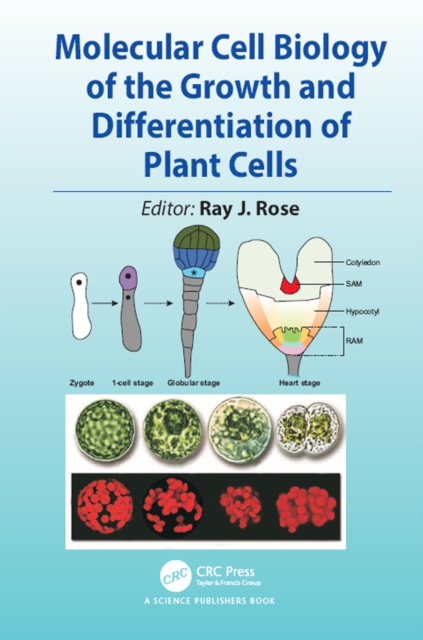
Molecular Cell Biology of the Growth and Differentiation of Plant Cells encompasses cell division, cell enlargement and differentiation; which is the cellular basis of plant growth and development.
It was not until recent years that the study of polyamines, their mechanisms of synthesis, and the roles they play in metabolism have flourished, becoming a fertile field of intense research.
Applied Molecular Biotechnology: The Next Generation of Genetic Engineering explains state-of-the-art advances in the rapidly developing area of molecular biotechnology, the technology of the new millennium.
The first edition of this book, Basic Concepts in Organ Procurement, Perfusion and Preservation for Transplantation, was published 27 years ago, in 1982 when organ procurement and preservation began to advance in the study of the best ways to preserve organs for transplantation.
While every cell of an organism has an identical genomic content, extremely complex networks exist to tailor the genomic output to the needs of that cell.
This book addresses relevant issues that tissue-engineering researchers must consider when planning new strategies, especially in the bone and cartilage field.