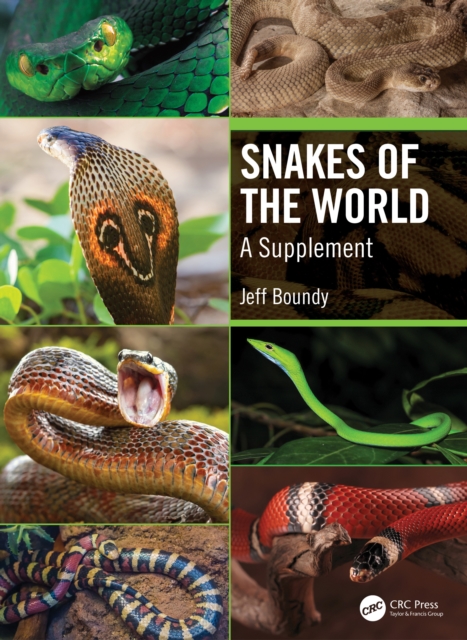
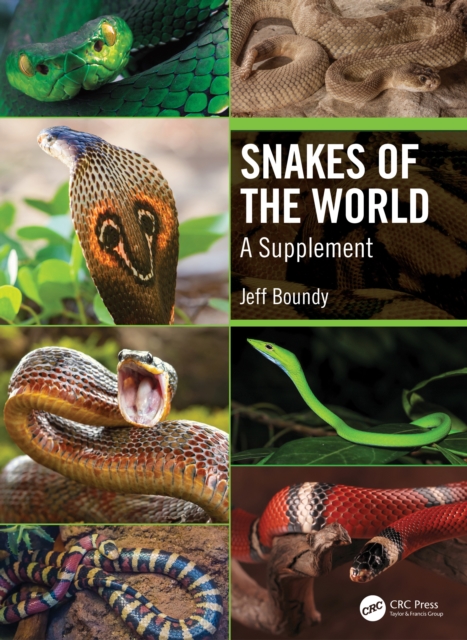
Snakes of the World: A Catalogue of Living and Extinct Species, published in 2014, was the first catalogue of its kind and covered all living and fossil snakes described between 1758 and 2012.
Snakes of the World: A Catalogue of Living and Extinct Species, published in 2014, was the first catalogue of its kind and covered all living and fossil snakes described between 1758 and 2012.
Reprinted from "e;The Fauna of British India, including Ceylon and Burma"e; in 1927, Harding and Moore's illustrated compendium describes the biology, anatomy and sub species of the parasitic leech family that is the Suborder Rhynchabdellae predominantly found in south Asia.
Reprinted from "e;The Fauna of British India, including Ceylon and Burma"e; in 1927, Harding and Moore's illustrated compendium describes the biology, anatomy and sub species of the parasitic leech family that is the Suborder Rhynchabdellae predominantly found in south Asia.
The book aims to bring together the essential information on animal behaviour for those concerned with the husbandry, management and welfare of farm animals.
Interest in insect behavior is growing rapidly, as reflected both in courses devoted fully to the topic and in its inclusion in general biology, ecology, invertebrate zoology, and animal behavior--as well as general entomology--curricula.
This monograph provides information on the basic and applied research on the morphology, taxonomy, biology, ecology and behaviour of the whitefly, Bemisia tabaci (Gennadius).
Recent interest in nonchemical methods of pest control has brought renewed attention to the biological control of plant pests in the fields of entomology, plant pathology, and weed science.
The honey bees were formerly seen as a small, static group comprising four species, whose behavior and ecology were simple variants on the patterns found in Apis mellifera.
The efficient production of large numbers of high-quality insects is a concern both for basic research and for the success of control programmes for pests of agricultural and medical significance.
Contributors present the newest information on ecological, physiological, neurological, cellular and biochemical mechanisms by which vertebrates deal with seasonal cold.
The 1985 Research Conference on Fire Ants and Leaf-Cutting Ants covered the most recent developments in research and control of these insect pests of the New World tropical and subtropical zones, the southern United States, South and Central America, and the Caribbean Islands.
The adverse affects of pesticides and other toxic deterrents on the environment and human health are causing researchers to investigate biological methods for controlling arthropods - flies and mites - which negatively affect livestock and poultry.
People have long been fascinated, not just by the behaviour of non-human animals, but by the problem of how this behaviour is to be interpreted and explained.
The book aims to bring together the essential information on animal behaviour for those concerned with the husbandry, management and welfare of farm animals.
Interest in insect behavior is growing rapidly, as reflected both in courses devoted fully to the topic and in its inclusion in general biology, ecology, invertebrate zoology, and animal behavior--as well as general entomology--curricula.
This monograph provides information on the basic and applied research on the morphology, taxonomy, biology, ecology and behaviour of the whitefly, Bemisia tabaci (Gennadius).
Recent interest in nonchemical methods of pest control has brought renewed attention to the biological control of plant pests in the fields of entomology, plant pathology, and weed science.
The honey bees were formerly seen as a small, static group comprising four species, whose behavior and ecology were simple variants on the patterns found in Apis mellifera.
The efficient production of large numbers of high-quality insects is a concern both for basic research and for the success of control programmes for pests of agricultural and medical significance.
Contributors present the newest information on ecological, physiological, neurological, cellular and biochemical mechanisms by which vertebrates deal with seasonal cold.
The adverse affects of pesticides and other toxic deterrents on the environment and human health are causing researchers to investigate biological methods for controlling arthropods - flies and mites - which negatively affect livestock and poultry.
People have long been fascinated, not just by the behaviour of non-human animals, but by the problem of how this behaviour is to be interpreted and explained.
The 1985 Research Conference on Fire Ants and Leaf-Cutting Ants covered the most recent developments in research and control of these insect pests of the New World tropical and subtropical zones, the southern United States, South and Central America, and the Caribbean Islands.
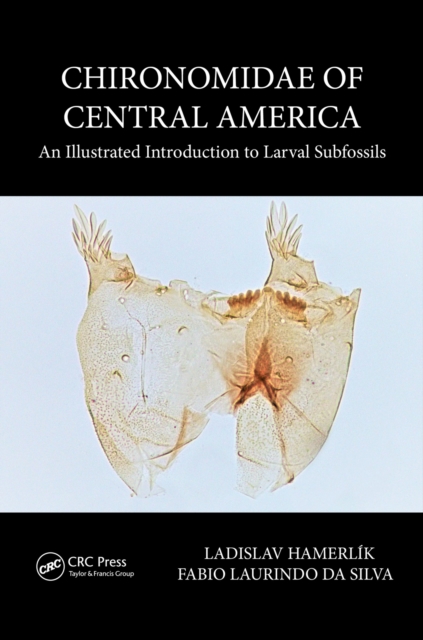
This illustrated introduction to Central American Chironomidae offers extensive photographic material, as well as detailed morphological and ecological descriptions of chironomid subfossils found in Central American lake sediments.