Originally published in 1899, The History of Creation was the first book of its kind to apply a doctrine to the whole range of organic morphology and make use of the effect Darwin had on biological sciences during the 19th century.
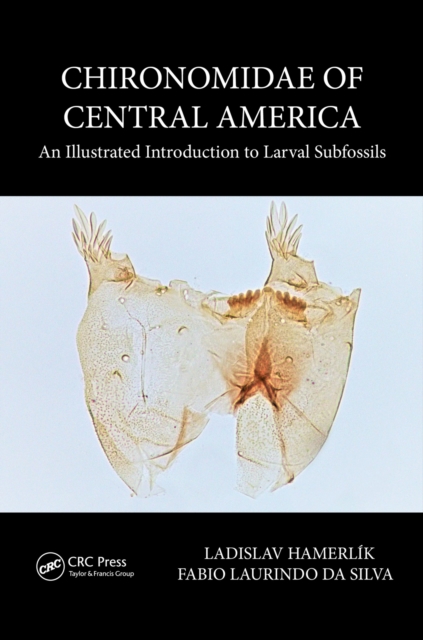
This illustrated introduction to Central American Chironomidae offers extensive photographic material, as well as detailed morphological and ecological descriptions of chironomid subfossils found in Central American lake sediments.
Originally published in 1899, The History of Creation was the first book of its kind to apply a doctrine to the whole range of organic morphology and make use of the effect Darwin had on biological sciences during the 19th century.
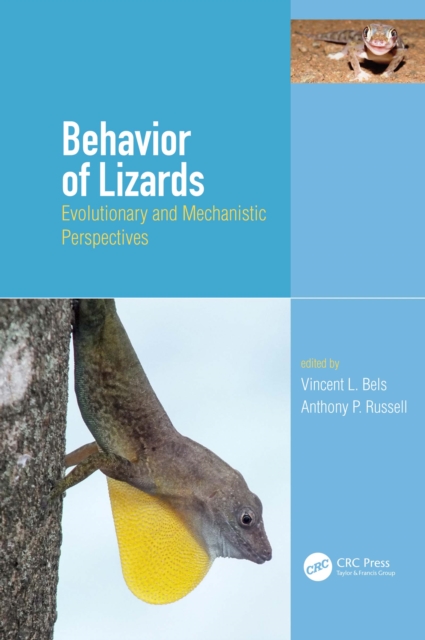
Key features:Presents a contemporary snapshot of the mechanisms underlying the evolution and adaptation of behaviorExplores how genetics, epigenetics, development, and environment shape behavior Discusses a broad range of behavioral repertoires and responses, including those related to thermoregulatory, foraging, predatory, displaying, social and escape strategies.
Key features:Presents a contemporary snapshot of the mechanisms underlying the evolution and adaptation of behaviorExplores how genetics, epigenetics, development, and environment shape behavior Discusses a broad range of behavioral repertoires and responses, including those related to thermoregulatory, foraging, predatory, displaying, social and escape strategies.
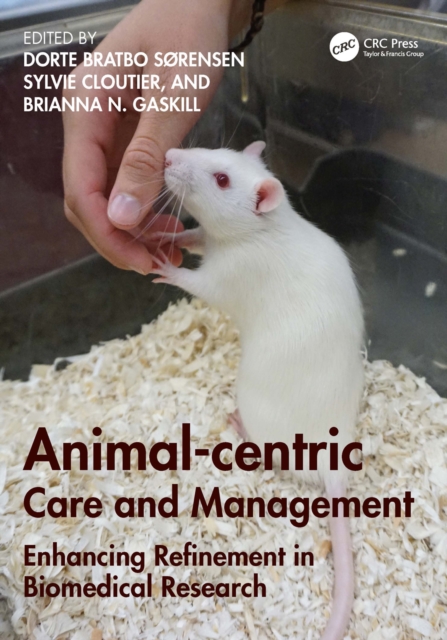
The concept of the 3Rs (Refinement, Reduction and Replacement) has been used as a framework for improving the welfare of laboratory animals for the last half century.
The concept of the 3Rs (Refinement, Reduction and Replacement) has been used as a framework for improving the welfare of laboratory animals for the last half century.
Ethical Debates in Orangutan Conservation explores how conservationists decide whether, and how, to undertake rehabilitation and reintroduction (R&R) when rescuing orphaned orangutans.
Ethical Debates in Orangutan Conservation explores how conservationists decide whether, and how, to undertake rehabilitation and reintroduction (R&R) when rescuing orphaned orangutans.
Gives an account of the morphologies of vertebrate respiratory organs and attempts to explicate the basis of the common and different structural and functional designs and stratagems that have evolved for acquisition of molecular oxygen.
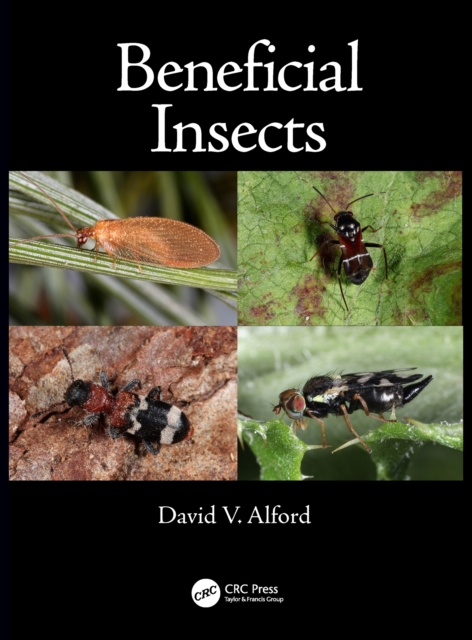
CHOICE Highly recommended 2020Insects are key components of life on our planet, and their presence is essential for maintaining balanced terrestrial ecosystems.
Dramatic changes in the environment, including habitat degradation and climate change, have focused attention on how individuals and populations respond to a shifting biotic and abiotic landscape.
The book is a multi-authored book of 18 chapters comprising the state of the art work of all relevant topics on modern fish histology from 28 authors from ten countries.
Interest in the humane and scientifically justifiable use of research animals has intensified since the publication of the 2nd edition of Animal Models in Cardiovascular Research.
Laboratory-bred common marmosets (Callithrix jacchus) have a natural lifespan in captivity in excess of 12 years, while their maximum longevity is more than 16 years.
Primate Craniofacial Function and Biology is an integrative volume with broad coverage of current research on primate craniofacial biology and function.
Biology and Ecology of Earthworms is established as a key valuable text for students of agriculture, soil science, and soil invertebrate zoology and ecology.
We developed the first edition of this book because we perceived a need for a compilation on study design with application to studies of the ecology, conser- tion, and management of wildlife.
This volume reports the proceedings of the eleventh triennial meeting of the Chemical Signals in Vertebrates International Symposium and thus, is the 30th anniversary of the informal grouping of scientists who convene to discuss their common interests in the ways in which vertebrates use chemical signals.
Elwyn Simons has held professional appointments at Yale University (1960-1977), Duke University (1977-present), and was the Director of the Duke Primate Center (1977-1991) and Scientific Director (1991-2001).
The Springer Handbook of Auditory Research presents a series of comprehensive and synthetic reviews of the fundamental topics in modern auditory research.
As models for vertebrate auditory systems, amphibians have been the source of extensive, ground-breaking research on hearing, the nervous system and acoustic communication.
Over the past twenty-five years, the effects of the spatial distribution and scaling of resources on animal populations have been increasingly studied in wildlife biology, landscape ecology, conservation biology, and related fields.
At the present time, the laboratory mouse has become a central tool for skeletal studies, mainly because of the extensive use of genetic manipulations in this species.
Lemurs: Ecology and Adaptation brings together information from recent research, and provides new insight into the study of lemur origins, and the ecology and adaptation of both extant and recently extinct lemurs.
This book provides a novel focus on adaptive explanations for cranial and postcranial features and functional complexes, socioecological systems, life history patterns, etc.
This book is a truly international collaboration, with editors based on four con- nents and first authors from Canada, France, Japan, Madagascar, the United Kingdom, and the United States.