Organic Chemistry: Structure, Mechanism, Synthesis, Second Edition, provides basic principles of this fascinating and challenging science, which lies at the interface of physical and biological sciences.
A reactions oriented course is a staple of most graduate organic programs, and synthesis is taught either as a part of that course or as a special topic.
For courses in Organic Chemistry (2-Semester) A framework for organic chemistry built around the similarities in reaction types Paula Bruice's presentation in Organic Chemistry, 8th Edition provides mixed-science majors with the conceptual foundations, chemical logic, and problem-solving skills they need to reason their way to solutions for diverse problems in synthetic organic chemistry, biochemistry, and medicine.
Discovery and Development of Antidiabetic Agents from Natural Products brings together global research on the medicinal chemistry of active agents from natural sources for the prevention and treatment of diabetes and associated disorders.
Mechanochemical Organic Synthesis is a comprehensive reference that not only synthesizes the current literature but also offers practical protocols that industrial and academic scientists can immediately put to use in their daily work.
Corrosion studies have attracted considerable interest in the areas of materials chemistry and industrial chemistry, as it affects the direct and indirect costs of industry, leading to huge economic setbacks due to the need for repair, maintenance, and even shutdowns due corrosion damage.
Of the thousands of novel compounds that a drug discovery project team invents and that bind to the therapeutic target, typically only a fraction of these have sufficient ADME/Tox properties to become a drug product.
Organic Nanoreactors: From Molecular to Supramolecular Organic Compounds provides a unique overview of synthetic, porous organic compounds containing a cavity which can encapsulate one or more guest(s).
Side Reactions in Peptide Synthesis, based on the author's academic and industrial experience, and backed by a thorough review of the current literature, provides analysis of, and proposes solutions to, the most frequently encountered side reactions during peptide and peptidomimetic synthesis.
Writing Reaction Mechanisms in Organic Chemistry, Third Edition, is a guide to understanding the movements of atoms and electrons in the reactions of organic molecules.
Although many books exist on the subject of chiral chemistry, they only briefly cover chiral synthesis and analysis as a minor part of a larger work, to date there are none that pull together the background information and latest advances in one comprehensive reference work.
Polymers are used in everything from nylon stockings to commercial aircraft to artificial heart valves, and they have a key role in addressing international competitiveness and other national issues.
A new focus on glycoscience, a field that explores the structures and functions of sugars, promises great advances in areas as diverse as medicine, energy generation, and materials science, this report finds.
Enzyme Kinetics and Mechanisms takes the reader through the experimental techniques and the logic by which the mechanisms of enzyme-catalyzed reactions can be elucidated by the results of steady-state kinetics and related experiments.
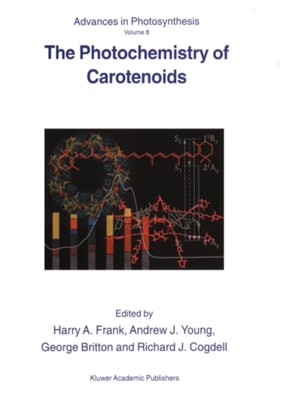
Each of the twenty chapters in The Photochemistry of Carotenoids is written by leading experts in the area of carotenoid research and gives a comprehensive overview of a particular topic in the field.
The discovery of fullerenes, species belonging to the electronodeficient polyalkenes with weakly conjugated double bonds, has opened novel opportunities for the radical chemistry.
The fields of hydrodesulfurization (HDS) and hydrodenitrogenation (HDN) continue to attract the attention of researchers in the various disciplines connected to these fascinating problems that represent two of the key outstanding chemical challenges for the petroleum refining industry in view of their very strong environmental and commercial implications.
Over the past 20 years aqueous organometallic catalysis has found applications in small- scale organic synthesis in the laboratory, as well as in the industrial production of chemicals with a combined output close to one million tons per year.
In the last decade there have been numerous advances in the area of rhodium-catalyzed hydroformylation, such as highly selective catalysts of industrial importance, new insights into mechanisms of the reaction, very selective asymmetric catalysts, in situ characterization and application to organic synthesis.
Even high-speed supercomputers cannot easily convert traditional two-dimensional databases from chemical topology into the three-dimensional ones demanded by today's chemists, particularly those working in drug design.
Lead-based paint has become a national issue and will continue to be a hi- priority focus ofnational, state, and local agencies until there is no lead-based paint in the United States.
Cyclic Polymers (Second Edition) reviews the many recent advances in this rapidly expanding subject since the publication of the first edition in 1986.
In the late 1980s, Peptide Societies were established in Europe, the United States, and Japan, and more recently, in the Asian and the Pacific Rim regions including Australia, China, and Korea.
Since its original appearance in 1977, Advanced Organic Chemistry has found wide use as a text providing broad coverage of the structure, reactivity and synthesis of organic compounds.
Proceedings of the Third International Symposium on Frontiers in Biomedical Polymers including Polymer Therapeutics: From Laboratory to Clinical Practice, held May 23-27, 1999, in Shiga, Japan.
Writing Reaction Mechanisms in Organic Chemistry, Third Edition, is a guide to understanding the movements of atoms and electrons in the reactions of organic molecules.