Introducing engineering students to numerical analysis and computing, this book covers a range of topics suitable for the first three years of a four year undergraduate engineering degree.
Reliability-based design is the only engineering methodology currently available which can ensure self-consistency in both physical and probabilistic terms.
Line Integral Methods for Conservative Problems explains the numerical solution of differential equations within the framework of geometric integration, a branch of numerical analysis that devises numerical methods able to reproduce (in the discrete solution) relevant geometric properties of the continuous vector field.
Numerical Methods for Fractional Calculus presents numerical methods for fractional integrals and fractional derivatives, finite difference methods for fractional ordinary differential equations (FODEs) and fractional partial differential equations (FPDEs), and finite element methods for FPDEs.
Teach Your Students Both the Mathematics of Numerical Methods and the Art of Computer ProgrammingIntroduction to Computational Linear Algebra presents classroom-tested material on computational linear algebra and its application to numerical solutions of partial and ordinary differential equations.
Uses a Step-By-Step Technique Directed with Guided Problems and Relevant Screen Shots Simulation use is on the rise, and more practicing professionals are depending on the reliability of software to help them tackle real-world mechanical engineering problems.
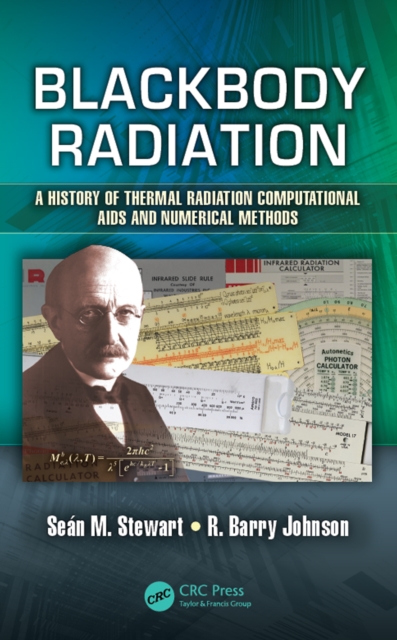
Shelving Guide: Electrical Engineering In 1900 the great German theoretical physicist Max Planck formulated a correct mathematical description of blackbody radiation.
Numerical Algorithms: Methods for Computer Vision, Machine Learning, and Graphics presents a new approach to numerical analysis for modern computer scientists.
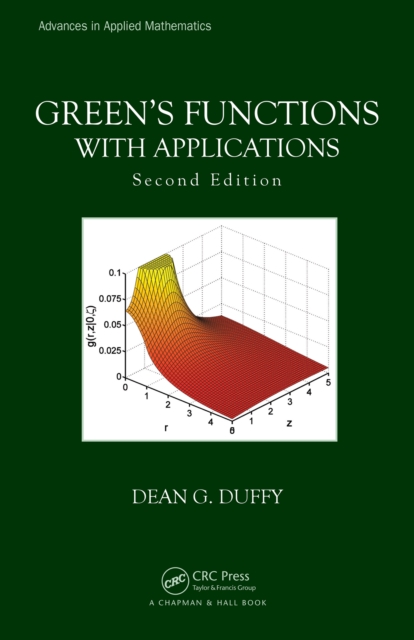
Since publication of the first edition over a decade ago, Green's Functions with Applications has provided applied scientists and engineers with a systematic approach to the various methods available for deriving a Green's function.
Presents a Systematic Approach for Modeling Mechanical Models Using Variational Formulation-Uses Real-World Examples and Applications of Mechanical ModelsUtilizing material developed in a classroom setting and tested over a 12-year period, Computational Solid Mechanics: Variational Formulation and High-Order Approximation details an approach that e
Differential equations play a vital role in the modeling of physical and engineering problems, such as those in solid and fluid mechanics, viscoelasticity, biology, physics, and many other areas.
Finite Difference Methods in Heat Transfer, Second Edition focuses on finite difference methods and their application to the solution of heat transfer problems.
The Future of Numerical ComputingWritten by one of the foremost experts in high-performance computing and the inventor of Gustafson's Law, The End of Error: Unum Computing explains a new approach to computer arithmetic: the universal number (unum).
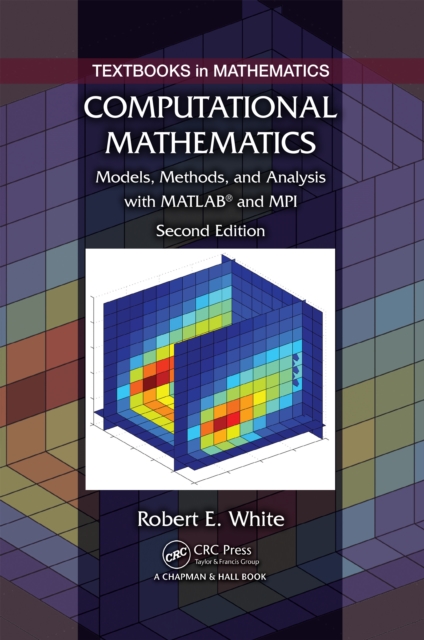
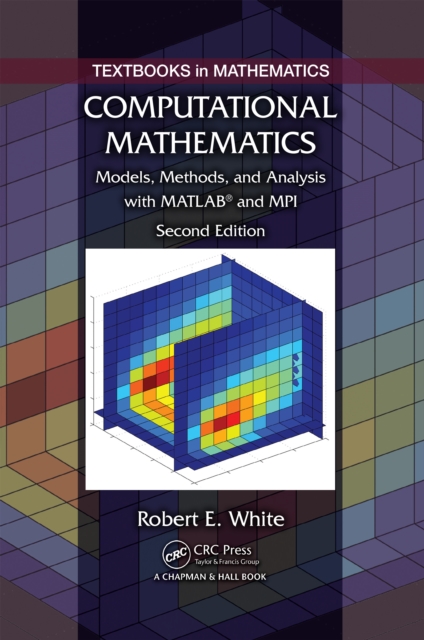
Computational Mathematics: Models, Methods, and Analysis with MATLAB and MPI is a unique book covering the concepts and techniques at the core of computational science.
Computational Mathematics: Models, Methods, and Analysis with MATLAB and MPI is a unique book covering the concepts and techniques at the core of computational science.
Physics forms the basis for many of the motions and behaviors seen in both the real world and in the virtual worlds of animated films, visual effects, and computer games.
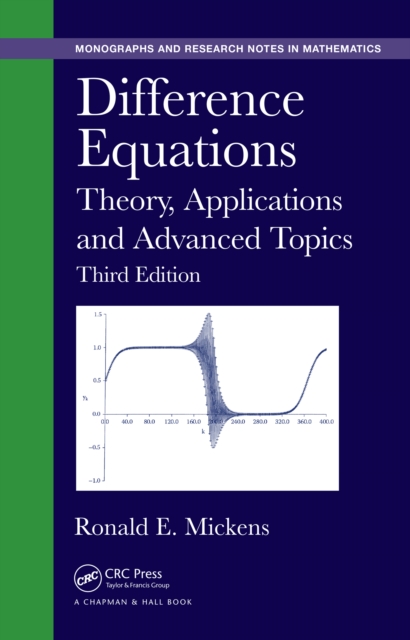
Difference Equations: Theory, Applications and Advanced Topics, Third Edition provides a broad introduction to the mathematics of difference equations and some of their applications.
Give Your Students the Proper Groundwork for Future Studies in OptimizationA First Course in Optimization is designed for a one-semester course in optimization taken by advanced undergraduate and beginning graduate students in the mathematical sciences and engineering.
Provides Step-by-Step Instruction Structural Analysis: Principles, Methods and Modelling outlines the fundamentals involved in analyzing engineering structures, and effectively presents the derivations used for analytical and numerical formulations.
Iterative Optimization in Inverse Problems brings together a number of important iterative algorithms for medical imaging, optimization, and statistical estimation.
Fixed Point Theory, Variational Analysis, and Optimization not only covers three vital branches of nonlinear analysis-fixed point theory, variational inequalities, and vector optimization-but also explains the connections between them, enabling the study of a general form of variational inequality problems related to the optimality conditions invol
Covered from the vantage point of a user of a commercial flow package, Essentials of Computational Fluid Dynamics provides the information needed to competently operate a commercial flow solver.
Nonparametric Regression and Generalized Linear Models focuses on the roughness penalty method of nonparametric smoothing and shows how this technique provides a unifying approach to a wide range of smoothing problems.
Introduction to Computational Modeling Using C and Open-Source Tools presents the fundamental principles of computational models from a computer science perspective.
Modeling and Inverse Problems in the Presence of Uncertainty collects recent research-including the authors' own substantial projects-on uncertainty propagation and quantification.
Filling the need for an introductory book on linear programming that discusses the important ways to mitigate parameter uncertainty, Introduction to Linear Optimization and Extensions with MATLAB provides a concrete and intuitive yet rigorous introduction to modern linear optimization.
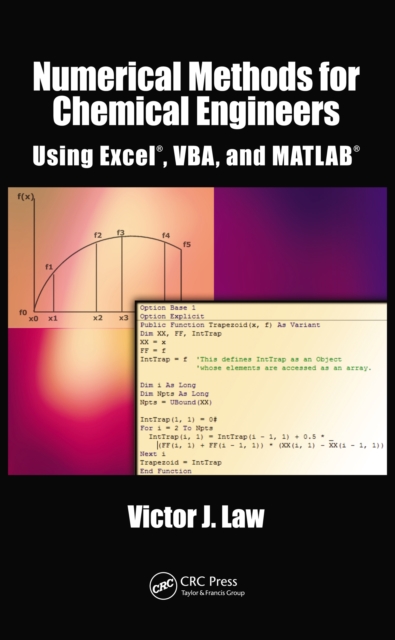
While teaching the Numerical Methods for Engineers course over the last 15 years, the author found a need for a new textbook, one that was less elementary, provided applications and problems better suited for chemical engineers, and contained instruction in Visual Basic for Applications (VBA).
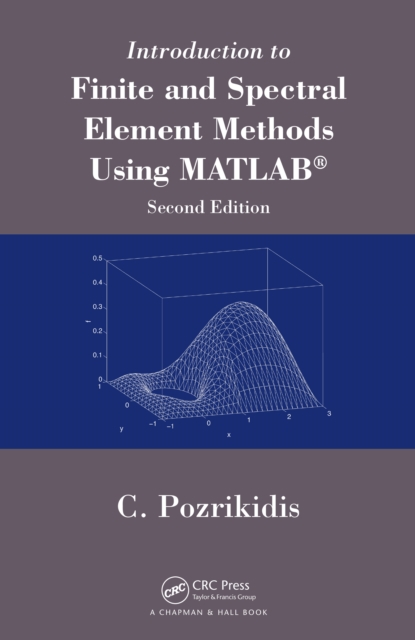
Incorporating new topics and original material, Introduction to Finite and Spectral Element Methods Using MATLAB, Second Edition enables readers to quickly understand the theoretical foundation and practical implementation of the finite element method and its companion spectral element method.
Designed for a one-semester course, Introduction to Numerical Analysis and Scientific Computing presents fundamental concepts of numerical mathematics and explains how to implement and program numerical methods.
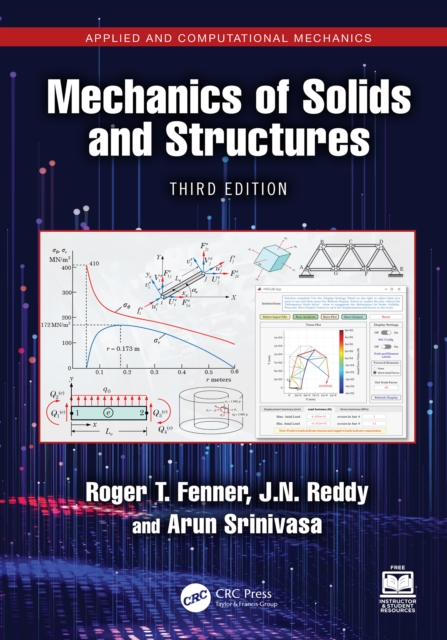
The third edition of Mechanics of Solids and Structures makes use of computational methods such as the finite element method that has revolutionized the field to solve problems while retaining all the basic principles and foundational information needed for mastering advanced engineering mechanics principles and acquiring problem-solving skills.
The objective of this book is to provide a comprehensive discussion of Fourier and Chebyshev spectral methods for the computation of incom- pressible viscous flows, based on the Navier-Stokes equations.
Scan 2000, the GAMM - IMACS International Symposium on Scientific Computing, Computer Arithmetic, and Validated Numerics and Interval 2000, the International Conference on Interval Methods in Science and Engineering were jointly held in Karlsruhe, September 19-22, 2000.
We come to know about the world in two distinctive ways: by direct perception and by application of rational reasoning which, in its highest form, is mathematical thinking.
This volume contains, in part, a selection of papers presented at the sixth Australian Optimization Day Miniconference (Ballarat, 16 July 1999), and the Special Sessions on Nonlinear Dynamics and Optimization and Operations Re- search - Methods and Applications, which were held in Melbourne, July 11-15 1999 as a part of the Joint Meeting of the American Mathematical Society and Australian Mathematical Society.
February 27 - March 1, 1997, the conference Optimal Control: The- ory, Algorithms, and Applications took place at the University of Florida, hosted by the Center for Applied Optimization.
This book covers the basic elements of difference equations and the tools of difference and sum calculus necessary for studying and solv- ing, primarily, ordinary linear difference equations.
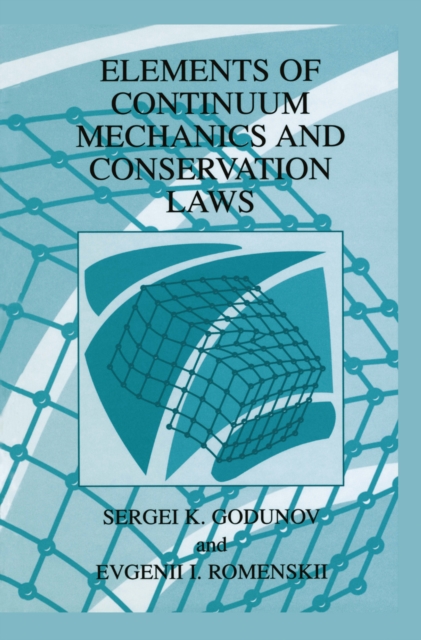
Elements of Continuum Mechanics and Conservation Laws presents a systematization of different models in mathematical physics, a study of the structure of conservation laws, thermodynamical identities, and connection with criteria for well-posedness of the corresponding mathematical problems.
This book deals with the theory and applications of the Reformulation- Linearization/Convexification Technique (RL T) for solving nonconvex optimization problems.
The origins of the finite element method can be traced back to the 1950s when engineers started to solve numerically structural mechanics problems in aeronautics.