This book describes the Optical Immersion Clearing method and its application to acquire information with importance for clinical practice and various fields of biomedical engineering.
This book presents a thorough description and critical discussion of different approaches to measuring leg stiffness during vertical jumps, as well as practical applications.
Mechanics of Biological Systems and Materials & Micro-and Nanomechanics, Volume 4 of the Proceedings of the 2019 SEM Annual Conference & Exposition on Experimental and Applied Mechanics, the fourth volume of six from the Conference, brings together contributions to important areas of research and engineering.
Biomechanics is often overlooked when dealing with orthopedic injuries, whether regarding prevention or treatment, and practicing surgeons and surgeons-in-training may feel overwhelmed when referring to a book with a more complicated basic science approach.
Synchrotron radiation has been a revolutionary and invaluable research tool for a wide range of scientists, including chemists, biologists, physicists, materials scientists, geophysicists.
This book is a comprehensive summary of 50 years of research from theoretical predictions to experimental confirmation of the manifestation of spin exchange in EPR spectroscopy.
This book presents a comprehensive and coherent summary of techniques for enhancing the resolution and image contrast provided by far-field optical microscopes.
This book describes the current state of knowledge in the field of multi-scale ECM mechanics and mechanobiology with a focus on experimental and modelling studies in biomechanical characterization, advanced optical microscopy and imaging, as well as computational modeling.
This book reports on the state of the art in physical ergonomics and addresses the design of products, processes, services, and work systems to ensure they are productive, safe, and enjoyable for people to use.
This undergraduate textbook aids readers in studying music and color, which involve nearly the entire gamut of the fundamental laws of classical as well as atomic physics.
This book gathers papers presented at the annual meetings of the Acarological Society of America (ASA), jointly organized with the Entomological Society of America.
This book presents the microscopic and macroscopic bark structure of more than 180 different tree and shrub species from Europe, Asia and North America.
This book explains the operating principles of atomic force microscopy with the aim of enabling the reader to operate a scanning probe microscope successfully and understand the data obtained with the microscope.
This book presents state-of-the-art experimental and modelling techniques for skin biophysics that are currently used in academic and industrial research.
In this book the recent progress accumulated in studies of the interaction of engineered nanoparticles with cells and cellular constituents is presented.
This book provides readers with the necessary background information and advanced concepts in the field of circuits, at the crossroads between physics, mathematics and system theory.
The interplay between synchronization and spatio-temporal pattern formation is central for a broad variety of phenomena in nature, such as the coordinated contraction of heart tissue, associative memory and learning in neural networks, and pathological synchronization during Parkinson disease or epilepsy.
This new edition presents an authoritative account of the current state of brain biomechanics research for engineers, scientists and medical professionals.
The book explores the phenomenon of surface-enhanced Raman scattering (SERS), the huge amplification of Raman signal from molecules in the proximity of a metallic nanostructured surface, allowing readers to gain an in-depth understanding of the mechanisms affecting the spectroscopic response of SERS-active systems for effective applications.
This book covers the fundamental aspects of fiber lasers and fiber amplifiers, and includes a wide range of material from laser physics fundamentals to state-of-the-art topics in this rapidly growing field of quantum electronics.
This volume of the series Space Life Sciences provides insights into the latest findings of gravity research and the effect of gravity on biological systems, specifically on a cellular and molecular level.
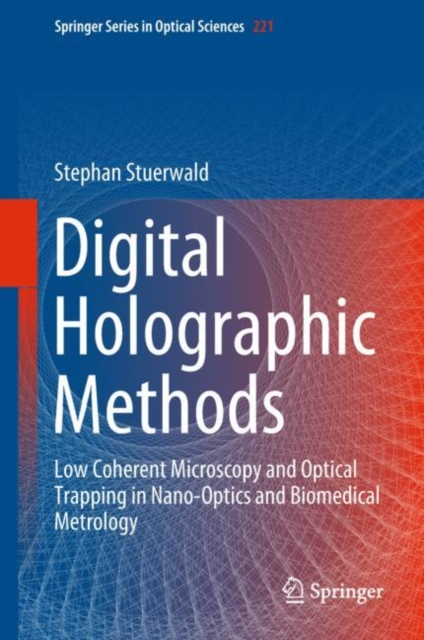
This book presents not only the simultaneous combination of optical methods based on holographic principles for marker-free imaging, real-time trapping, identification and tracking of micro objects, but also the application of substantial low coherent light sources and non-diffractive beams.
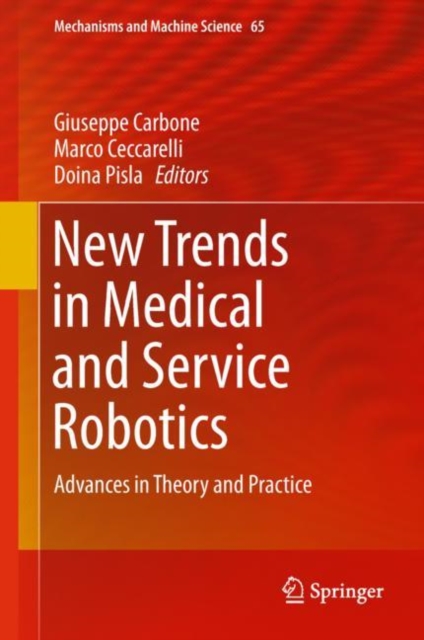
This book contains the selected papers of the Sixth International Workshop on Medical and Service Robots (MESROB 2018), held in Cassino, Italy, in 2018.
This book presents not only the simultaneous combination of optical methods based on holographic principles for marker-free imaging, real-time trapping, identification and tracking of micro objects, but also the application of substantial low coherent light sources and non-diffractive beams.
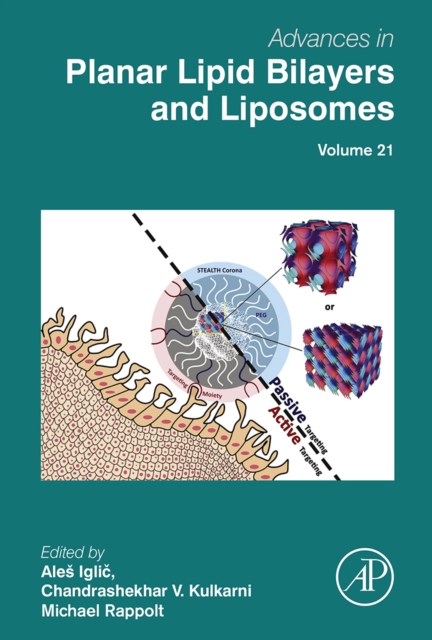
The Elsevier book-series "e;Advances in Planar Lipid Bilayers and Liposomes' (APLBL) provides a global platform for a broad community of experimental and theoretical researchers studying cell membranes, lipid model membranes and lipid self-assemblies from the micro- to the nanoscale.
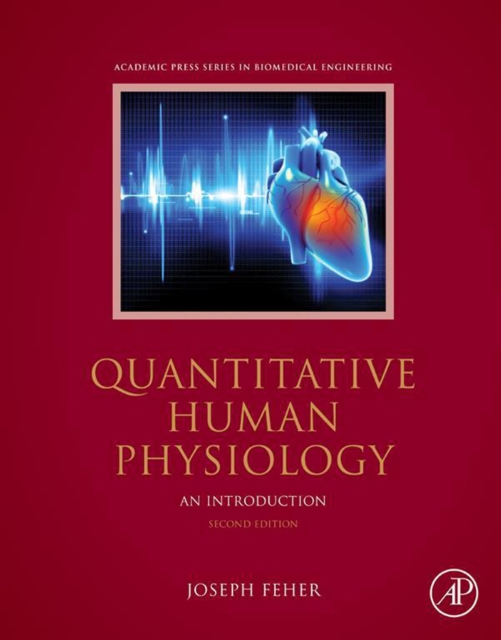
Quantitative Human Physiology: An Introduction, winner of a 2018 Textbook Excellence Award (Texty), is the first text to meet the needs of the undergraduate bioengineering student who is being exposed to physiology for the first time, but requires a more analytical/quantitative approach.
Exploring the five elements of cooking and eating: Taste, Flavour (smell), Texture (touch and sound), Temperature (touch) and Appearance, this book explains how these elements work together and how best to use them to produce simple, delicious dishes.
Although textbooks on the physics of condensed matter consider non-covalent interactions in detail, their application for analysis of protein properties is often poorly presented or omitted.
Atomic force microscopy (AFM) is part of a range of emerging microscopic methods for biologists which offer the magnification range of both the light and electron microscope, but allow imaging under the 'natural' conditions usually associated with the light microscope.