The proceedings contain invited papers and contributions which capture the recent advances in technology (beams, detectors, electronics, computing) and emphasize the new frontiers opened up in Nuclear Physics.
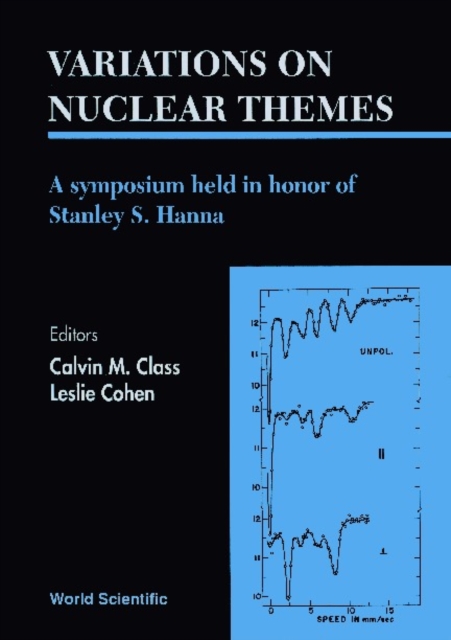
This symposium on Reflections and Directions in Low Energy Heavy-Ion Physics celebrates twenty years of the University Isotope Separator at Oak Ridge (UNISOR) and ten years of the Joint Institute for Heavy Ion Research (JIHIR).
These proceedings focus on contemporary fast neutron physics and include the recent progress and new achievements in fast neutron scattering, energy spectrum, nuclear fission, y-ray spectroscopy and (n,y) reaction mechanism, nuclear theory, activation cross sections, nuclear reactions and intermediate energy neutron physics.
Recent experimental investigations of deep inelastic scattering, baryon form factors and high momentum transfer nuclear reactions have revealed many unexpected phenomena that suggest deep relationships between nucleon structure, hadronic spectroscopy and quantum chromodynamics.
These proceedings cover the following topics: Regular and chaotic motion in nuclei; Symmetry violations in statistical nuclear reactions; From nuclear forces to statistical matrix elements; From single step to compound nuclear reactions; Medium energy nuclear reactions; Nucleus-nucleus collisions and nuclear fission.
The subject of this Institute is the importance of Spin and Symmetry measurements in probing the Standard Model and QCD, polarization in lepton-quark interactions, nucleon spin structure functions, spin effects in high energy hadronic interactions, and electromagnetic spin physics at medium energies.
This volume collects the papers presented at the "e;Specialists' Meeting on Nuclear Level Densities"e;, held in Bologna 15 - 17 November, 1989, which gathered most of the scientists working in the field.
These proceedings provide a general summary of the theoretical and experimental results which have established QCD as the theory of the strong interactions in the past 20 years.
The topics covered in this proceedings include: synthesis of the heaviest isotopes of the lightest elements and the study of their properties, properties of neutron and proton-rich nuclei, some astrophysical problems, cluster radioactivity, present status and perspectives of producing radioactive nuclear beams and their applications, and new experimental facilities and projects.
This workshop gives an overview of the physics opportunities that would be created by high-quality, intense pion beams with energies up to about 1 GeV.
The Symposium on Nuclear Data Evaluation Methodology provided a forum for the discussion of developments made over the past 12 years in the evaluation methods used for generating data files for applied technology.
The XV Workshop on Nuclear Physics was devoted to the study of nucleon models, nuclear structure, nuclear reactions as well as exotic forms of nuclear matter.
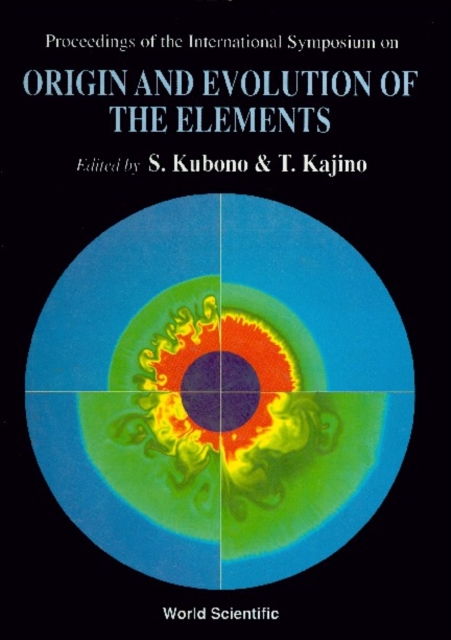
This volume covers a variety of modern aspects of the observational, experimental and theoretical studies on the origin, evolution and distribution of the elements in the Universe.
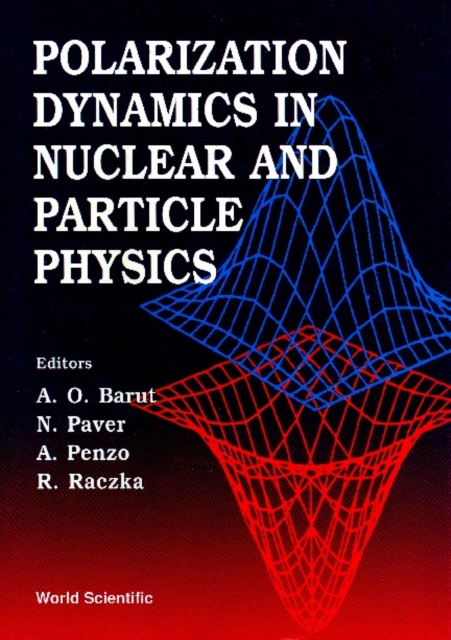
In the four years since the first Trieste Meeting on Spin and Polarization Dynamics in Nuclear and Particle Physics, considerable progress has been made both in the theoretical and experimental aspects of this field.
These proceedings address the new emerging questions in nuclear dynamics such as fluctuations, nuclear multifragmentation, transport theories and particle production in heavy-ion reactions.
The Franklin symposium reviews the state of experimental neutrino physics, particularly those areas in which the properties of neutrinos are the subject of current research.
The International Workshop on Time Reversal Invariance and Parity Violation in Neutron Reactions focused on the study of parity violation (PV) and time reversal invariance (TRI) in neutron physics.
This volume presents topics in which researchers in elementary particle and nuclear physics are commonly interested: nonperturbative aspects of QCD and chiral properties of hadrons, relativistic heavy ion reactions and quark-gluon plasma, nuclear matter at high temperature/ density, lattice QCD, quark structure of hadrons and nuclei, high q2 phenomena in hadrons and nuclei, heavy quarks and weak interaction, hyperon interactions and hypernuclei, relativistic nuclear theory, recent experimentals and other topics.
This volume discusses primarily the characteristics of reactions induced by unstable nuclei and aims to guide future directions in this area of research.
This volume provides an overview of the current state and future developments of Monte Carlo simulation and related tools and methods used in high energy physics and nuclear physics.
The workshop aimed to gather the electron scattering community to assess the present status of the experimental and theoretical research program at the electron scattering facilities that will be available in the near future.
No basic or applied physics research can be done nowadays without the support of computing systems, ranging from cheap personal computers to large multi-user mainframes.
This volume contains lectures on the experimental and theoretical aspects of the present knowledge in the field of strangeness production in atomic nuclei.