Fred Hoyle was one of the most widely acclaimed and colourful scientists of the twentieth century, a down-to-earth Yorkshireman who combined a brilliant scientific mind with a relish for communication and controversy.
This is a book about the dramatic periods in the Earth's history called mass extinctions - short periods (by geological standards) when life nearly died out on Earth.
In this compelling introduction to the fundamental particles that make up the universe, Frank Close takes us on a journey into the atom to examine known particles such as quarks, electrons, and the ghostly neutrino.
Peter Byrne tells the story of Hugh Everett III (1930-1982), whose "e;many worlds"e; theory of multiple universes has had a profound impact on physics and philosophy.
Humans are extraordinary creatures, with the unique ability among animals to imitate and so copy from one another ideas, habits, skills, behaviours, inventions, songs, and stories.
At this very moment the most ambitious scientific experiment of all time is beginning, and yet its precise aims are little understood by the general public.
The editors utilize their 50 years of combined experience in professional engagement with the behaviour and ecology of wild felids to draw together a unique network of the world's most respected and knowledgeable experts.
From the sudden expansion of a cloud of gas or the cooling of a hot metal, to the unfolding of a thought in our minds and even the course of life itself, everything is governed by the four Laws of Thermodynamics.
For 150 years, Down's Syndrome has constituted the archetypal mental disability, easily recognisable by distinct facial anomalies and physical stigmata.
Asthma is a familiar and growing disease today, but its story goes back to the ancient world, as we know from accounts in ancient texts from China, India, Greece and Rome.
Gray's Anatomy is probably one of the most iconic scientific books ever published: an illustrated textbook of anatomy that is still a household name 150 years since its first edition, known for its rigorously scientific text, and masterful illustrations as beautiful as they are detailed.
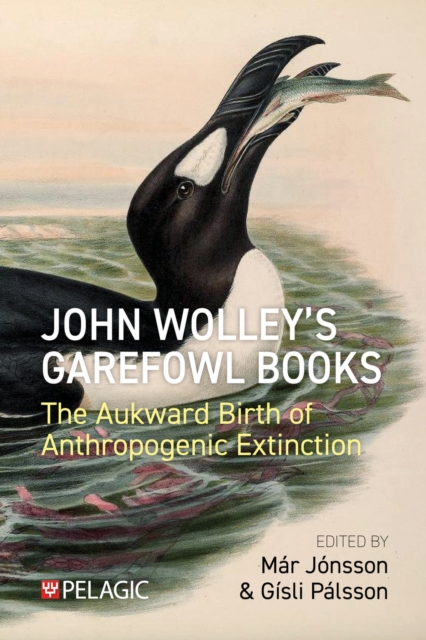
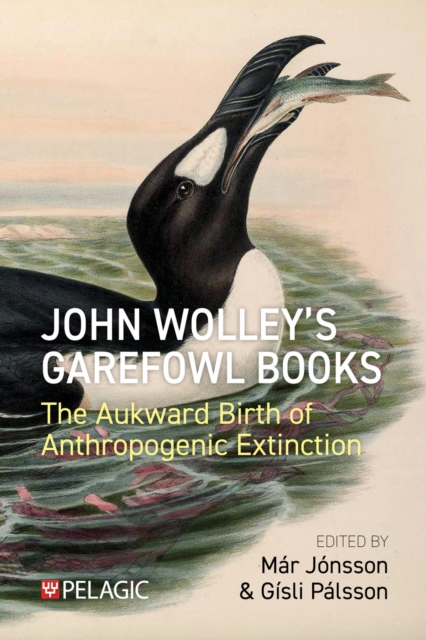
The extent to which human activity has influenced species extinctions during the recent prehistoric past remains controversial due to other factors such as climatic fluctuations and a general lack of data.
From the sheep, dog, and cockerel that were sent aloft in Montgolfier's balloon, to Galvani's frog's legs, Dolly the Sheep, the finches of the Galapagos, and even imaginary cats and simulated life forms, Pavlov's Dogs and Schrodinger's Cat explores the fascinating history of the role of living things in science.