If you have ever wondered why women always bite your head off or why one guy gets all the girls, if you have ever pondered why some men bring you balloons while others leave you their genitals, then Dr Tatiana's Sex Advice to All Creation is the book for you.
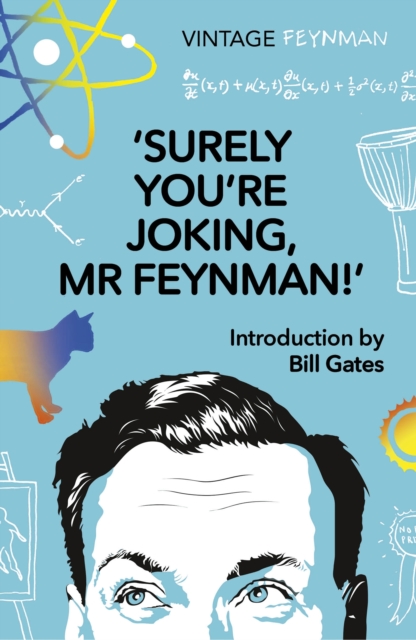
WITH A NEW INTRODUCTION BY BILL GATESIn this warm, insightful portrait of the Winner of the Nobel Prize for Physics in 1965, we see the wisdom, humour and curiosity of Richard Feynman through a series of conversations with his friend Ralph Leighton.
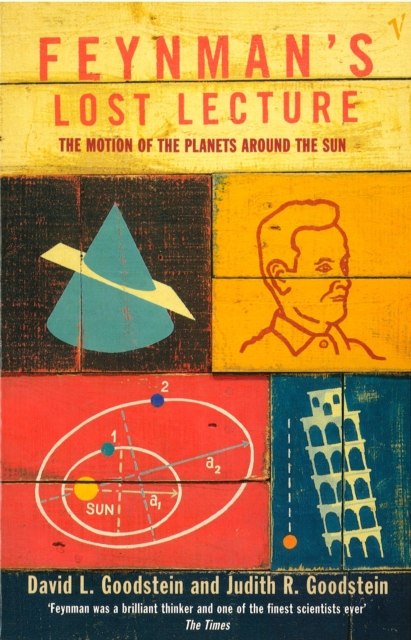
On 14 March 1964 Richard Feynman, one of the greatest scientific thinkers of the 20th Century, delivered a lecture entitled 'The Motion of the Planets Around the Sun'.
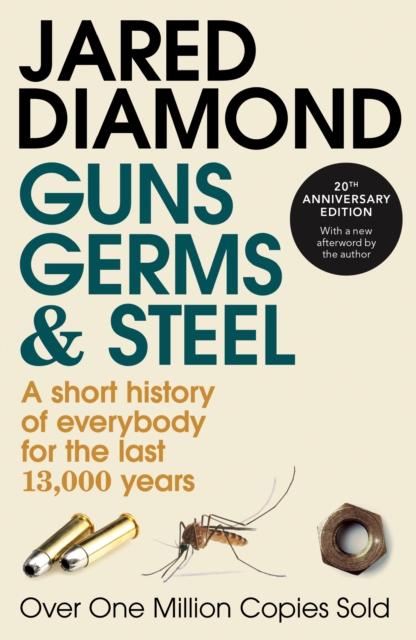
**WINNER OF THE PULITZER PRIZE** 'A book of big questions, and big answers' Yuval Noah Harari, bestselling author of Sapiens Why has human history unfolded so differently across the globe?
For centuries, scientists had only one way to study the brain: wait for misfortune to strike - strokes, seizures, infections, lobotomies, horrendous accidents, phantom limbs, Siamese twins - and see how the victims changed afterwards.
This fascinating anthology introduces us to a wide range of arguments on the subject of memory, the thread that holds our lives, and our history, together.
On July 4th, 2012, one of physics' most exhilarating results was announced: a new particle and very likely a new kind of particle had been discovered at the Large Hadron Collider, the huge particle accelerator designed to reproduce energies present in the universe a fraction of a second after the Big Bang.
When the woman he loved was diagnosed with a metastatic cancer, science-writer George Johnson embarked on a journey to learn everything he could about the disease and the people who dedicate their lives to understanding and combating it.
'A brilliant book' Daniel Kahneman, author of Thinking, Fast and Slow A book that can show you how to change your behaviour' Evening StandardA child is presented with a marshmallow and given a choice: Eat this one now, or wait and enjoy two later.
Born to parents who were enthusiastic naturalists, and linked through his wider family to a clutch of accomplished scientists, Richard Dawkins was bound to have biology in his genes.
In the tradition of Susan Orlean's The Orchid Thief and James Gleick's Genius, The Emperor of Scent tells the story of Luca Turin, an utterly unusual, stubborn scientist, his otherworldly gift for perfume, his brilliant, quixotic theory of how we smell, and his struggle to set before the world the secret of the most enigmatic of our senses.
The story of how East Asians became "e;yellow"e; in the Western imagination-and what it reveals about the problematic history of racial thinkingIn their earliest encounters with Asia, Europeans almost uniformly characterized the people of China and Japan as white.
The fourth book in the Science of Discworld series, and this time around dealing with THE REALLY BIG QUESTIONS, Terry Pratchett s brilliant new Discworld story Judgement Day is annotated with very big footnotes (the interleaving chapters) by mathematician Ian Stewart and biologist Jack Cohen, to bring you a mind-mangling combination of fiction, cutting-edge science and philosophy.
While humanity faces unprecedented ecological and social challenges, advances in technology and our understanding of the mind are creating the conditions for a global renaissance.
Revised Edition with New Afterword from the Author Time #1 Nonfiction Book of the YearFinalist for the National Book Critics Circle Award Over 3 million copies sold in 35 Languages"e;On the day after humans disappear, nature takes over and immediately begins cleaning house - or houses, that is.
Guy Martin, lorry mechanic, motorcycle racing legend and favourite of the Isle of Man TT, lives for the buzz he feels racing his bike round terrifying bends at 200mph.
Why does it feel as if our most challenging problems today- the worldwide recession, global warming, fast-spreading viruses, terrorism and poverty- aren't getting solved?
The Buddhist view of the mind - how it works, how it goes wrong, how to put it right - is increasingly being recognised as profound and highly practical by scientists, counsellors and other professionals.
In this remarkable journal of visits to Eden, Mabey transports his reader from Cornwall to the Mediterranean to the Tropics, from Old World to New, from present to personal memory, to new perspectives on our collective artistic and emotional past.