This book highlights progress and trends in the rapidly evolving field of complement-related drug discovery and spotlights examples of clinical applications.
This book will present completely new, unique findings in eczema: sweat ducts that become occluded with staphylococcal biofilms trigger the innate immune system with TLR2 receptor activity and this leads to production of the "e;itching"e; and inflammation in this disease.
This is a practical reference volume for the student or practising physician to aid him in the investigation, diagnosis, and treatment of allergy in children.
In 1996, the National Bladder Foundation (NBF) was founded by a dedicated group of physicians and researchers propeIled by the urgent need to find better treatments for bladder disease.
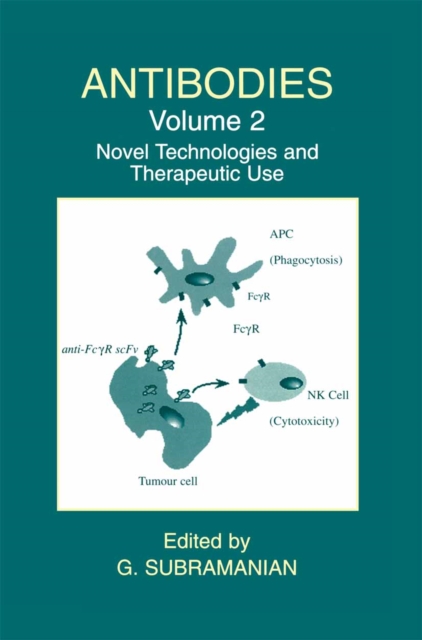
It is now over one hundred years since von Behring and Kitsato first concluded experiments that led to the use of passive immunisation, employing antibodies raised in animals against tetanus and diphtheria toxins.
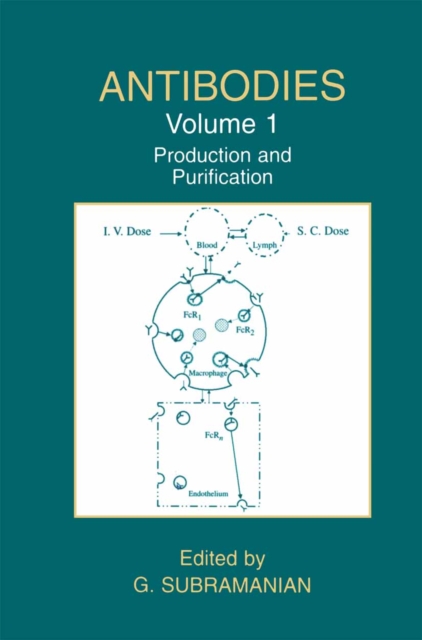
If the antibody industry is to achieve its full potential in the next decade, the individual technical potentials must be exploited, the limitations must be addressed, and lessons learned must be applied both to current purification methods and to the new technologies that continue to emerge.
Whole new areas of immunological research are emerging from the analysis of experimental data, going beyond statistics and parameter estimation into what an applied mathematician would recognise as modelling of dynamical systems.
Hot Topics in Infection and Immunity in Children brings together leading experts in the field to provide a current and authoritative view concerning the hottest topics of concern to clinicians caring for children with infections and research scientists working in the areas of infectious disease, immunology, microbiology and public health.
Course covers topics in infectious diseases in children and is intended for Pediatric Infectious disease trainees, trainers, and all those who manage children with infections.
System Biology encompasses the knowledge from diverse fields such as Molecular Biology, Immunology, Genetics, Computational Biology, Mathematical Biology, etc.
This volume presents a collection of reviews derived from work presented at the Aegean Conference: "e;3rd Crossroads between innate and adaptive immunity"e; which occurred during September 27 - October 2, 2009 at the Minoa Palace Conference Center in Chania, Crete, Greece.
Microbial endocrinology represents a newly emerging interdisciplinary field that is formed by the intersection of the fields of neurobiology and microbiology.
Since the terrorist attack on the United States on September 11, 2001 and subsequent cases of anthrax in Florida and New York City, attention has been focused on the threat of b- logical warfare and bioterrorism.
Course covers topics in infectious diseases in children and is intended for Pediatric Infectious disease trainees, trainers, and all those who manage children with infections.
Target pattern recognition in innate immunity is responsible for the immediate, usually protective, responses shown against invading microorganisms, and it is the principal feature of self and non-self recognition by virtue of the recognition of structures on the microbial pathogens, which are not found on host cells.
This cookbook was created out of my own interest and desire to develop tasty, healthy easy to prepare meals and snacks that accommodate all of my sensitivities and allergies.
Although acute inflammation is a healthy physiological response indicative of wound healing, chronic inflammation has been directly implicated in a wide range of degenerative human health disorders encompassing almost all present day non-communicable diseases including autoimmune diseases, obesity, diabetes and atherosclerosis.
Plasma membrane-associated channels known as gap junctions, along with their protein building blocks-connexins-have an important functional role in a range of immunological processes.
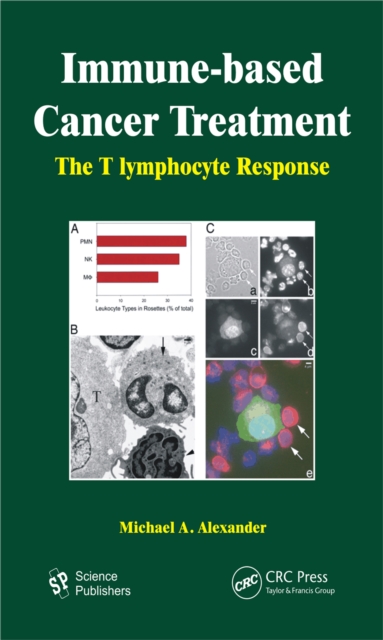
The culmination of 30 years of research and experience in T-cell-based cancer, this book highlights and evaluates new treatments that harness the power of the T cell to attack and kill all cancer cells in our bodies.
This is a review text on medical microbiology and immunology containing approximately 625 board-type review questions on left-hand pages with answers and explanations on facing right-hand pages.
Utilizing a syndrome-based approach, Respiratory Infections provides pulmonologists, infectious disease specialists, and immunologists with essential and thorough knowledge of respiratory infections and the multitude of diseases that make us these infections, including pneumonia, tuberculosis, HIV, and cystic fibrosis.
A step-by-step guide to commonly used procedures, Methods in Cellular Immunology addresses both human and murine models, in addition to such topics as PCR and apoptosis.
Investigative Immunotoxicology provides a critical evaluation of proposed experimental animal models and approaches, and discusses the contribution that immunotoxicity can make to the overall assessment of chemical-induced adverse health effects on humans and the ecosystem.