Although there are a number of excellent current reviews on one or another aspect of cytomegalovirus, the last comprehensive treatment of this subject was that of Krech et al.
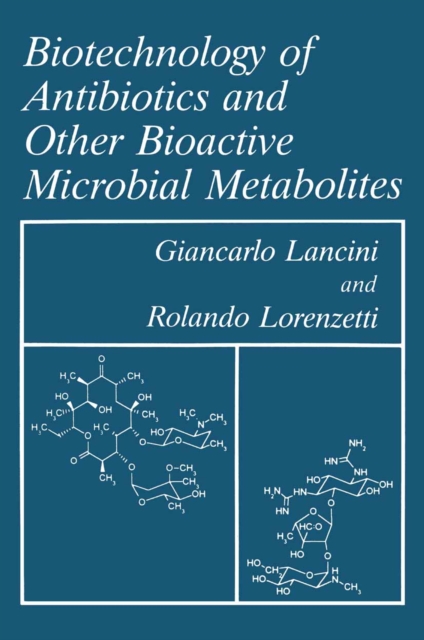
In response to the field's need for an introductory text, the authors have distilled the vast and scattered literature relating to the biotechnology of microbial secondary metabolites.
This volume is based on a FEMS Symposium entitled "e;Bacterial Growth and Lysis: Metabolism and Structure of the Bacterial Sacculus"e; held at the Monastery of Lluc (Mallorca, Spain) on 5-10 April, 1992.
Bacterial plasmids originating in a wide range of genera are being studied from a variety of perspectives in hundreds of laboratories around the globe.
The papers assembled in this collection comprise a majority of the oral presentations as well as several poster presentations given at the 22nd Annual Symposium arranged by the Bastern Pennsylvania Branch of the American Society for MicrobioloS)'.
Development and Implications of Antimicrobial Resistance One of the most ominous trends in the field of antimicrobial chemotherapy over the past decade has been the increasing pace of development of antimicrobial resistance among microbial pathogens.
This book is a compilation of the research which was presented during the NATO-Advanced Research Workshop (ARW) entitled "e;Advances in Bacterial Paracrystalline Surface Layers"e; held in London, Ontario, Canada during September 27 to 30, 1992.
Protecting Infants through Human Milk: Advancing the Scientific Evidence provides a forum in which basic scientists, clinicians, epidemiologists, and policy makers exchange the latest findings regarding the effects of human milk and breastfeeding on infant and maternal health, thereby fostering new and promising collaborations.
Integrating recent research on the physiology and modelling of bioreactions and bioreactors, the authors present a comprehensive, unified introduction to the principles and practices of the field.
The rapid advances made in the study of the synthesis, structure and function of biological macromole- cules in the last fifteen years have enabled scientists concerned with antimicrobial agents to achieve a considerable measure of understanding of how these substances inhibit cell growth and division.
The application of enzymes or whole cells (fermentatively active or resting; microbial, plant, or animal) to carry out selective transformations of commercial importance is the central theme of industrial biocatalysis.
Wolf's discovery demonstrating that a reporter gene is expressed in myocytes subsequent to injection of naked DNA, was exploited by immunologists and vaccinologists to develop a new generation of vaccines.
For many of us, these simple rewards are suf- The purpose of this briefforeword is unchanged from the first edition; it is simply to make you, ficiently gratifying so that we have chosen to the reader, hungry for the scientific feast that spend our scientific lives studying these unusual follows.
Advances in Microbial Ecology was established by the International Com- mittee on Microbial Ecology (ICOME) to provide a means for in-depth, critical, and even provocative reviews to emphasize current trends in the rapidly expanding area of microbial ecology.
This book is the result of an international symposium held at the Institute of Virology and Immunobiology of the-University of WUrzburg, Germany, in October 1980.
This completely revised, updated, and expanded edition has been neces- sitated by the many important newer discoveries that have been made since the publication of the first edition.
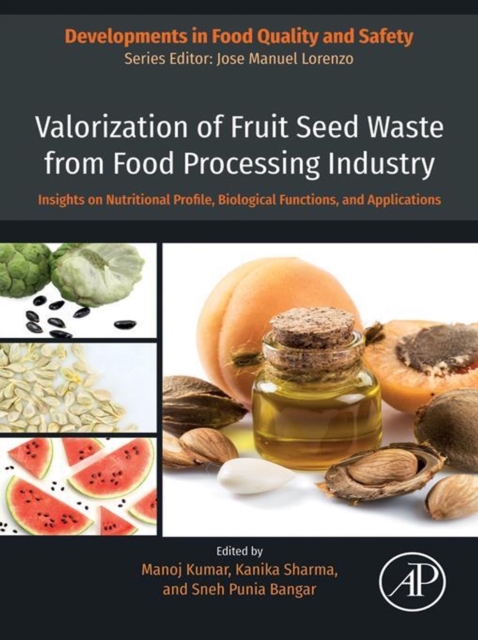
"e;Developments in Food Quality and Safety Series"e; is the most up-to-date resource covering trend topics such as Advances in the analysis of toxic compounds and control of food poisoning; Food fraud, traceability and authenticity; Revalorization of agrifood industry; Natural antimicrobial compounds and application to improve the preservation of food; Non-thermal processing technologies in the food industry; Nanotechnology in food production; and Intelligent packaging and sensors for food applications.
This book provides an ample overview of the current state of research on nutrition's influence on the human microbiome and how it can be leveraged in personalized diets.
**A NEW YORK TIMES BOOK OF THE YEAR 2022 and FINANCIAL TIMES BEST BOOK OF 2023***Shortlisted for the Royal Society Trivedi Science Book Prize 2023*From the author of Spillover, the book that predicted the pandemic, Breathless is the story of Covid-19 and its fierce journey through the human population, as seen by the scientists tasked with fighting it.
'A big-picture forecast of how medicine stands on the threshold of a revolution that will radically change all of our lives' The TimesWelcome to a revolution in the science of you.
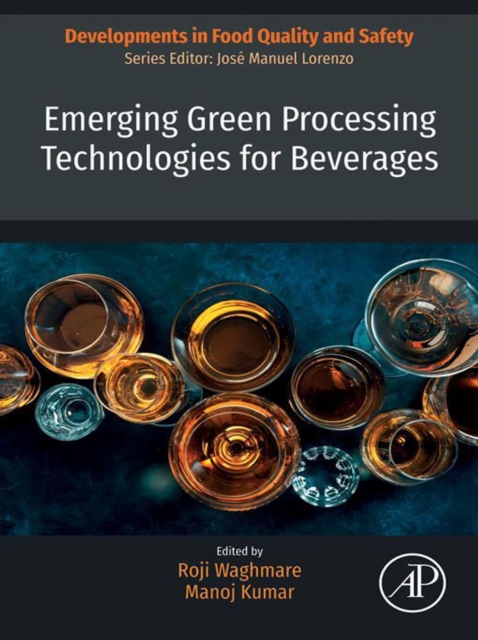
Emerging Green Processing Technologies for Beverages, Volume Seven in the Developments in Food Quality and Safety series, covers the fundamentals and recent trends in the processing of different beverages, such as herbal beverages, fresh produce-based beverages, and dairy beverages.
This edited volume encompasses chapters on novel and innovative research in the applications of leading digital technologies in an accessible and engaging way.
The meeting on "e;Microbial Surface Components and Toxins in Relation to Pathogenesis"e; was held on May 15-19, 1989, in the Mitzpe Rachel guesthouse of Kibbutz Ramat Rachel in Israel.
Since the appearance of the first volume of Advances in Microbial Ecology in 1977 under the editorship of Martin Alexander, the series has achieved wide recognition as a source of in-depth, critical, and sometimes provocative reviews on the ecology of microorganisms in natural and man-made ecosystems.
The discovery of adenoviruses naturally induced a new interest in viruses of the human upper respiratory tract since previously unknown viruses infecting this portion of the human body had not been identified in 20 years, and their unique characteristics stimulated investigations into the biochemical events essential for replication of animal viruses.
By 1960 the scientific community began observing an ever increasing explosion in the literature embrac- ing the many facets of industrial microbiology.