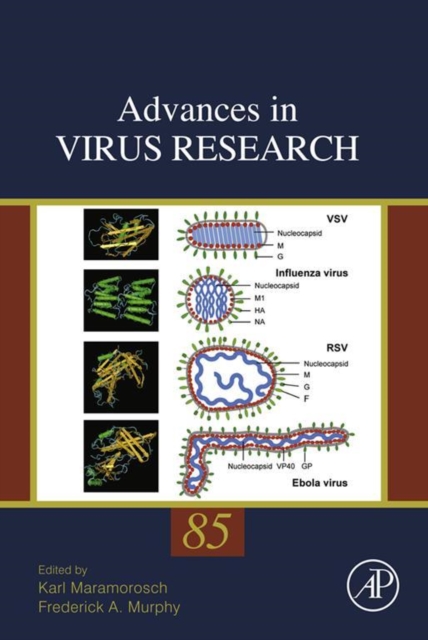
Published since 1953, Advances in Virus Research covers a diverse range of in-depth reviews providing a valuable overview of the current field of virology.
Guide to Food Safety and Quality During Transportation provides a sound foundation for the improvement of the transportation sector responsible for the movement of food.
Published since 1953, Advances in Virus Research covers a diverse range of in-depth reviews providing a valuable overview of the current field of virology.
This book sheds light on the major functions of microbial communities in aquaculture ecosystems, showing that by recycling nutrients, degrading organic matter and preventing disease outbreaks, a variety of microbes are truly beneficial to a wide range of aquaculture industries.
This book focuses on immune reactions and interactions of humans with Helicobacter pylori - a human pathogen connected to gastritis, peptic ulcers and even gastric cancer.
Lawrie's Meat Science, Eighth Edition, provides a timely and thorough update to this key reference work, documenting significant advances in the meat industry, including storage and preservation of meat, the eating quality of meat, and meat safety.
Advances in Food Authenticity Testing covers a topic that is of great importance to both the food industry whose responsibility it is to provide clear and accurate labeling of their products and maintain food safety and the government agencies and organizations that are tasked with the verification of claims of food authenticity.
Will change your life Chris Evans Completely fascinating Heston Blumenthal Important and devastating The TimesFrom a world-leading microbiome scientist and surgeon comes Dark Matter, a pioneering guide to hacking your microbiome for a healthier life.
This book covers the wide set of well-regulated virulence factors and defense mechanisms of Pseudomonas aeruginosa focusing on stress responses and the evolution of this opportunistic human pathogen.
Antibiotics, the backbone of modern clinical-medicine, are facing serious challenges from emerging antimicrobial-resistance (AMR), a complicated phenomenon expanding in bacterial species, from nosocomial to community origins, where microbes are no longer sensitive to a range of commonly used antibiotics.
Recent discoveries in microbiology are hard to grasp for those unfamiliar with scientific jargon, and the research data can be overwhelming even for those working in other scientific fields.
This book provides an in-depth yet concise overview of the most common and emerging protozoa that cause diseases in both farm animals and companion animals.
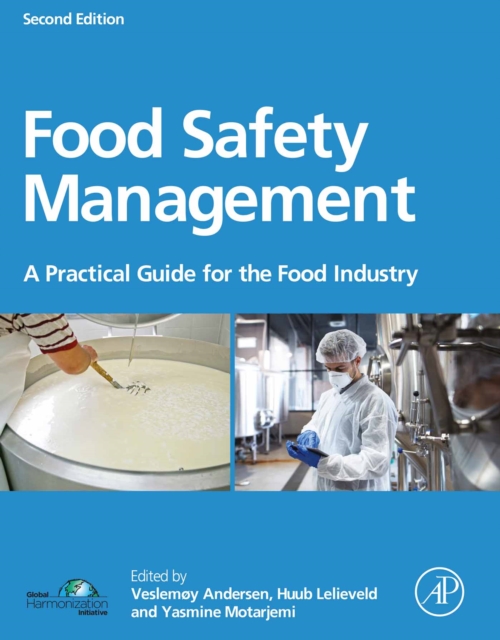
Food Safety Management: A Practical Guide for the Food Industry, Second Edition continues to present a comprehensive, integrated and practical approach to the management of food safety throughout the production chain.
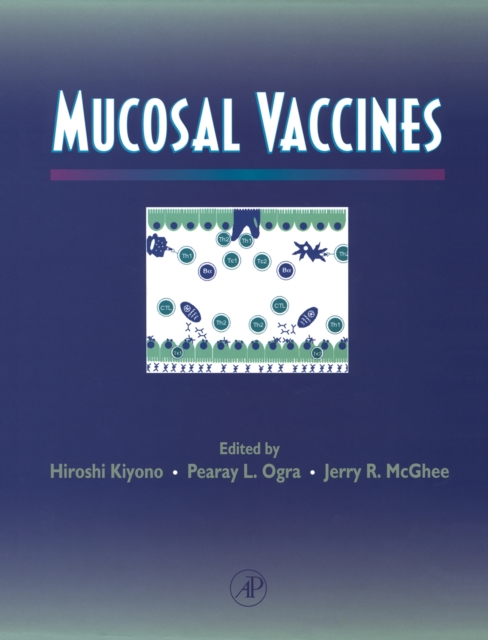
This comprehensive, authoritative treatise covers all aspects of mucosal vaccines including their development, mechanisms of action, molecular/cellular aspects, and practical applications.
Volume 3 of Advances in Antiviral Drug Design is keeping up with the recent progress made in the field of antiviral drug research and highlights five specific directions that have opened new avenues for the treatment of virus infections.
Natural Antioxidants to Enhance the Shelf-Life of Food, Volume Two in the Developments in Food Quality and Safety series is the most up-to-date resource covering trending topics such as the analysis of toxic compounds and control of food poisoning, food fraud, traceability and authenticity, revalorization of agrifood industry, and natural antimicrobial compounds and their applications to improve the preservation of food, non-thermal processing technologies, nanotechnology in food production, and intelligent packaging and sensors for food applications.
This book provides deep insights into the ecology of the plague bacterium Yersinia pestis in natural foci, its diversity, genetic variability and the function of the vector, thus painting a holistic picture of how plague pandemics have evolved and how the bacterium has adapted perfectly to its environment over such a long period of time.
This book provides deep insights into the ecology of the plague bacterium Yersinia pestis in natural foci, its diversity, genetic variability and the function of the vector, thus painting a holistic picture of how plague pandemics have evolved and how the bacterium has adapted perfectly to its environment over such a long period of time.
A fundamental and groundbreaking reassessment of how we view and manage cancer When we think of the forces driving cancer, we don't necessarily think of evolution.
Current cancer therapies are focused on three general strategies: modifying intrinsic radiosensitivity via molecular targeting, manipulating microenvironmental factors to enhance tumor susceptibility to radiation, and improving delivery of radiation to critical tumor locations while sparing normal tissues.
This updated second edition of Molecular Typing in Bacterial Infections, presented in two volumes, covers both common and neglected bacterial pathogenic agents, highlighting the most effective methods for their identification and classification in the light of their specific epidemiology.
This book provides an ample overview of the current state of research on nutrition's influence on the human microbiome and how it can be leveraged in personalized diets.
This book highlights cutting-edge studies in the development of cell-inspired biomaterials and synthetic materials that manipulate cell functions and provide the next generation with contemporary tools for treating complex human diseases.