During a wide-reaching catastrophic public health emergency or disaster, existing surge capacity plans may not be sufficient to enable health care providers to continue to adhere to normal treatment procedures and follow usual standards of care.
Nanoscale science and technology, often referred to as "e;nanoscience"e; or "e;nanotechnology,"e; are science and engineering enabled by our relatively new ability to manipulate and characterize matter at the level of single atoms and small groups of atoms.
Driven by community-based organizations and supported by a growing body of literature, the environmental justice movement contends that poor and minority populations are burdened with more than their share of toxic waste, pesticide runoff, and other hazardous byproducts of our modern economic life.
The time has come to initiate a new program of research on the Supplemental Nutrition Program for Women, Infants, and Children (commonly referred to as WIC).
Biological threats like SARS and natural disasters like the tsunami in Indonesia have devastated entire regions, and quickly exhausted budgetary resources.
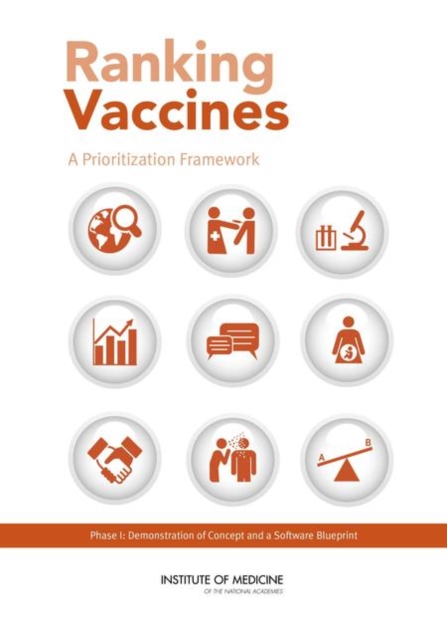
As a number of diseases emerge or reemerge thus stimulating new vaccine development opportunities to help prevent those diseases, it can be especially difficult for decision makers to know where to invest their limited resources.
This report summarizes the presentations and discussion at a workshop entitled Opportunities to Promote Child and Adolescent Development During the After-School Hours, convened on October 21, 1999.
The number of people infected with HIV or living with AIDS is increasing at unprecedented rates as various scientists, organizations, and institutions search for innovative solutions to combating and preventing the disease.
There is growing evidence from developed and developing countries that community-based approaches are effective in improving the health of individuals and populations.
Companies today are operating in a more complex and competitive environment where traditional models for doing business are no longer sufficient and expectations of business are growing both internally and externally.
The influenza pandemic caused by the 2009 H1N1 virus underscores the immediate and critical need to prepare for a public health emergency in which thousands, tens of thousands, or even hundreds of thousands of people suddenly seek and require medical care in communities across the United States.
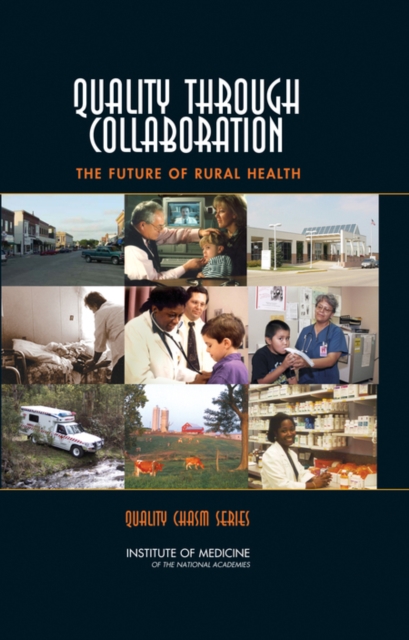
Building on the innovative Institute of Medicine reports To Err Is Human and Crossing the Quality Chasm, Quality Through Collaboration: The Future of Rural Health offers a strategy to address the quality challenges in rural communities.
From the origin of the leak, to the amount of oil released into the environment, to the spill's duration, the 2010 Gulf of Mexico oil spill poses unique challenges to human health.
Globalization is by no means a new phenomenon; transcontinental trade and the movement of people date back at least 2,000 years, to the era of the ancient Silk Road trade route.
Recognizing the importance of good nutrition for physical and mental status, theDepartment of Defense asked the Institute of Medicine to guide the design of thenutritional composition of a ration for soldiers on short-term, high-stress missions.
Early detection is essential to the control of emerging, reemerging, and novel infectious diseases, whether naturally occurring or intentionally introduced.
Over the past 20 years, public concerns have grown in response to the apparent rising prevalence of food allergy and related atopic conditions, such as eczema.
Today our emergency care system faces an epidemic of crowded emergency departments, patients boarding in hallways waiting to be admitted, and daily ambulance diversions.
After-school programs, scout groups, community service activities, religious youth groups, and other community-based activities have long been thought to play a key role in the lives of adolescents.
Cardiovascular disease (CVD), once thought to be confined primarily to industrialized nations, has emerged as a major health threat in developing countries.
Tobacco use has declined because of measures such as high taxes on tobacco products and bans on advertising, but worldwide there are still more than one billion people who regularly use tobacco, including many who purchase products illicitly.
The remarkable increase in the prevalence of obesity among children and youth in the United States over a relatively short timespan represents one of the defining public health challenges of the 21st century.
Several positive and negative lifelong behaviors are established during adolescence including diet and exercise, sexual conduct, practices related to oral health, smoking, drinking, and the use if legal and illegal substances.
When 18-year-old Jesse Gelsinger died in a gene transfer study at the University of Pennsylvania, the national spotlight focused on the procedures used to ensure research participants' safety and their capacity to safeguard the well-being of those who volunteer for research studies.
This report summarizes the presentations and discussion at a workshop entitled Opportunities to Promote Child and Adolescent Development During the After-School Hours, convened on October 21, 1999.
Public health officials have the traditional responsibilities of protecting the food supply, safeguarding against communicable disease, and ensuring safe and healthful conditions for the population.
Increasing public investments in health care services for low-income and special needs children and adolescents in the United States have raised questions about whether these efforts improve their health outcomes.