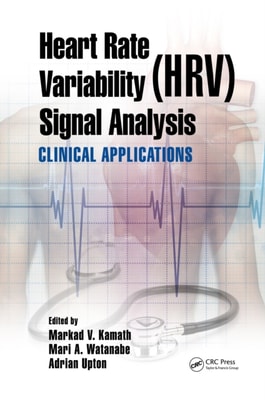
Open a Window into the Autonomic Nervous SystemQuantifying the amount of autonomic nervous system activity in an individual patient can be extremely important, because it provides a gauge of disease severity in a large number of diseases.
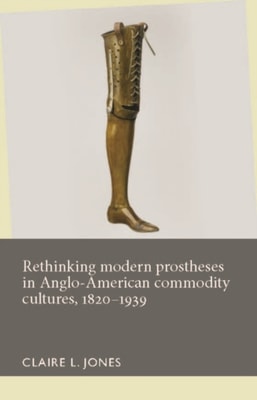
This book explores the development of modern transatlantic prosthetic industries in nineteenth and twentieth centuries and reveals how the co-alignment of medicine, industrial capitalism, and social norms shaped diverse lived experiences of prosthetic technologies and in turn, disability identities.
This book provides a platform for presenting machine learning (ML)-enabled healthcare techniques and offers a mathematical and conceptual background of the latest technology.
With its focus on the offshore randomized control trials of a Pre-Exposure Prophylactic pill (PrEP) for preventing HIV infection, the volume develops a sustained analysis of the complex, virtual and topological dimensions of the expectations, ethics and evidence that surround the innovation of PrEP.
The most comprehensive textbook available on therapeutic modalities in rehabilitation-enhanced by a full-color presentation and numerous case studiesThis practically oriented guide presents the basic science and current best available evidence for each type of therapeutic modality used in physical rehabilitation.
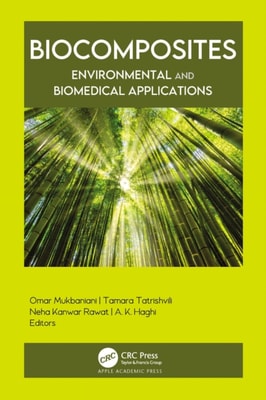
This new book presents the most recent studies on biocomposites, discussing the engineering and technical properties of the most in-demand green materials employed for fabricating biocomposites along with approaches for enhancing their properties.
Publisher's Note: Products purchased from Third Party sellers are not guaranteed by the publisher for quality, authenticity, or access to any online entitlements included with the product.
Over recent years there has been a vast expansion in the variety of imaging techniques available, and developments in machine specifications continue apace.
3D Bioprinting and Nanotechnology in Tissue Engineering and Regenerative Medicine, Second Edition provides an in-depth introduction to bioprinting and nanotechnology and their industrial applications.
Handbook of Research on Blockchain Technology presents the latest information on the adaptation and implementation of Blockchain technologies in real world business, scientific, healthcare and biomedical applications.
Medical Biosensors for Point of Care (POC) Applications discusses advances in this important and emerging field which has the potential to transform patient diagnosis and care.
Personalized Computational Hemodynamics: Models, Methods, and Applications for Vascular Surgery and Antitumor Therapy offers practices and advances surrounding the multiscale modeling of hemodynamics and their personalization with conventional clinical data.
Organic Materials as Smart Nanocarriers for Drug Delivery presents the latest developments in the area of organic frameworks used in pharmaceutical nanotechnology.
Medical Devices Quality Management Systems: Strategy and Techniques for Improving Efficiency and Effectiveness is written for the needs of quality, compliance, and regulatory professionals in medical device companies.
Clinical Systems Engineering: New Challenges for Future Healthcare covers the critical issues relating to the risk management and design of new technologies in the healthcare sector.
**Selected for Doody's Core Titles(R) 2024 in Endocrinology/Metabolic Disease**Updated with new and expanded chapters, Endocrine Disruption and Human Health, Second Edition provides an introduction to what endocrine disruptors are, the issues surrounding them, the source of these chemicals in the ecosystem and the mechanisms of action and assay systems.
Essential Concepts in Molecular Pathology, Second Edition, offers an introduction to molecular genetics and the "e;molecular"e; aspects of human disease.
Dermoscopy is a noninvasive skin imaging technique that uses optical magnification and either liquid immersion or cross-polarized lighting to make subsurface structures more easily visible when compared to conventional clinical images.
Cardiac Regeneration and Repair, Volume Two reviews the use of biomaterials, alone or combined with cell therapy, in providing tissue-engineered constructs to repair the injured heart and prevent or reverse heart failure.
This book provides state-of-the-art information on ambient assisted living (AAL), and focuses on technologies, services, living spaces, policies, and interventions to promote health, improve quality of life, and active aging.
This handbook covers tested and proven DNA forensic testing methodologies, forensic bioinformatics techniques, case studies and current forensic legal framework for investigation of variety of crimes and provides a clinching evidence for speedy justice.
This book provides an in-depth study on the theory of fundamental rights and the legal challenges posed by new technologies, with a particular focus on neurotechnologies and neurorights.
This book provides an in-depth study on the theory of fundamental rights and the legal challenges posed by new technologies, with a particular focus on neurotechnologies and neurorights.
Cardiovascular diseases (CVD) including heart diseases, peripheral vascular disease and heart failure, account for one-third of deaths throughout the world.
Written by 30 worldwide leading scientists, experts and medical doctors, this comprehensive book provides a broad, multi-disciplinary overview on hemoperfusion.
This book describes at the introductory level how modern technology has made the scenario of the classic science-fiction movie Fantastic Voyage a reality.
This is the first textbook dedicated to CEST imaging and covers the fundamental principles of saturation transfer, key features of CEST agents that enable the production of imaging contrast, and practical aspects of preparing image-acquisition and post-processing schemes suited for in vivo applications.
Nanomedicine can take advantage of the recent developments in nanobiotechnology research for the creation of platforms with superior drug carrier capabilities, selective responsiveness to the environment, unique contrast enhancement profiles, and improved accumulation at the disease site.
Over the past decade, fluorine (19F) magnetic resonance imaging (MRI) has garnered significant scientific interest in the biomedical research community owing to the unique properties of fluorinated materials and the 19F nucleus.
The use of micro / nanotechnology in cell and tissue engineering, and especially for cell and tissue preservation, is at the peak of its activity now, with scientific output expected to continue growing in the coming years.
The first edition of the book was written employing mathematical techniques to formulate the physical principles involved in the structural and functional correlates of the underlying physiology.