This book is no less than a guide to the whole of Western philosophy--the ideas that have undergirded our civilization for two-and-a-half thousand years.
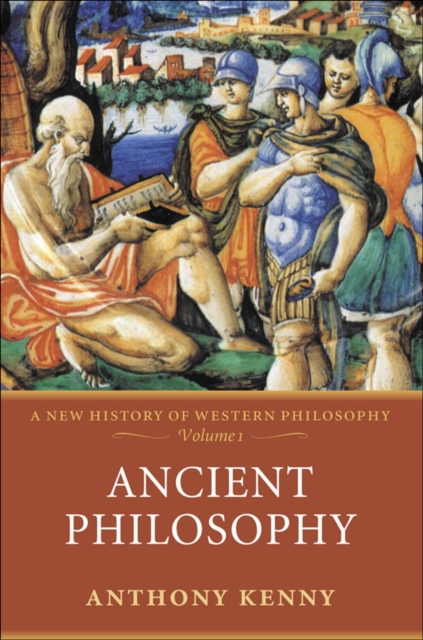
This book is no less than a guide to the whole of Western philosophy--the ideas that have undergirded our civilization for two-and-a-half thousand years.
Evading established accounts of the development of doctrine in the Patristic era, Augustine's Christology has yet to receive the critical scholarly attention it deserves.
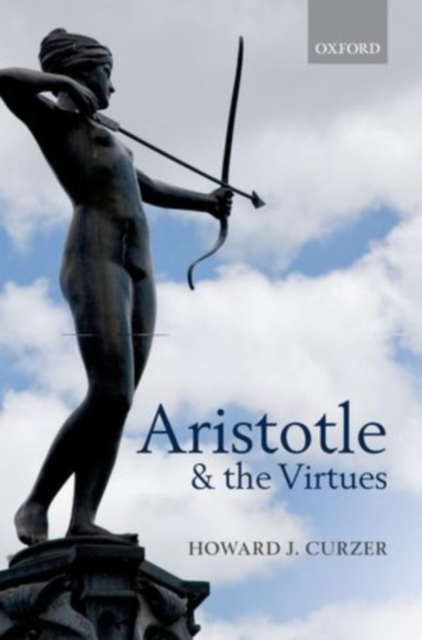
Aristotle is considered by many to be the founder of 'faculty psychology'--the attempt to explain a variety of psychological phenomena by reference to a few inborn capacities.
Plato famously promised to complement the Sophist and the Statesman with another work on a third sort of expert, the philosopher--but we do not have this final dialogue.
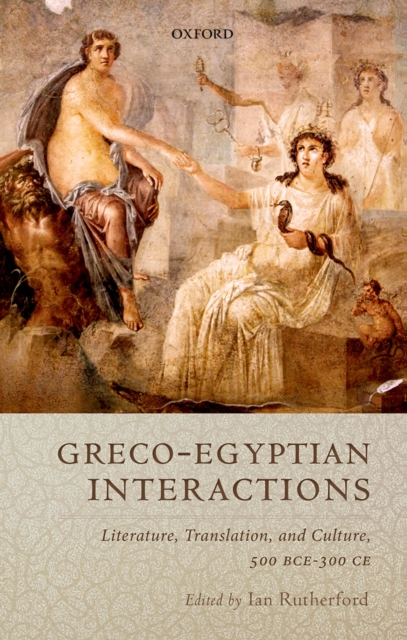
Contact and interaction between Greek and Egyptian culture can be traced in different forms over more than a millennium: from the sixth century BC, when Greeks visited Egypt for the sake of tourism or trade, through to the Hellenistic period, when Egypt was ruled by the Macedonian-Greek Ptolemaic dynasty who encouraged a mixed Greek and Egyptian culture, and even more intensely in the Roman Empire, when Egypt came to be increasingly seen as a place of wonder and a source of magic and mystery.
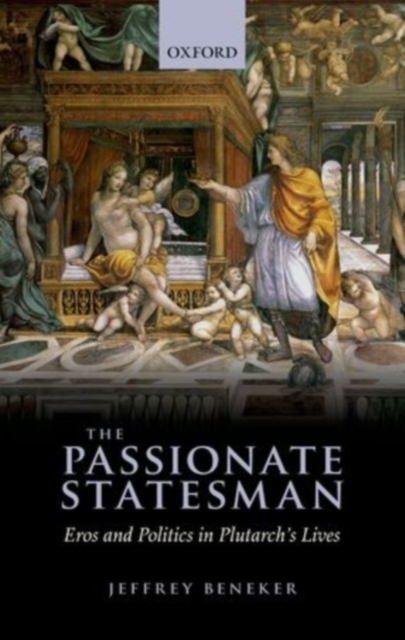
The Passionate Statesman explores the intersection of passion and politics in Plutarch's Parallel Lives, with special emphasis on how he represents the influence of eros, or erotic desire, on the careers of some of the most prominent statesmen from Greco-Roman antiquity.
This volume presents an interconnected set of sixteen essays, four of which are previously unpublished, by Allan Gotthelf--one of the leading experts in the study of Aristotle's biological writings.
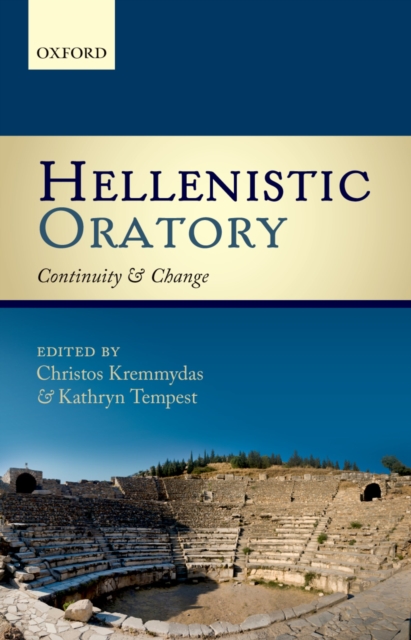
Hellenistic oratory remains an elusive subject as not one Greek speech has survived from the end of the fourth century BC until the beginning of the first century AD.
'With a single announcement from a herald, all the cities of Greece and Asia had been set free; only an intrepid soul could formulate such an ambitious project, only phenomenal valour and fortune bring it to fruition.
`Therefore this terror and darkness of the mind Not by the sun's rays, nor the bright shafts of day, Must be dispersed, as is most necessary, But by the face of nature and her laws.
`My present intention is to clear myself of any suspicion of partiality by presenting the views of the generality of philosophers concerning the nature of the gods.
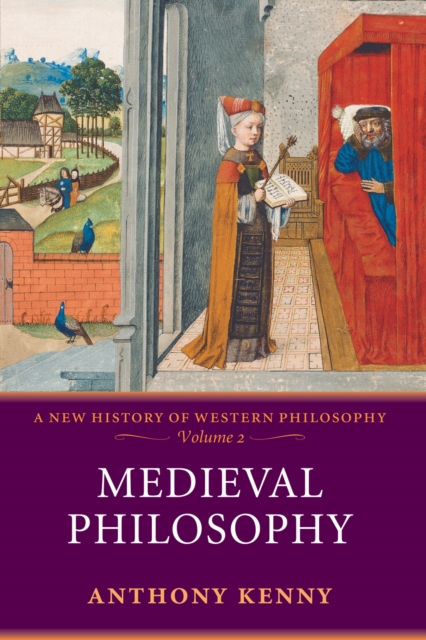
Sir Anthony Kenny continues his magisterial new history of Western philosophy with a fascinating guide through more than a millennium of thought from 400 AD onwards, charting the story of philosophy from the founders of Christian and Islamic thought through to the Renaissance.
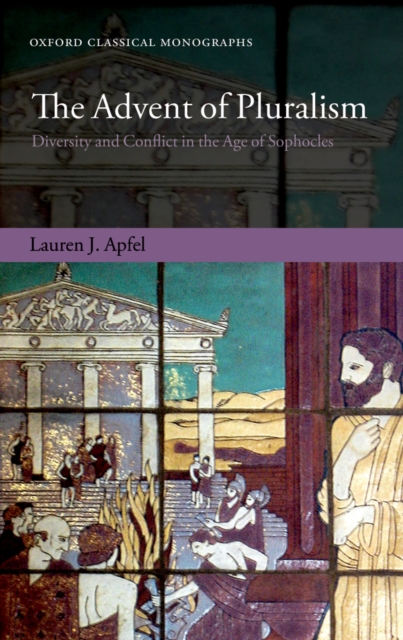
The Advent of Pluralism explores how the philosophical position of pluralism - the idea, made famous by Isaiah Berlin, that values and moral codes can and will come into conflict with one another - has clear and important roots in the Classical Greek world.
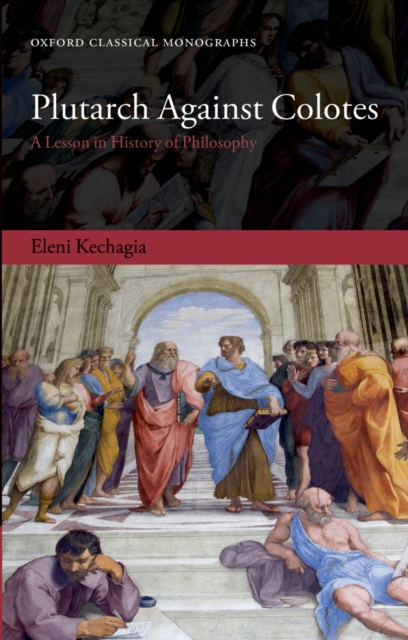
Plutarch of Chaeroneia's philosophical work remained largely in the shadow of his celebrated Lives, partly because it was often dubbed 'popular philosophy', and partly because it was thought to be lacking in originality.
Michail Peramatzis presents a new interpretation of Aristotle's view of the priority relations between fundamental and derivative parts of reality, following the recent revival of interest in Aristotelian discussions of what priority consists in and how it relates existents.
Soon after Nero's accession in 54 CE, his tutor, the philosopher Seneca, addressed to his young pupil an essay called De Clementia in which he offered advice on how to behave in his new role.
Blighted and accursed families are an inescapable feature of Greek tragedy, and many scholars have treated questions of inherited guilt, curses, and divine causation.
The life and works of Augustine of Hippo (354-430) have shaped the development of the Christian Church, sparking controversy and influencing the ideas of theologians through subsequent centuries.
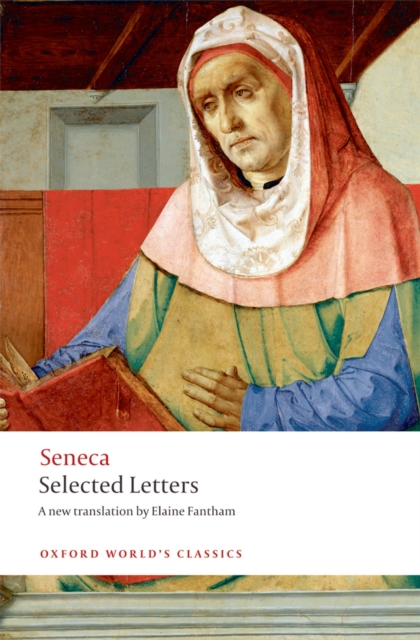
Seneca's Letters to Lucilius are a rich source of information about ancient Stoicism, an influential work for early modern philosophers, and a fascinating philosophical document in their own right.
Activity and Participation in Late Antique and Early Christian Thought is an investigation into two basic concepts of ancient pagan and Christian thought.
John Palmer develops and defends a modal interpretation of Parmenides, according to which he was the first philosopher to distinguish in a rigorous manner the fundamental modalities of necessary being, necessary non-being or impossibility, and non-necessary or contingent being.