This volume presents a series of essays published by Charles Kahn over a period of forty years, in which he seeks to explicate the ancient Greek concept of Being.
Geoffrey Lloyd engages in a wide-ranging exploration of what we can learn from the study of ancient civilisations that is relevant to fundamental problems, both intellectual and moral, that we still face today.
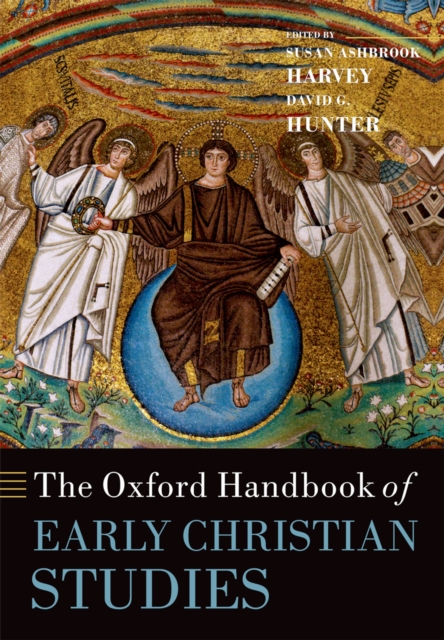
The Oxford Handbook of Early Christian Studies responds to and celebrates the explosion of research in this inter-disciplinary field over recent decades.
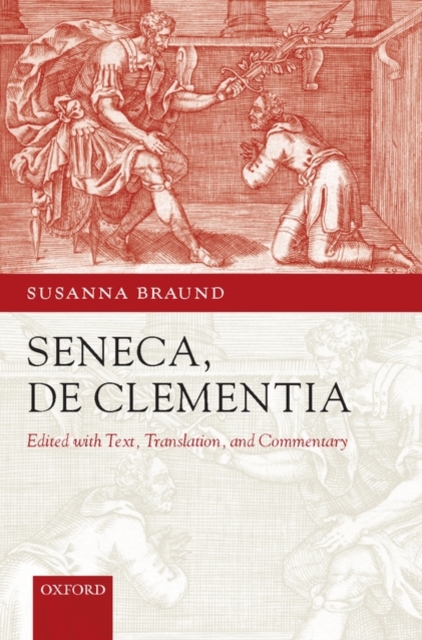
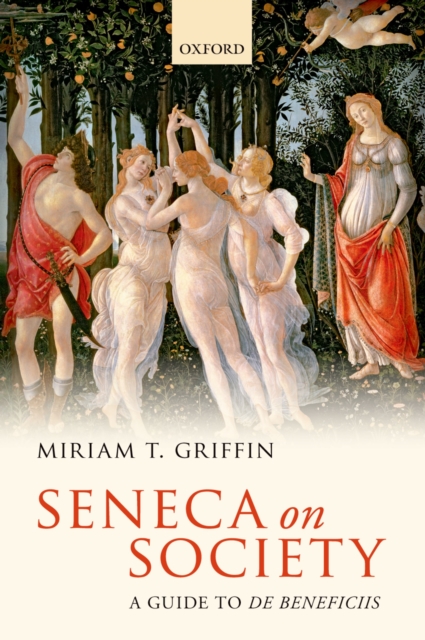
Soon after Nero's accession in 54 CE, his tutor, the philosopher Seneca, addressed to his young pupil an essay called De Clementia in which he offered advice on how to behave in his new role.
Kathrin Koslicki offers an analysis of ordinary materials objects, those material objects to which we take ourselves to be committed in ordinary, scientifically informed discourse.
Eusebius' magisterial Praeparatio Evangelica (written sometime between AD 313 and 324) offers an apologetic defence of Christianity in the face of Greek accusations of irrationality and impiety.
Maieusis pays tribute to the highly influential work of Myles Burnyeat, whose contributions to the study of ancient philosophy have done much to enhance the profile of the subject around the world.
Space, Time, Matter, and Form collects ten of David Bostock's essays on themes from Aristotle's Physics, four of them published here for the first time.
Athens in Paris explores the ways in which the writings of the ancient Greeks played a decisive part in shaping the intellectual projects of structuralism and post-structuralism - arguably the most significant currents of thought of the post-war era.
George Karamanolis breaks new ground in the study of later ancient philosophy by examining the interplay of the two main schools of thought, Platonism and Aristotelianism, from the first century BC to the third century AD.
Brad Inwood presents a selection of his most influential essays on the philosophy of Seneca, the Roman Stoic thinker, statesman, and tragedian of the first century AD.
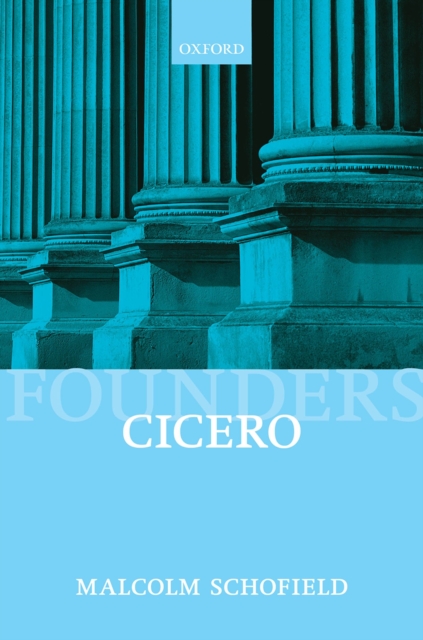
The Founders of Modern Political and Social Thought series presents critical examinations of the work of major political philosophers and social theorists, assessing both their initial contribution and their continuing relevance to politics and society.
Blighted and accursed families are an inescapable feature of Greek tragedy, and many scholars have treated questions of inherited guilt, curses, and divine causation.
Cicero, one of the greatest orators of all time and an important politician at the time of the downfall of the Roman Republic, has left in his writings a first-hand view of the age of Caesar and Pompey.
Sir Anthony Kenny continues his magisterial new history of Western philosophy with a fascinating guide through more than a millennium of thought from 400 AD onwards, charting the story of philosophy from the founders of Christian and Islamic thought through to the Renaissance.
Adam Smith and the Classics analyses the influence of classical culture---the work of Plato, Aristotle, Cicero, and the Stoics---on Adam Smith's thought.
The Development of Ethics is a selective historical and critical study of moral philosophy in the Socratic tradition, with special attention to Aristotelian naturalism, its formation, elaboration, criticism, and defence.
This is a book about the invention of Western philosophy, and the first thinkers to explore ideas about the nature of reality, time, and the origin of the universe.
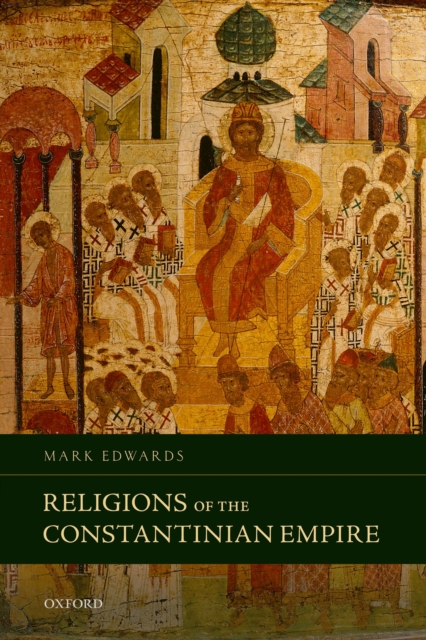
Religions of the Constantinian Empire provides a synoptic review of Constantine's relation to all the cultic and theological traditions of the Empire during the period from his seizure of power in the west in 306 c?
Religions of the Constantinian Empire provides a synoptic review of Constantine's relation to all the cultic and theological traditions of the Empire during the period from his seizure of power in the west in 306 c?
This book offers an innovative analytic account of Cicero's treatment of key political ideas: liberty and equality, government, law, cosmopolitanism and imperialism, republican virtues, and ethical decision-making in politics.